
 English
 中文简体
中文简体 русский
 Español
 عربى
عربى
Don't hesitate to contact when you need us!
 Home / News / Industry News / 2026 High-Speed Precision Turning and Milling Machine Selection Guide: Which One is the Best Buy?
 2026 High-Speed Precision Turning and Milling Machine Selection Guide: Which One is the Best Buy?
 2026.03.19
 Industry News
Content
- 1 The Best Buy in 2026: What You Need to Know First
- 2 What Is a High-Speed Precision Turning and Milling Machine?
- 3 Spindle Performance: The Core of Every High-Speed Electric Spindle Turning and Milling Machine
- 4 Structural Rigidity and Thermal Management: Why They Define Long-Term Accuracy
- 5 CNC Control Systems and Intelligent Features in 2026
- 6 Key Performance Benchmarks: How to Compare Machines Side by Side
- 7 Industry Application Fit: Matching the Machine to Your Production Need
- 8 Total Cost of Ownership: Beyond the Acquisition Investment
- 9 Frequently Asked Questions
The Best Buy in 2026: What You Need to Know First
If you're looking for the best high-speed precision turning and milling machine in 2026, the verdict is clear: a 5-axis High-Speed Electric Spindle Turning And Milling Machine with a spindle speed above 12,000 RPM, sub-micron positioning accuracy (≤0.001 mm), and a rigid thermal-symmetric structure delivers the highest return for precision manufacturing environments. These machines now represent the mainstream standard for aerospace, medical device, and mold & die industries.
The selection decision ultimately comes down to three factors: spindle performance, structural rigidity, and control system intelligence. The sections below break down each dimension with real performance data to guide your investment.
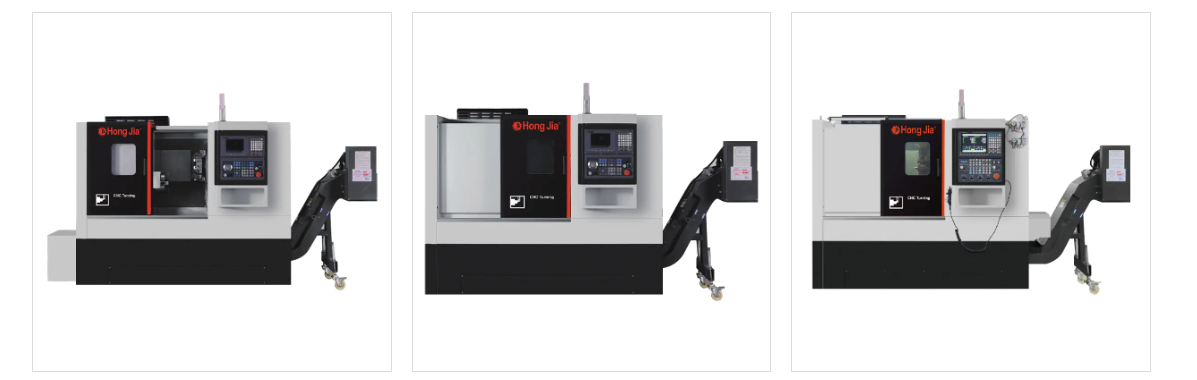
What Is a High-Speed Precision Turning and Milling Machine?
A High-Speed Precision Turning And Milling Machine integrates turning (rotating the workpiece) and milling (rotating the cutting tool) into a single platform. This compound approach eliminates the need for multiple setups, reducing cumulative positioning error and cycle time by as much as 40–60% compared to single-function machines.
The "high-speed" designation typically refers to spindle speeds exceeding 8,000 RPM for turning centers and 15,000–40,000 RPM for milling spindles. At these speeds, cutting forces are reduced while surface finish quality improves — Ra values of 0.4 µm or better are achievable on hardened steel without grinding.
Key Machine Categories in 2026
| Category | Spindle Speed Range | Typical Axes | Best Application |
|---|---|---|---|
| Turning-Milling Center (TMC) | 3,000–8,000 RPM | 4–5 Axis | General precision parts |
| High-Speed Electric Spindle TMC | 12,000–40,000 RPM | 5–9 Axis | Aerospace, medical, molds |
| Vertical Turning-Milling Machine | 500–4,000 RPM | 4–5 Axis | Large-diameter heavy parts |
| Swiss-Type High-Speed TMC | 10,000–20,000 RPM | 7–13 Axis | Micro components, watchmaking |
Spindle Performance: The Core of Every High-Speed Electric Spindle Turning and Milling Machine
The electric spindle is the defining component of any High-Speed Electric Spindle Turning And Milling Machine. Unlike gear-driven spindles, electric (motorized) spindles embed the motor directly into the spindle shaft, eliminating transmission losses and enabling far higher rotational speeds with lower vibration.
Critical Spindle Specifications to Evaluate
- Maximum spindle speed: For high-speed milling operations, a minimum of 15,000 RPM is the practical threshold; top-tier models offer 30,000–40,000 RPM.
- Radial runout (TIR): Values below 0.002 mm are required for precision work; elite electric spindle models achieve ≤0.001 mm.
- Spindle power and torque: A 15–30 kW continuous power range with torque exceeding 100 N·m covers most aerospace and mold applications.
- Bearing configuration: Angular contact ceramic ball bearings or hydrostatic/aerostatic bearings are preferred for speeds above 20,000 RPM.
- Thermal stability: Integrated cooling jackets and oil-air lubrication are standard in 2026; thermal displacement at full speed should be below 5 µm.
A practical benchmark: a 20,000 RPM electric spindle turning and milling machine cutting titanium alloy (Ti-6Al-4V) at a cutting speed of 120 m/min with a 0.1 mm depth of cut can achieve a surface roughness of Ra 0.6 µm — a result previously requiring a dedicated grinding operation.
Figure 1: Achievable surface roughness (Ra µm) at different spindle speed levels for hardened steel milling
Structural Rigidity and Thermal Management: Why They Define Long-Term Accuracy
At high cutting speeds, vibration and thermal growth are the primary enemies of dimensional accuracy. A well-designed High-Speed Precision Turning And Milling Machine addresses both through its machine bed design and thermal compensation systems.
Machine Bed and Frame Construction
The most capable machines in 2026 use polymer concrete (Meehanite or mineral casting) or high-grade cast iron beds with internal ribbing optimized via finite element analysis (FEA). Compared to traditional welded steel frames, polymer concrete offers 6–10× higher vibration damping, directly translating to finer surface finish and longer tool life.
- Linear guide systems: Roller linear guides (with preload class C2 or better) support rapid traverse speeds of 30–60 m/min while maintaining positioning repeatability of ±0.001 mm.
- Ball screw specifications: C3-class or better, dual-drive configurations for larger machines to eliminate axial backlash.
- Turret rigidity: BMT (Base Mount Turret) or VDI turret with driven tool capability should sustain radial cutting forces of over 3,000 N without deflection exceeding 2 µm.
Thermal Compensation Technology
Thermal drift is responsible for up to 70% of machining errors in high-speed operations. Modern machines employ:
- Active thermal compensation (ATC): Multiple temperature sensors feed real-time correction values to the CNC controller, compensating for spindle growth and structural drift.
- Constant-temperature coolant circuits: Maintaining spindle and linear guide coolant at ±0.5°C of ambient temperature reduces thermal displacement to under 3 µm over an 8-hour shift.
- Chip conveyor and chip flushing systems prevent heat re-absorption into the workpiece zone.
CNC Control Systems and Intelligent Features in 2026
The CNC control system is increasingly the differentiator in modern High-Speed Electric Spindle Turning And Milling Machine platforms. Beyond basic G-code execution, leading 2026 controllers integrate adaptive control, digital twin simulation, and IoT connectivity.
Must-Have Control Features
- High-speed look-ahead processing: A minimum of 1,000-block look-ahead allows smooth velocity profiles at feedrates exceeding 20 m/min, critical for contour milling accuracy.
- Nano-interpolation: Position command resolution of 0.1 nm (0.0000001 mm) eliminates staircase effects on curved surfaces.
- RTCP (Rotation Tool Center Point) function: Essential for simultaneous 5-axis machining, ensuring the tool tip follows the programmed path regardless of rotary axis position.
- Adaptive feedrate control: Real-time adjustment of feedrate based on spindle load, protecting the tool and spindle from overload — extending tool life by 20–35% in production studies.
- Remote monitoring and diagnostics: OPC-UA or MTConnect protocol support for integration into smart factory (Industry 4.0) environments.
Figure 2: Typical cumulative OEE (Overall Equipment Effectiveness) improvement trend after deploying smart CNC high-speed turning-milling centers (indexed to baseline = 100)
Key Performance Benchmarks: How to Compare Machines Side by Side
When evaluating a High-Speed Precision Turning And Milling Machine, use the following quantitative benchmarks as your scoring framework. These metrics are drawn from ISO 230-series test standards and represent consistent, comparable performance data.
| Performance Parameter | Entry-Level | Mid-Range | High-Performance |
|---|---|---|---|
| Max Spindle Speed (Milling) | 6,000 RPM | 12,000 RPM | 20,000–40,000 RPM |
| Positioning Accuracy (ISO 230-2) | ±0.005 mm | ±0.003 mm | ±0.001 mm |
| Repeatability | ±0.003 mm | ±0.002 mm | ±0.0005 mm |
| Surface Finish (Ra, steel) | Ra 1.6 µm | Ra 0.8 µm | Ra 0.4 µm |
| Rapid Traverse | 24 m/min | 40 m/min | 60+ m/min |
| Tool Change Time (chip-to-chip) | 4.5 s | 2.5 s | 1.5 s |
Industry Application Fit: Matching the Machine to Your Production Need
Selecting the right High-Speed Electric Spindle Turning And Milling Machine requires an honest assessment of your production volume, material mix, and tolerance requirements. The following guidance maps machine capability to industry use cases.
Aerospace and Defense
Aerospace components — turbine blades, structural brackets, landing gear parts — demand 5-axis simultaneous machining, tolerance bands of IT5 or better (typically ±0.005 mm on critical features), and full process documentation. A high-performance electric spindle machine with 20,000+ RPM capability and RTCP is non-negotiable. Titanium and Inconel work requires powerful spindle torque (>80 N·m) at lower speeds (3,000–6,000 RPM), so select a machine with a wide constant-power range.
Medical Device Manufacturing
Bone screws, implant components, and surgical instruments are typically small, complex, and produced in stainless steel, cobalt chrome, or PEEK. Swiss-type high-speed turning-milling machines or compact 9-axis models with guide bushing support excel here, achieving cycle times under 30 seconds per part on dental implant screws at Ra ≤ 0.4 µm without secondary finishing.
Mold and Die Production
Cavity milling in hardened steel (HRC 52–62) demands high spindle speed for small-diameter end mills, exceptional thermal stability, and rigid structure for long-reach tooling. Machines with 30,000 RPM electric spindles, active vibration damping, and nano-CNC interpolation can produce mirror-finish cavities (Ra 0.1–0.2 µm) directly from hardened material, eliminating EDM in many cases and reducing lead time by up to 50%.
Automotive and General Precision Parts
High-volume automotive components prioritize cycle time, automation compatibility (bar feeder, robot loading), and long spindle life. A mid-range high-speed turning-milling center with 12,000 RPM capability, a 12-station driven turret, and a parts catcher system can deliver cycle times under 2 minutes on complex shaft components while maintaining Cpk ≥ 1.67 over production runs of 100,000+ parts.
Total Cost of Ownership: Beyond the Acquisition Investment
Evaluating a High-Speed Precision Turning And Milling Machine on acquisition alone is a costly mistake. Over a 10-year operating life, tooling, maintenance, energy, and downtime costs often exceed the machine's initial investment by a factor of 3–5×. The smarter approach is total cost of ownership (TCO) analysis.
- Spindle rebuild intervals: Electric spindles typically require first service at 8,000–15,000 operating hours. Machines with in-machine spindle diagnostics can predict bearing wear 200–400 hours in advance, avoiding unplanned shutdowns.
- Energy consumption: A 22 kW electric spindle machine running 6,000 hours/year at 70% duty cycle consumes approximately 92,400 kWh annually. Regenerative drive systems on modern machines recover 15–25% of braking energy, reducing annual electricity consumption meaningfully.
- Tooling cost per part: Higher spindle accuracy reduces runout-induced tool wear — machines with TIR ≤ 0.002 mm demonstrate 30–40% longer tool life on difficult-to-cut materials compared to machines with TIR > 0.005 mm.
- Spare parts availability: Verify that the machine's CNC controller and critical mechanical components (spindle, turret, linear guides) have at least a 10-year spare parts guarantee from the manufacturer or authorized service network.
Frequently Asked Questions
Q1 What is the main difference between a standard CNC lathe and a high-speed precision turning and milling machine? ▼
A standard CNC lathe performs only turning operations; the workpiece rotates while stationary tools cut. A High-Speed Precision Turning And Milling Machine adds live (driven) tooling capability — the milling spindle or driven turret rotates cutting tools independently — enabling drilling, milling, tapping, and contouring in the same setup. This eliminates secondary operations and significantly reduces cumulative positioning error.
Q2 How do I determine if I need a high-speed electric spindle version or a standard gear-driven spindle model? ▼
Choose a High-Speed Electric Spindle Turning And Milling Machine if your applications involve small-diameter tooling (≤10 mm end mills), hard material milling (HRC 50+), mirror-finish surface requirements (Ra ≤ 0.8 µm), or high-speed aluminum/composite cutting. Gear-driven spindles are adequate for heavy turning or roughing operations where maximum torque at low RPM is the priority. Most modern facilities benefit from the electric spindle option for its versatility and lower vibration.
Q3 What spindle speed range is suitable for machining titanium alloys? ▼
Titanium alloys such as Ti-6Al-4V are typically machined at cutting speeds of 50–120 m/min depending on insert grade. For a 10 mm end mill, this translates to approximately 1,600–3,800 RPM. However, the machine still needs a high-speed spindle (12,000+ RPM rated) to maintain adequate torque headroom and to handle other materials in the same facility. Ensure the spindle has continuous torque of at least 60 N·m at the titanium cutting speed range.
Q4 How often does the electric spindle need maintenance or replacement? ▼
With proper lubrication (oil-air or grease-packed bearing systems) and operation within rated speed and load limits, electric spindles typically achieve 8,000–15,000 hours before first bearing service is required. Machines with integrated spindle condition monitoring can alert operators to bearing wear early. Full spindle replacement is typically needed every 20,000–30,000 hours of operation under normal production conditions.
Q5 Is a 5-axis high-speed turning and milling machine necessary for most job shops? ▼
For job shops handling diverse, complex parts, a 5-axis high-speed precision turning and milling machine typically pays back in reduced setups and faster turnaround, even at lower volumes. If your shop primarily handles simple turned or prismatic parts with straightforward features, a 4-axis model (X, Z, C, Y) may be sufficient. The decision should be driven by part complexity and the proportion of work involving off-center features or compound angles.
Q6 What standards should I use to verify the accuracy claims of a machine before purchase? ▼
Request a machine acceptance test report based on ISO 230-1 (geometric accuracy), ISO 230-2 (positioning and repeatability), and ISO 230-4 (circular test / ball bar test). For thermal performance, ask for ISO 230-3 results. These internationally recognized tests provide objective, comparable data. Insist on an on-site acceptance test at your facility if tolerances tighter than ±0.002 mm are required.
