
 English
 中文简体
中文简体 русский
 Español
 عربى
عربى
Don't hesitate to contact when you need us!
Can a Vertical Milling Center Improve Production Efficiency?
 2026.03.12
 Industry News
Content
- 1 Yes — A Vertical Milling Center Directly Improves Production Efficiency
- 2 How a Vertical Milling Center Drives Efficiency
- 3 Key Factors That Determine Efficiency Gains
- 4 Vertical Machining Center Accessories List: What You Actually Need
- 5 Vertical Milling Center Cutting Parameters Guide
- 6 Vertical Milling Center Maintenance Tips to Sustain Performance
- 7 Real-World Efficiency Outcomes
- 8 Frequently Asked Questions
Yes — A Vertical Milling Center Directly Improves Production Efficiency
The answer is yes. A Vertical Milling Center (VMC) improves production efficiency by enabling multi-axis precision machining, reducing manual setup time, and supporting automated workflows. Facilities transitioning to VMC-based production lines consistently achieve 30–50% reductions in cycle time compared to conventional milling setups. The vertical spindle orientation gives operators clear visibility of the cutting zone, easier tool access, and better chip evacuation — all of which contribute directly to throughput.
That said, the degree of improvement depends on how well the machine is configured, maintained, and integrated into your workflow. This article covers the specific mechanisms by which a VMC drives efficiency gains, which accessories and cutting parameters matter most, and how to keep performance consistent over time.
How a Vertical Milling Center Drives Efficiency
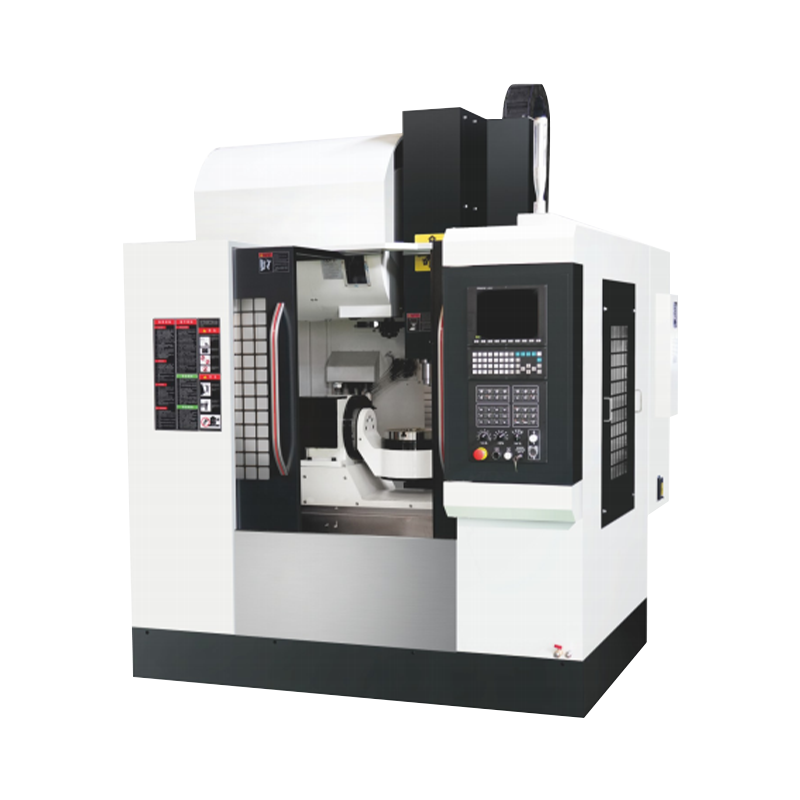
A vertical milling center positions the cutting spindle perpendicular to the worktable. This orientation allows gravity to assist chip removal, keeps the workpiece stable during deep cuts, and gives operators a direct sightline to the cutting zone. Most modern VMCs operate on 3 to 5 axes, enabling complex contour cutting, pocket milling, drilling, and tapping in a single setup.
This single-setup capability is one of the largest efficiency drivers. Each time a workpiece is repositioned, there is risk of cumulative error and additional idle time. A 5-axis VMC can machine five faces of a component without re-clamping, which in precision engineering can eliminate 2–4 separate setups per part. At a production rate of 200 parts per week, that translates directly into dozens of saved labor hours.
Key Factors That Determine Efficiency Gains
Spindle Speed and Power
Spindle speed directly affects material removal rate and surface finish. High-speed VMCs with spindles reaching 12,000–24,000 RPM are capable of high-feed milling in aluminum and composites, dramatically increasing output per shift. For steel and cast iron, lower RPM with higher torque is more appropriate — typically 4,000–8,000 RPM depending on tool diameter.
CNC Control and Automation
Modern VMCs support G-code automation, conversational programming, and CAM software integration. Operators can preprogram tool paths, automate tool changes via an Automatic Tool Changer (ATC), and run lights-out machining during off-hours. Facilities using ATCs with 20 or more tool pockets report up to 40% less operator intervention per shift.
Workholding and Fixturing
Even the most capable VMC underperforms with inefficient workholding. Modular fixturing systems — including zero-point clamping and tombstone setups — reduce changeover time from an average of 45 minutes to under 10 minutes for repeat jobs. This directly raises Overall Equipment Effectiveness (OEE).
Vertical Machining Center Accessories List: What You Actually Need
A well-equipped VMC is only as efficient as its supporting accessories. Below is a practical vertical machining center accessories list organized by function and efficiency impact.
| Accessory | Function | Efficiency Impact |
|---|---|---|
| Automatic Tool Changer (ATC) | Swaps tools without operator input | High |
| Through-Spindle Coolant | Reduces heat, extends tool life | High |
| In-Spindle Probing System | In-cycle measurement and alignment | Medium-High |
| Chip Conveyor | Automated chip removal from work zone | Medium |
| 4th / 5th Axis Rotary Table | Multi-face machining in one setup | Very High |
| Zero-Point Clamping System | Fast, repeatable fixture changes | High |
| Mist Collector | Maintains clean air and visibility | Low-Medium |
Combining through-spindle coolant with a probing system can extend tool life by up to 35%, reducing unplanned downtime from tool breakage and cutting the labor needed for manual inspection.
Vertical Milling Center Cutting Parameters Guide
Optimizing cutting parameters is one of the most practical levers for improving VMC efficiency. Incorrect speeds and feeds cause tool wear, poor surface finish, and scrapped parts. The following vertical milling center cutting parameters guide provides reference values for common materials using a 10mm carbide end mill.
| Material | Spindle Speed (RPM) | Feed Rate (mm/min) | Depth of Cut (mm) |
|---|---|---|---|
| Aluminum 6061 | 8,000 – 18,000 | 1,200 – 3,000 | 1.5 – 4.0 |
| Mild Steel (1018) | 2,500 – 5,000 | 300 – 800 | 0.5 – 2.0 |
| Stainless Steel 304 | 1,500 – 3,500 | 150 – 450 | 0.3 – 1.5 |
| Titanium Grade 5 | 800 – 2,000 | 80 – 250 | 0.2 – 1.0 |
| Cast Iron | 1,000 – 3,000 | 200 – 600 | 0.5 – 2.5 |
These values are starting points. Always verify with your tooling manufacturer's data and adjust based on observed chip color, surface finish, and vibration. Running at 80–90% of the recommended feed rate on the first pass allows operators to confirm stability before pushing toward maximum material removal rates.
Vertical Milling Center Maintenance Tips to Sustain Performance
A VMC that is not consistently maintained drifts in accuracy, produces more scrap, and generates unplanned downtime — all of which erode efficiency gains. Structured vertical milling center maintenance tips are the most reliable way to protect machine uptime.
Daily Tasks
- Check coolant level and concentration (target: 6–10% for aluminum, 8–12% for steel).
- Inspect and clean the chip conveyor to prevent buildup near the spindle base.
- Verify the way lube system is dispensing correctly — dry guideways cause rapid wear.
- Check the spindle for unusual noise or vibration during warm-up cycle.
Weekly Tasks
- Clean ball screws and inspect for backlash with a dial indicator.
- Verify ATC tool holders are clean and undamaged — contaminated tapers reduce tool retention force.
- Review axis servo motor alarm logs via the CNC controller.
Monthly and Annual Tasks
- Perform geometric accuracy checks: squareness, parallelism, and spindle runout.
- Replace coolant completely every 6–12 months to prevent bacterial growth and corrosion.
- Inspect spindle bearing preload annually — spindle bearing failure is among the costliest VMC repairs.
- Calibrate probing systems against a certified reference artifact.
Facilities that follow a documented preventive maintenance schedule report machine availability rates of 92–96%, compared to 75–82% for reactive-only approaches. That availability gap has a direct, measurable impact on annual output.
Real-World Efficiency Outcomes
To illustrate the practical impact of a well-configured vertical milling center, consider these representative outcomes across different industries:
- Aerospace bracket production: Switching to 5-axis VMC machining reduced cycle time from 47 minutes to 18 minutes per piece — a 62% improvement — while also eliminating a secondary deburring step.
- Medical device manufacturing: Adding through-spindle coolant and a probing system reduced scrap rate from 4.2% to 0.8%, saving significant rework labor and material over 12 months.
- Automotive mold shop: Upgrading to a high-speed VMC with a 15,000 RPM spindle reduced electrode machining time by 45%, enabling faster mold delivery cycles.
These outcomes are not exceptional — they represent what is achievable when a VMC is properly specified, accessorized, and maintained. The machine provides the capability; consistent process discipline multiplies it.
