
 English
 中文简体
中文简体 русский
 Español
 عربى
عربى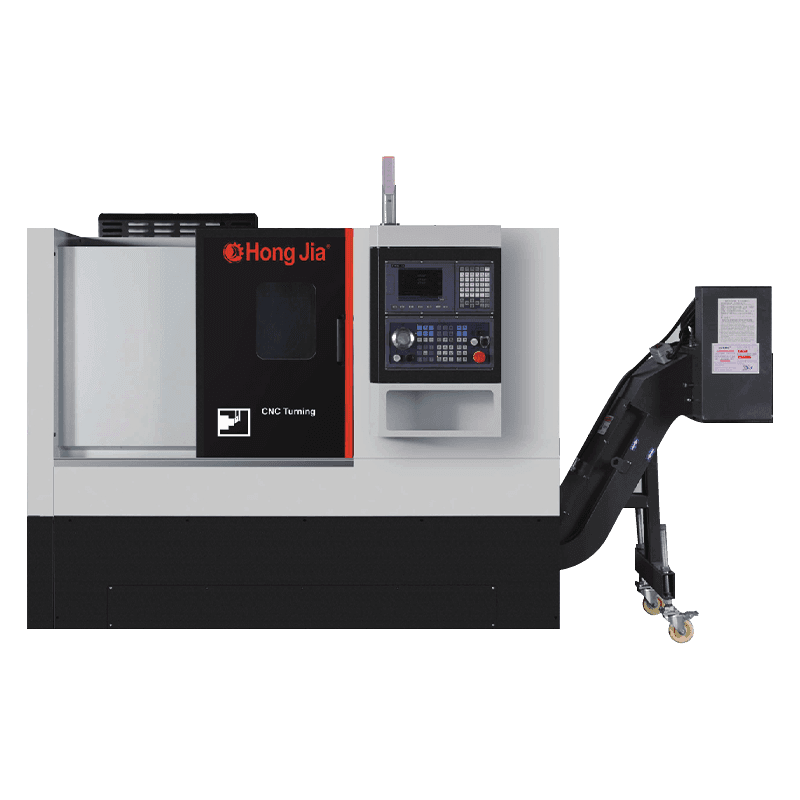
Don't hesitate to contact when you need us!
 Home / News / Industry News / Vertical Lathe vs. Horizontal Lathe: Which is better suited to your production needs?
 Vertical Lathe vs. Horizontal Lathe: Which is better suited to your production needs?
 2026.03.05
 Industry News
Choose a vertical lathe when machining large-diameter, short, heavy workpieces — typically those exceeding 800 mm in diameter or 500 kg in weight — where gravity assists chuck clamping and floor space is at a premium. Choose a horizontal lathe for long, slender workpieces, high-speed precision turning, and general-purpose production where workpiece length exceeds diameter by a ratio of 3:1 or greater. Neither machine is universally superior; the correct choice is determined by workpiece geometry, material weight, required tolerances, production volume, and shop floor constraints.
This guide provides a direct, data-driven comparison across every major selection criterion so production engineers, shop owners, and procurement managers can make a confident, cost-justified decision.
Content
- 1 Core Design Differences Between Vertical and Horizontal Lathes
- 2 Head-to-Head Comparison Across Key Production Criteria
- 3 Where Vertical Lathes Deliver a Clear Advantage
- 4 Where Horizontal Lathes Retain a Clear Advantage
- 5 Industry Application Map: Which Sectors Use Each Machine Type
- 6 CNC Vertical Lathes: Modern Capabilities and Productivity Features
- 7 Total Cost of Ownership: Making the Financial Case
- 8 Frequently Asked Questions About Vertical Lathes
- 8.1 Q1: What is the maximum workpiece size a vertical lathe can handle?
- 8.2 Q2: Can a vertical lathe perform the same operations as a horizontal lathe?
- 8.3 Q3: How is a workpiece loaded onto a vertical lathe?
- 8.4 Q4: What tolerances can a CNC vertical lathe achieve on large-diameter bores?
- 8.5 Q5: What are the key factors to evaluate when purchasing a vertical lathe?
- 8.6 Q6: Is it worth adding a vertical lathe to a shop that already has horizontal lathes?
Core Design Differences Between Vertical and Horizontal Lathes
The fundamental distinction between these two machine types is the orientation of the spindle axis — and this single design difference cascades into entirely different performance characteristics, workpiece suitability profiles, and operational requirements.
Vertical Lathe (VTL) — Design Principles
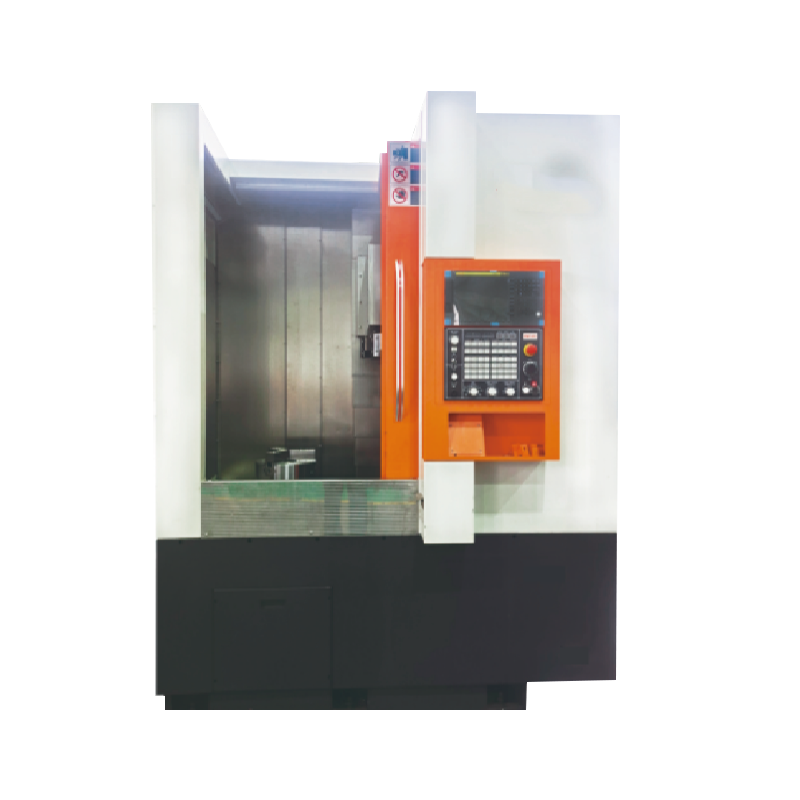
In a vertical lathe (also called a vertical turning lathe or vertical boring mill), the spindle axis is oriented vertically, with the workpiece mounted on a horizontal rotating table — much like a turntable. The cutting tool travels on a cross rail above the table. This configuration means gravity acts downward through the workpiece into the table and spindle, rather than sideways, making it inherently stable for large, heavy, or unbalanced parts. Vertical lathes are manufactured in table diameters ranging from 800 mm to over 25,000 mm for the largest industrial models used in power generation and shipbuilding.
Horizontal Lathe — Design Principles
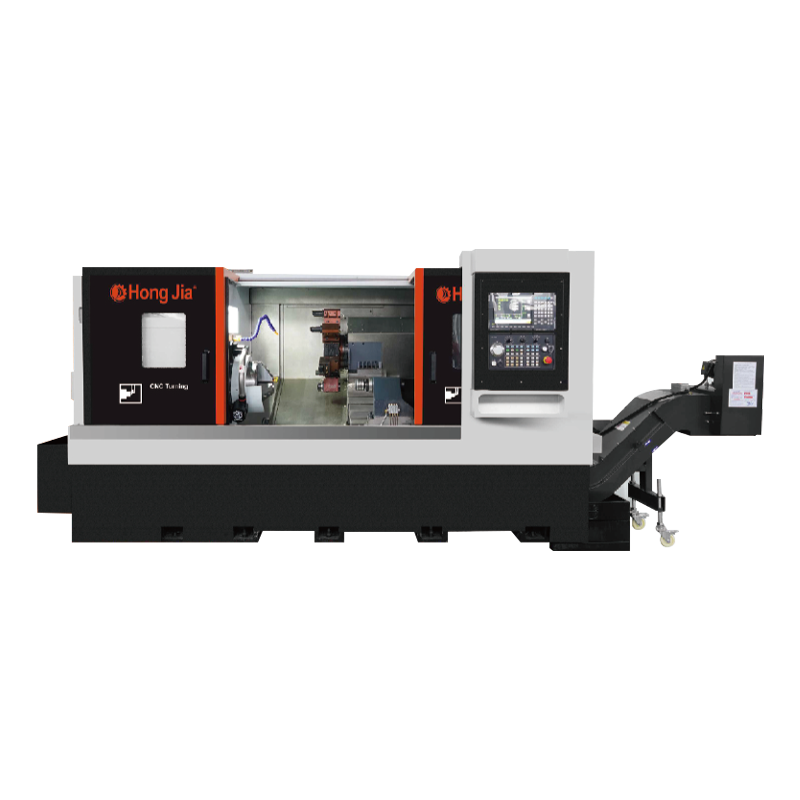
In a horizontal lathe, the spindle axis is horizontal, and the workpiece is clamped in a chuck or between centers along the machine's length. The cutting tool travels on a saddle and cross-slide along the bed. This layout is optimal for elongated workpieces — shafts, rods, bars, and cylinders — where the length-to-diameter ratio makes vertical mounting impractical. Horizontal lathes range from benchtop hobby models to heavy-duty floor lathes with swing diameters over 3,000 mm and bed lengths exceeding 20 meters for large shaft work.
Head-to-Head Comparison Across Key Production Criteria
The table below summarizes how vertical and horizontal lathes compare across the criteria that matter most in a real production decision.
| Selection Criterion | Vertical Lathe (VTL) | Horizontal Lathe | Better Choice |
|---|---|---|---|
| Workpiece Diameter Capacity | 800 mm – 25,000+ mm | 50 mm – 3,000 mm | VTL for large dia. |
| Workpiece Weight Handling | Up to 500,000+ kg | Up to ~50,000 kg | VTL |
| Long/Slender Workpiece Suitability | Poor (height limited) | Excellent (bed length) | Horizontal |
| Spindle Speed Range | 1 – 500 RPM (typical) | 10 – 6,000+ RPM | Horizontal for high speed |
| Clamping / Workholding Ease | Gravity-assisted, very stable | Requires tailstock or chuck | VTL for heavy parts |
| Floor Space Required | Compact footprint (vertical height) | Large floor area (bed length) | VTL (smaller footprint) |
| Operator Accessibility | Moderate (elevated tooling) | Excellent (front access) | Horizontal |
| Chip & Coolant Management | Chips fall away from cutting zone | Chips accumulate around workpiece | VTL |
| Dimensional Accuracy on Large Parts | Superior (gravity-centered) | Good (sag risk on heavy parts) | VTL for heavy parts |
| Initial Machine Cost | Higher (for comparable capacity) | Lower entry cost | Horizontal (entry level) |
Where Vertical Lathes Deliver a Clear Advantage
Vertical lathes are not simply larger versions of horizontal machines — they represent a fundamentally different approach to part support and cutting dynamics that makes them the only practical choice for specific production scenarios.
Large, Heavy, and Low-Height-to-Diameter Workpieces
When workpieces are wide relative to their height — flanges, rings, large gears, turbine discs, impellers, and pressure vessel heads — horizontal mounting requires extremely powerful chucks and creates bending forces on the spindle. Vertical mounting eliminates these bending moments entirely. A 10,000 kg turbine disc that would require specialized steady rests and custom fixturing on a horizontal lathe can be loaded directly onto a VTL table with a crane and secured with standard jaw arrangements, as gravity does the clamping work.
Industries where vertical lathes dominate include power generation (turbine casings, generator rotors), oil and gas (large valve bodies, wellhead components), mining (crusher rings, pulley shells), and heavy vehicle manufacturing (large brake drums, wheel hubs, differential housings).
Gravitational Stability and Reduced Deflection
On a horizontal lathe, heavy workpieces exert radial load on the spindle bearings, causing measurable deflection that degrades dimensional accuracy. Engineering data from major machine tool manufacturers shows that a 2,000 kg part on a horizontal lathe can produce 0.05–0.12 mm of spindle deflection at the chuck face — unacceptable for precision bores and faces. On a vertical lathe, the same load is purely axial through the spindle, producing deflection of less than 0.01 mm for equivalent machines.
Floor Space Efficiency in Heavy Fabrication Shops
A vertical lathe with a 3,000 mm table diameter occupies approximately 25–35 m² of floor space. A horizontal lathe capable of similar swing diameter would require a bed length of 6–8 meters and a total floor footprint of 60–80 m² — more than twice the area. In heavy industrial shops where floor space is expensive and crane coverage is a constraint, this difference is operationally significant.
Where Horizontal Lathes Retain a Clear Advantage
Despite the vertical lathe's strengths in heavy-part machining, horizontal lathes remain the dominant configuration for the majority of the world's turning operations — and for good reasons rooted in physics, versatility, and cost.
Long Shaft and Bar Work
Any workpiece where length significantly exceeds diameter — drive shafts, hydraulic cylinder rods, spindles, lead screws, axles, and pipe — must be machined on a horizontal lathe. Vertical lathes are limited by the practical ceiling height of the building and the structural challenge of supporting a tall, narrow workpiece against lateral cutting forces. A 6-meter drive shaft with a 150 mm diameter (40:1 L/D ratio) cannot be realistically machined on a VTL but is a routine horizontal lathe operation with steady rest support.
High-Speed Precision Turning
Horizontal CNC lathes routinely achieve spindle speeds of 3,000–6,000 RPM or higher, enabling efficient machining of small to medium parts in aluminum, brass, plastics, and light steel. Vertical lathes are mechanically constrained by table size and bearing load to much lower speeds — typically under 500 RPM for machines above 2,000 mm table diameter. For precision small-part production, screw machine work, or high-volume turned component manufacturing, horizontal lathes are incomparably more appropriate.
Between-Centers Turning and Taper Work
Horizontal lathes support workpieces between the headstock and tailstock centers, enabling precise taper turning, thread cutting over long lengths, and cylindrical grinding-quality turned surfaces. The between-centers configuration is physically impossible on a standard vertical lathe and requires specialized vertical machining center adaptations for any equivalent operation.
Lower Entry Cost and Broader Operator Skill Pool
A capable CNC horizontal turning center can be purchased for $30,000–$150,000 at the mid-range production level. Equivalent-capacity vertical lathes start at $80,000–$500,000 and escalate rapidly for large-table configurations. Additionally, the global population of trained CNC horizontal lathe operators far exceeds vertical lathe specialists, reducing recruitment and training costs for shops transitioning to or expanding horizontal turning capacity.
Industry Application Map: Which Sectors Use Each Machine Type
Understanding which industries standardize on which lathe type helps manufacturers benchmark their own needs against proven production practice.
| Industry Sector | Primary Workpieces | Preferred Machine | Typical Work Diameter |
|---|---|---|---|
| Power Generation | Turbine casings, generator end plates | Vertical Lathe | 1,500 – 8,000 mm |
| Oil & Gas | Valve bodies, wellhead flanges, risers | Both | 200 – 3,000 mm |
| Aerospace | Engine casings, landing gear, shafts | Both | 50 – 2,000 mm |
| Automotive | Brake drums, hubs, crankshafts | Horizontal (volume) | 50 – 600 mm |
| Shipbuilding | Propeller hubs, rudder stocks, stern frames | Vertical Lathe | 2,000 – 15,000 mm |
| Mining & Cement | Mill rings, crusher bodies, rotary kiln tyres | Vertical Lathe | 3,000 – 12,000 mm |
| General Precision Machining | Shafts, bushings, fittings, connectors | Horizontal | 10 – 500 mm |
CNC Vertical Lathes: Modern Capabilities and Productivity Features
Contemporary CNC vertical lathes have evolved far beyond the basic rotary table configuration of traditional vertical boring mills. Modern CNC VTLs incorporate features that dramatically improve throughput, accuracy, and operational flexibility.
- Live tooling and milling capability: Multi-tasking CNC vertical lathes combine turning with milling, drilling, and boring in a single setup — eliminating re-fixturing and reducing total cycle time by 30–50% for complex flanged or bored components.
- Automatic tool changers (ATC): Magazine-style ATCs with 12–40 tool positions enable unattended multi-operation machining on vertical lathes, reducing operator intervention for long-cycle heavy parts.
- In-process probing: Integrated touch probes measure workpiece dimensions during machining, enabling automatic tool offset compensation and achieving tolerances of ±0.005 mm on large bores without operator gauging interruption.
- Inverted (gantry) configurations: Some CNC vertical lathes use an inverted spindle design where the chuck faces downward, enabling finished parts to fall into a conveyor system — ideal for medium-size production volumes of disc-type parts.
- Thermal compensation systems: Critical for large-part accuracy, modern VTL controllers incorporate thermal error compensation algorithms that adjust axis positions in real-time to counteract spindle and structural thermal growth during extended machining cycles.
Total Cost of Ownership: Making the Financial Case
Machine purchase price is only one component of the true investment. The table below outlines the full cost structure for a mid-range CNC vertical lathe versus a comparable CNC horizontal turning center over a 10-year operational horizon.
| Cost Category | CNC Vertical Lathe (2,000mm) | CNC Horizontal Lathe (600mm swing) |
|---|---|---|
| Machine Purchase Price | $300,000 – $800,000 | $80,000 – $250,000 |
| Foundation & Installation | $15,000 – $60,000 | $5,000 – $20,000 |
| Annual Maintenance | $12,000 – $30,000 | $5,000 – $15,000 |
| Energy Consumption (annual) | $18,000 – $45,000 | $8,000 – $22,000 |
| Operator Skill Premium | $5,000 – $15,000/yr above standard | Standard CNC rates |
| Estimated 10-Year TCO | $670,000 – $1,750,000 | $215,000 – $620,000 |
The higher TCO of a vertical lathe is justified when workpiece size, weight, and accuracy requirements cannot be met by horizontal alternatives. For shops whose part mix genuinely requires VTL capability, the cost of not having one — in outsourcing fees, lead times, and quality limitations — typically exceeds the ownership cost within 3–5 years.
Frequently Asked Questions About Vertical Lathes
Q1: What is the maximum workpiece size a vertical lathe can handle?
The maximum workpiece diameter on a vertical lathe is determined by the table diameter and cross-rail clearance. The largest industrial vertical lathes — used in shipbuilding and power generation — have table diameters exceeding 25,000 mm (25 meters) and can accommodate workpieces weighing over 500 metric tons. More common production-grade CNC vertical lathes range from 800 mm to 6,000 mm table diameter, handling parts from 200 kg to 100,000 kg. Maximum turning height (the axial depth of cut along the vertical axis) typically ranges from 1,000 mm to 5,000 mm depending on cross-rail travel and column height.
Q2: Can a vertical lathe perform the same operations as a horizontal lathe?
A vertical lathe can perform facing, boring, turning of diameters and tapers, grooving, and threading — the same fundamental operations as a horizontal lathe — but within the geometric constraints of the workpiece being disc-like or at least wider than it is tall. Modern multi-tasking CNC vertical lathes additionally perform milling, drilling, and contour machining. However, vertical lathes cannot practically machine long slender workpieces (high L/D ratio shafts, bars, or rods), cannot perform between-centers turning, and are mechanically limited to much lower maximum spindle speeds than horizontal lathes of equivalent capacity — making them unsuitable for high-speed finish turning of small-diameter parts.
Q3: How is a workpiece loaded onto a vertical lathe?
Workpiece loading on vertical lathes almost always requires overhead crane or gantry crane handling, as the parts are typically too large and heavy for manual manipulation. The workpiece is lifted by crane, positioned over the rotating table, and lowered onto chuck jaws, magnetic chuck, or custom fixture. Jaw chucks on VTLs typically have 3 or 4 independent jaws that are manually or hydraulically adjusted to center and clamp the workpiece. For very large or irregular parts, custom-fabricated fixtures welded to the table faceplate are used. Proper alignment is confirmed by indicating the workpiece with a dial indicator while rotating the table at low speed before committing to the first cut.
Q4: What tolerances can a CNC vertical lathe achieve on large-diameter bores?
A well-maintained, thermally stabilized CNC vertical lathe operating with in-process probing and thermal compensation can achieve diameter tolerances of ±0.01–0.025 mm on large bores (500–2,000 mm diameter) under production conditions. For ultra-precision applications — such as large bearing housings or precision gear ring bores — single-point fine boring on a CNC VTL with vibration isolation and temperature-controlled coolant can achieve IT6 tolerance grades (typically ±0.005–0.012 mm) on diameters up to 1,500 mm. Surface finish of Ra 0.8–1.6 µm is routinely achievable with carbide tooling; Ra 0.4 µm is achievable with CBN inserts on appropriate materials.
Q5: What are the key factors to evaluate when purchasing a vertical lathe?
The most critical specification criteria when selecting a vertical lathe are: table diameter and maximum workpiece weight (must exceed your largest planned workpiece with margin); cross-rail travel and maximum turning height (axial dimension of your largest workpiece); spindle motor power and torque (heavy roughing cuts on cast iron or large steel forgings require 75–300 kW spindle power); table speed range and torque at low speed (large heavy parts need high torque at very low RPM); CNC controller brand and compatibility with your existing programming infrastructure; and service network — vertical lathes require specialized engineers for maintenance and repair, so manufacturer support coverage in your region is a critical operational risk factor.
Q6: Is it worth adding a vertical lathe to a shop that already has horizontal lathes?
Adding a vertical lathe to an existing horizontal lathe shop is strategically justified when: your customer base regularly requests large-diameter or heavy workpieces that you currently outsource (outsourcing fees of $5,000–$50,000 per job quickly build the business case); when you are losing bids on contracts that require VTL capability; or when a major customer in power, oil and gas, or heavy equipment manufacturing requires a qualified on-site VTL as part of their supplier approval process. Shops that add a mid-range CNC VTL (2,000–3,000 mm) typically report payback periods of 3–6 years when the machine runs two shifts against a realistic workload of large-part contracts. The machine also differentiates the shop competitively — VTL capability is far less commoditized than standard horizontal turning.
