
 English
 中文简体
中文简体 русский
 Español
 عربى
عربى
Don't hesitate to contact when you need us!
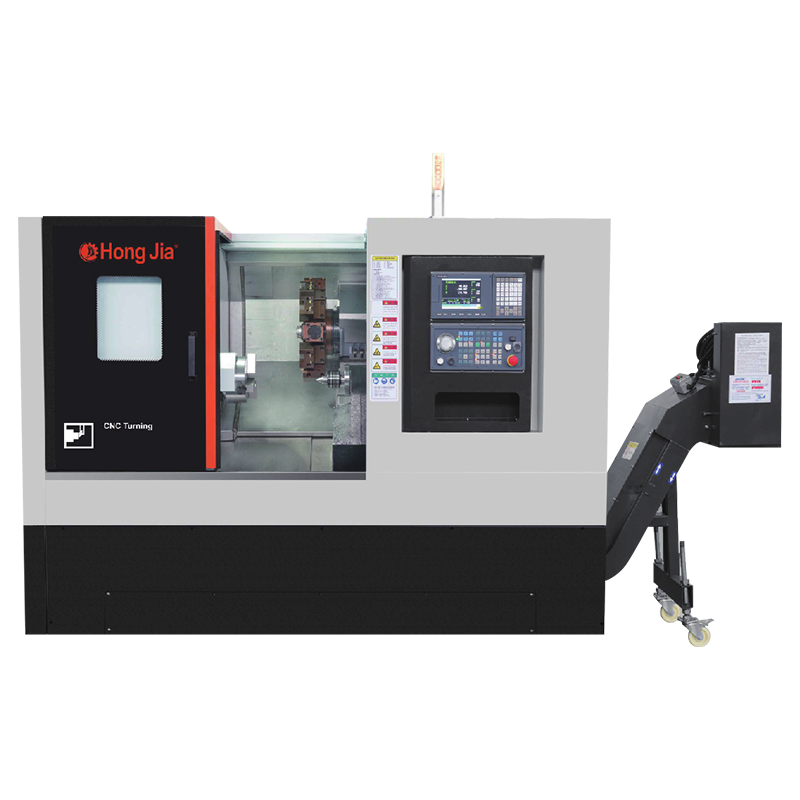
Common Problems and Solutions for Turret Inclined Bed CNC Lathes
 2026.02.27
 Industry News
Content
Most Turret Inclined Bed CNC Lathe Problems Are Preventable
The majority of issues in a Turret Inclined Bed CNC Lathe stem from improper maintenance, tool misalignment, lubrication failure, or programming errors. In fact, industry data shows that over 60% of machining downtime is caused by preventable mechanical or operational issues. By implementing structured maintenance, proper setup calibration, and optimized cutting parameters, manufacturers can reduce breakdown rates by up to 30–40%.
Below are the most common problems and practical solutions to ensure stable performance, high precision, and extended machine life.
Poor Machining Accuracy
Dimensional deviation and inconsistent tolerances are frequent complaints. Typical tolerance drift ranges from 0.01mm to 0.05mm when alignment issues occur.
Main Causes
- Turret misalignment
- Ball screw wear
- Thermal expansion during long runs
Solutions
- Recalibrate turret alignment every 3–6 months
- Check ball screw backlash (keep below 0.01mm)
- Allow machine warm-up time of 15–20 minutes before precision machining
Turret Indexing Failure
Turret indexing errors can halt production entirely. This problem often increases cycle time by 15–25% due to repeated positioning attempts.
Main Causes
- Hydraulic pressure instability
- Worn coupling or locking mechanism
- Electrical sensor malfunction
Solutions
- Maintain hydraulic pressure within manufacturer specifications (commonly 4–6 MPa)
- Inspect turret locking teeth regularly
- Test and replace proximity sensors when necessary
Excessive Vibration and Chatter
Vibration reduces surface finish quality and tool life. Surface roughness (Ra) may increase from 0.8μm to over 3.2μm if chatter persists.
| Cause | Impact | Solution |
|---|---|---|
| Loose tool holder | Surface defects | Retighten and balance tools |
| Improper cutting speed | Tool wear | Optimize RPM and feed rate |
| Workpiece instability | Dimensional error | Use tailstock or steady rest |
Lubrication System Failure
Insufficient lubrication accelerates guideway and ball screw wear. Machines without proper lubrication may experience component lifespan reduction of up to 50%.
Solutions
- Check oil levels weekly
- Clean clogged lubrication lines
- Replace filters every 6–12 months
Frequently Asked Questions (FAQ)
Why does my Turret Inclined Bed CNC Lathe lose accuracy over time?
Gradual wear of ball screws, guideways, and turret alignment typically causes accuracy drift.
How often should I calibrate the turret?
For high-precision operations, calibration every 3–6 months is recommended.
What causes vibration during cutting?
Improper cutting parameters, loose tooling, or unstable workpiece support are common causes.
How can I extend machine lifespan?
Follow preventive maintenance schedules, maintain lubrication, and avoid overloading the spindle.
Is warm-up necessary before operation?
Yes. A 15–20 minute warm-up reduces thermal expansion effects and improves dimensional stability.
What is the most common cause of downtime?
Preventable maintenance neglect accounts for the majority of unexpected downtime cases.
