
 English
 中文简体
中文简体 русский
 Español
 عربى
عربى
Don't hesitate to contact when you need us!
 Home / News / Industry News / How to Choose a Horizontal CNC Turning and Milling Machine (2026 Guide)
 How to Choose a Horizontal CNC Turning and Milling Machine (2026 Guide)
 2026.05.07
 Industry News
If you need to machine complex parts with turning, milling, drilling, and tapping in a single setup, a Horizontal Turn Mill Machine is the most efficient solution available today. The direct answer: choose based on your workpiece size, required axes, spindle type, and production volume—then match those to a machine's verified specs. This guide walks you through every factor that matters, backed by real data and practical examples.
Content
- 1 What Is a Horizontal CNC Turn Mill Center?
- 2 Understanding Machine Types: Which Configuration Fits Your Work?
- 3 Critical Specifications to Evaluate Before Buying
- 4 Axis Count: How Many Do You Actually Need?
- 5 Dual-Spindle Architecture: When and Why It Pays Off
- 6 High-Speed Electric Spindle: Advantages for Precision Applications
- 7 Evaluating Build Quality and Structural Integrity
- 8 Industry Applications: Matching Machine to Sector
- 9 A 5-Step Selection Process for Buyers
- 10 About Ningbo Hongjia CNC Technology Co., Ltd.
- 11 Frequently Asked Questions
What Is a Horizontal CNC Turn Mill Center?
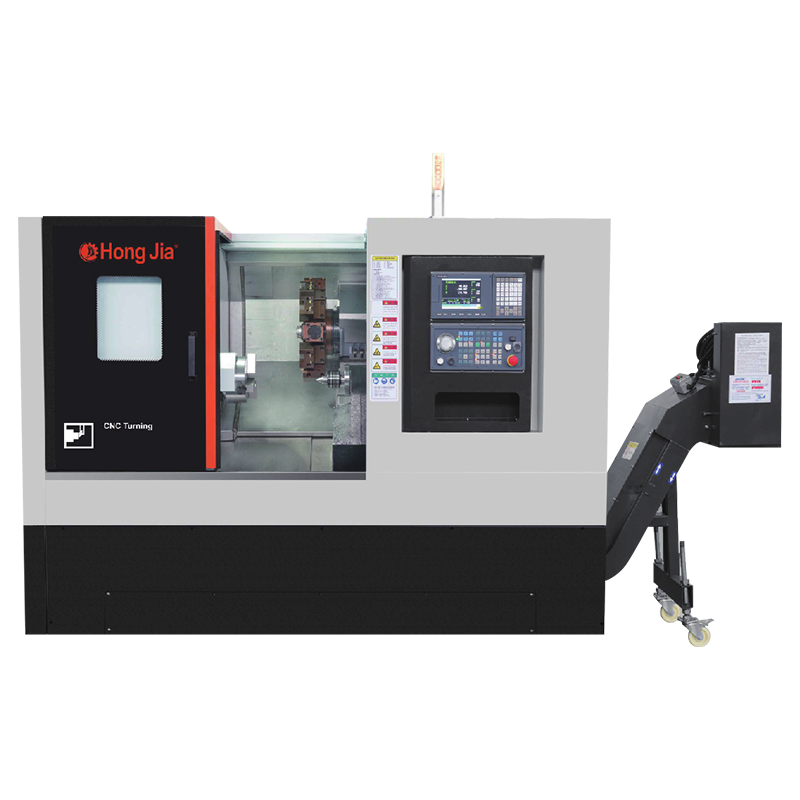
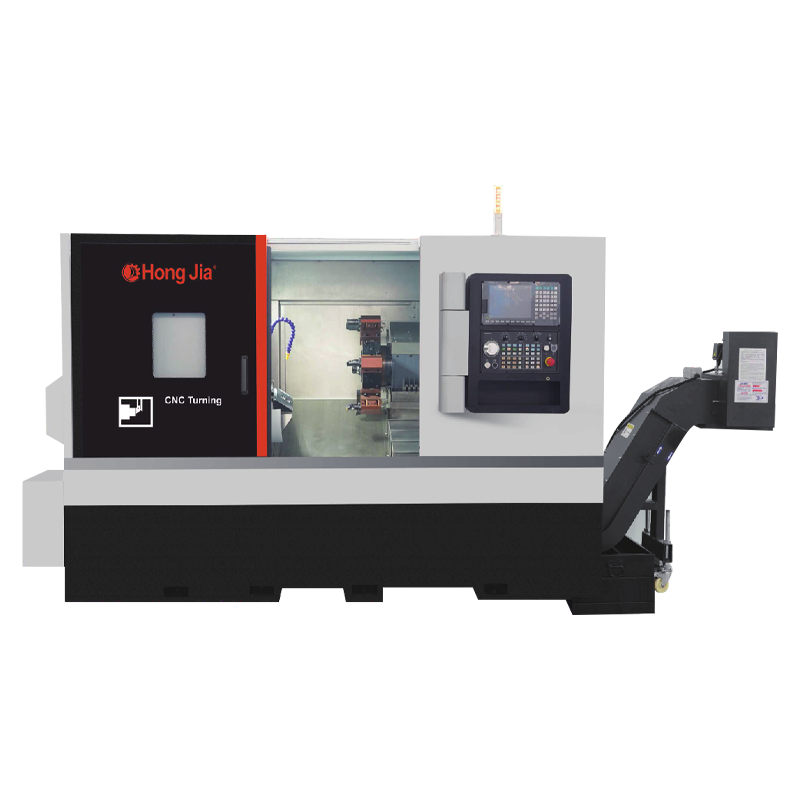
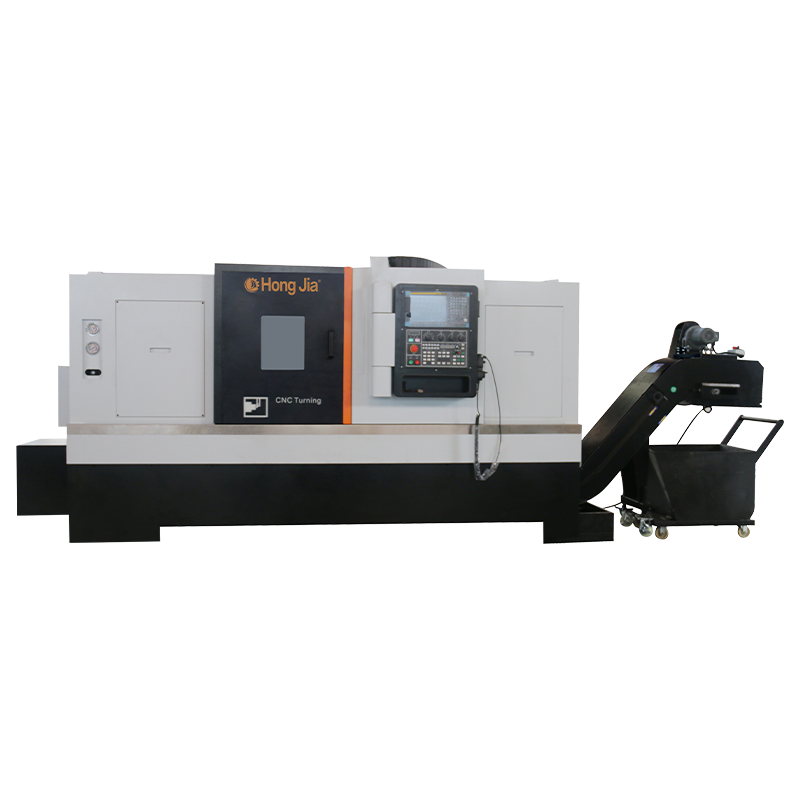
A CNC Turn Mill Center combines the functions of a CNC lathe and a machining center into one platform. The workpiece rotates as in conventional turning, while driven milling tools perform off-center, angular, and contour operations simultaneously. Horizontal configurations position the spindle axis parallel to the ground, which improves chip evacuation, supports heavier workpieces, and enables longer bar stock processing.
These machines are widely used in aerospace, automotive, hydraulics, medical device manufacturing, and energy sectors where complex geometries and tight tolerances (often ±0.005 mm or better) must be achieved at scale.
Key Functional Advantages Over Conventional Lathes
- Eliminates secondary setups — complete parts in one clamping
- Reduces fixture costs and inter-operation handling errors
- Supports simultaneous multi-axis interpolation for complex surfaces
- Higher throughput per floor space compared to standalone machines
- Compatible with automation and bar-feed systems for lights-out production
Understanding Machine Types: Which Configuration Fits Your Work?
Not all turn-mill machines are built the same. Selecting the correct configuration prevents costly mismatches between machine capability and part requirements.
| Machine Type | Axis Count | Best For | Typical Industries |
|---|---|---|---|
| Standard Turn Mill | 4-axis | Rotational parts with off-axis features | General manufacturing, automotive |
| Multi Axis CNC Turning Machine | 5-axis | Complex contoured geometries | Aerospace, medical implants |
| Dual-Spindle Turning And Milling Machine | 6-axis+ | Complete front/back machining in one cycle | High-volume precision parts |
| High-Speed Electric Spindle Turning And Milling Machine | 5–6 axis | Soft metals, thin-wall parts, fine finishes | Electronics, optics, dental |
For high-volume production of shaft-type parts under 200 mm diameter, a standard 4-axis or 5-axis configuration handles the majority of tasks efficiently. If your parts require full backside machining without re-clamping, the Dual-Spindle Joint Turning And Milling Machine architecture is the correct investment.
Critical Specifications to Evaluate Before Buying
Comparing machines by spec sheet alone is not enough—you need to understand what each parameter means for your actual workload.
Spindle Speed and Power
Main spindle speeds typically range from 4,000 to 6,000 RPM for heavy-duty industrial machines, while milling spindles on a High-Speed Precision Turning And Milling Machine can exceed 12,000 RPM. Electric spindle designs reduce heat generation and vibration, directly improving surface finish—Ra values below 0.8 µm are achievable on aluminum and stainless steel.
Axis Travel and Workpiece Capacity
Measure your largest planned workpiece first. Horizontal machines generally offer X-axis travel from 200 mm to over 1,000 mm, Z-axis from 500 mm to 2,000 mm. If you process shaft components regularly, confirm the distance between chuck face and tailstock quill travel—common oversights cause bottlenecks in production.
Tool Magazine Capacity
Complex parts often require 20–40 tools in a single program. Entry-level machines may offer 12-station turrets, while advanced Industrial Turn Mill Machines feature drum-type or chain-type tool magazines holding 40–80 tools. Insufficient magazine capacity forces mid-program manual tool changes, which negates cycle time savings.
CNC Controller Platform
The controller determines programming flexibility, simulation capability, and integration with CAM software. Mainstream platforms support simultaneous 5-axis interpolation, on-machine measurement cycles, and network connectivity for DNC (Direct Numerical Control) operation. Confirm your engineering team's familiarity with the control dialect before committing.
Thermal Compensation and Rigidity
For a Precision Turn Milling Machine holding tolerances under ±0.01 mm, thermal compensation systems are non-negotiable. Look for hydrostatic or heavily ribbed cast iron beds, automatic thermal correction algorithms, and temperature-controlled coolant systems. Machines without these features will drift as ambient temperature changes during a production shift.
Axis Count: How Many Do You Actually Need?
More axes increase capability but also programming complexity and machine cost. Here is a practical framework for matching axis count to part complexity:
- 3+1 axis (C-axis): Radial and face drilling/milling on rotational parts. Suitable for flanged connectors and valve bodies.
- 4-axis (C + Y-axis): Off-center milling, keyways, and flat surfaces. Covers the majority of industrial shaft components.
- 5-axis (C + Y + B-axis): Angled bores, compound angles, turbine blades, and complex medical parts. Essential for aerospace components.
- 6-axis+ with sub-spindle: Full part completion including backside features. The Dual-Spindle Turning And Milling Machine architecture passes parts automatically from main to sub-spindle, cutting cycle time by up to 40% compared to two-machine setups.
Estimated Cycle Time Reduction vs. Standalone Lathe + Machining Center Setup
4-axis Turn Mill
~20%
5-axis Turn Mill
~30%
Dual-Spindle Turn Mill
~40%
High-Speed Electric Spindle
~25%
Source: Comparative production case studies across precision manufacturing facilities, 2024–2025
Dual-Spindle Architecture: When and Why It Pays Off
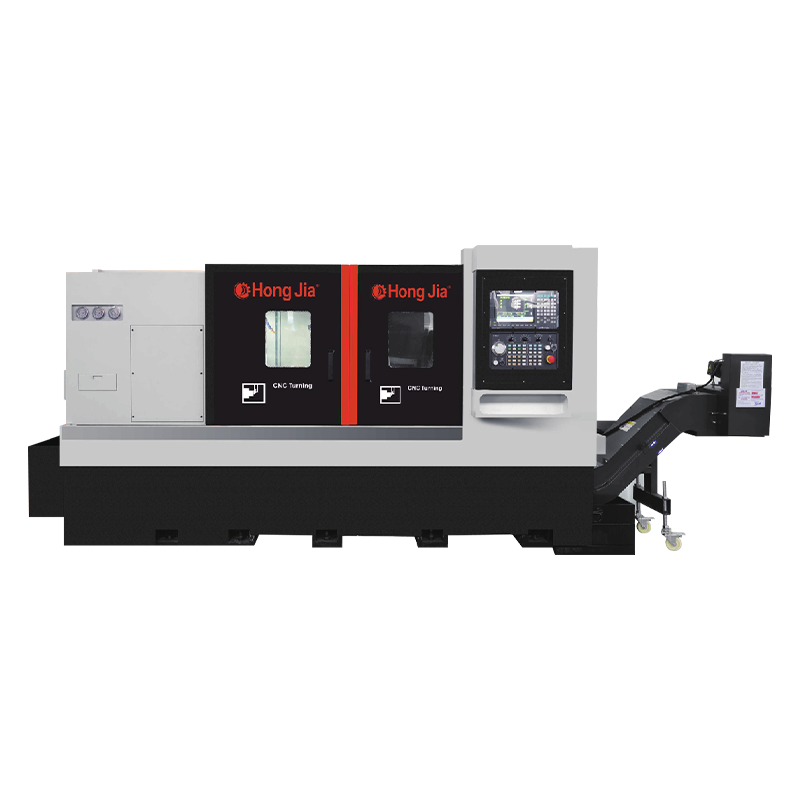
The Dual-Spindle Joint Turning And Milling Machine design is one of the most impactful innovations in modern precision manufacturing. It integrates a main spindle and a sub-spindle on the same horizontal axis. After the main spindle completes front-side operations, the sub-spindle picks up the part automatically—no operator, no re-fixture, no measurement risk.
This architecture is most valuable when:
- Parts require machined features on both ends (e.g., threaded shafts, connector bodies)
- Batch sizes exceed 500 pieces per production run
- Positional accuracy between front and back features must be within ±0.01 mm
- Labor cost reduction is a strategic priority (unmanned overnight runs become viable)
In a documented hydraulic fitting production case, switching from a separate turning and milling workflow to a dual-spindle turn-mill setup reduced per-part cycle time from 8.4 minutes to 5.1 minutes—a 39% improvement—while cutting scrap from 1.8% to 0.4% due to eliminated re-clamping errors.
High-Speed Electric Spindle: Advantages for Precision Applications
Conventional belt-driven or gear-driven spindles introduce mechanical play and vibration that limits surface quality at high RPM. A High-Speed Electric Spindle Turning And Milling Machine integrates the motor directly into the spindle housing, eliminating intermediate drive components.
Surface Roughness (Ra µm) vs. Milling Spindle Speed — Electric vs. Gear-Drive Spindle
Lower Ra = better surface finish. Electric spindle maintains quality at high RPM while gear-drive degrades.
Key benefits of electric spindle technology include spindle run-out below 0.002 mm, noise reduction of 8–12 dB compared to gear-driven systems, and spindle warm-up times reduced from 15 minutes to under 3 minutes. For industries requiring mirror-finish surfaces or tight bore tolerances, this technology is not optional—it is a baseline requirement.
Evaluating Build Quality and Structural Integrity
An Industrial Turn Mill Machine is a long-term capital investment, often expected to operate reliably for 10–20 years. Structural integrity determines not only initial accuracy but sustained performance over time.
What to Inspect in Machine Structure
- Bed material: High-quality Meehanite cast iron or polymer concrete composite. Polymer concrete beds absorb vibration 6–8x better than standard cast iron.
- Guideway type: Linear roller guides offer low friction and high speed; box guideways offer superior damping for heavy cutting. Many premium machines combine both.
- Spindle bearing preload: Look for angular contact bearings with adjustable preload, rated for the stated maximum RPM at continuous duty.
- Ball screw specification: C3 class or better for precision; direct coupling (no belt) between servo motor and ball screw eliminates backlash.
- Coolant and chip management: Through-spindle coolant at 40–70 bar pressure improves tool life by up to 30% in deep-hole operations.
Industry Applications: Matching Machine to Sector
Different sectors place different demands on turn-mill equipment. Understanding your industry's specific requirements prevents over-specification (wasted budget) or under-specification (performance gaps).
| Industry | Typical Part | Key Requirement | Recommended Config |
|---|---|---|---|
| Automotive | Crankshafts, hubs, fittings | High volume, consistent tolerance | Dual-Spindle 5-axis |
| Aerospace | Titanium structural parts | Complex geometry, traceability | 5-axis Multi Axis CNC Turning Machine |
| Medical | Bone screws, implants | Surface finish Ra ≤ 0.4 µm | High-Speed Electric Spindle |
| Hydraulics / Energy | Valve bodies, manifolds | Deep bores, cross-drillings | 5-axis with Y-axis + through coolant |
| Electronics | Connector housings, sockets | Micro-features, tight roundness | High-Speed Electric Spindle, small swing |
A 5-Step Selection Process for Buyers
Follow this structured approach to avoid common purchasing mistakes and align machine choice with actual production needs.
- Define your part envelope: List the 10 most complex parts you will machine. Identify max diameter, max length, smallest feature, tightest tolerance.
- Determine required axes: Map each feature to an axis. Off-center holes = Y-axis. Angled bores = B-axis. Backside features = sub-spindle.
- Establish production volume: Low volume (under 50 pcs/day) favors flexibility. High volume (over 500 pcs/day) favors cycle time and automation readiness.
- Request cutting tests: Any reputable manufacturer will perform a test cut on your material with your geometry. Measure results with your own instruments.
- Evaluate after-sales infrastructure: Confirm local service engineers, spare parts lead time under 48 hours, and remote diagnostics capability before finalizing.
About Ningbo Hongjia CNC Technology Co., Ltd.
Ningbo Hongjia CNC Technology Co., Ltd. started in 2006 and was formally established in 2018. Located in Qianwan New District, Ningbo City, Zhejiang Province—in the south wing of China's Yangtze River Delta Economic Zone—Hongjia CNC is an enterprise specializing in the research, development, production, and sales of CNC metal cutting equipment.
As a recognized China Dual-Spindle Turning and Milling Machine manufacturer and a wholesale supplier of High-Speed Electric Spindle Turning and Milling Machines, Hongjia CNC combines strong technical capability with deep industry experience. The company is committed to delivering advanced CNC solutions that meet the evolving demands of customers across automotive, aerospace, hydraulics, medical, and electronics sectors worldwide.
