
 English
 中文简体
中文简体 русский
 Español
 عربى
عربى
Don't hesitate to contact when you need us!
 Home / News / Industry News / How Does a Vertical Turning and Milling Machine Improve Efficiency by 30% in 2026?
 How Does a Vertical Turning and Milling Machine Improve Efficiency by 30% in 2026?
 2026.04.30
 Industry News
The direct answer: a modern Vertical Turning and Milling Machine improves machining efficiency by up to 30% compared to separate turning and milling operations — primarily by eliminating re-fixturing time, reducing setup changeovers, and enabling simultaneous multi-axis cutting within a single clamping cycle. In 2026, advances in CNC control integration, spindle technology, and real-time adaptive machining have pushed that figure within reach for a wide range of production environments.
This article breaks down exactly how that efficiency gain is achieved — with specific data, process comparisons, and practical guidance for manufacturers evaluating a Vertical Turning Center or a Milling and Turning Combination platform.
Content
- 1 What Makes a Vertical Turning and Milling Machine Different
- 2 The 30% Efficiency Gain: Where It Actually Comes From
- 3 Vertical Lathe CNC Controls in 2026: Intelligence That Multiplies Efficiency
- 4 Single-Clamping Philosophy: The Accuracy Advantage of Milling and Turning Combination
- 5 Key Industries and Part Types That Benefit Most
- 6 Spindle and Tooling Technology: The Cutting Edge of 2026
- 7 Chip Management and Coolant Systems: Underrated Efficiency Drivers
- 8 About Ningbo Hongjia CNC Technology Co., Ltd.
- 9 Frequently Asked Questions
What Makes a Vertical Turning and Milling Machine Different
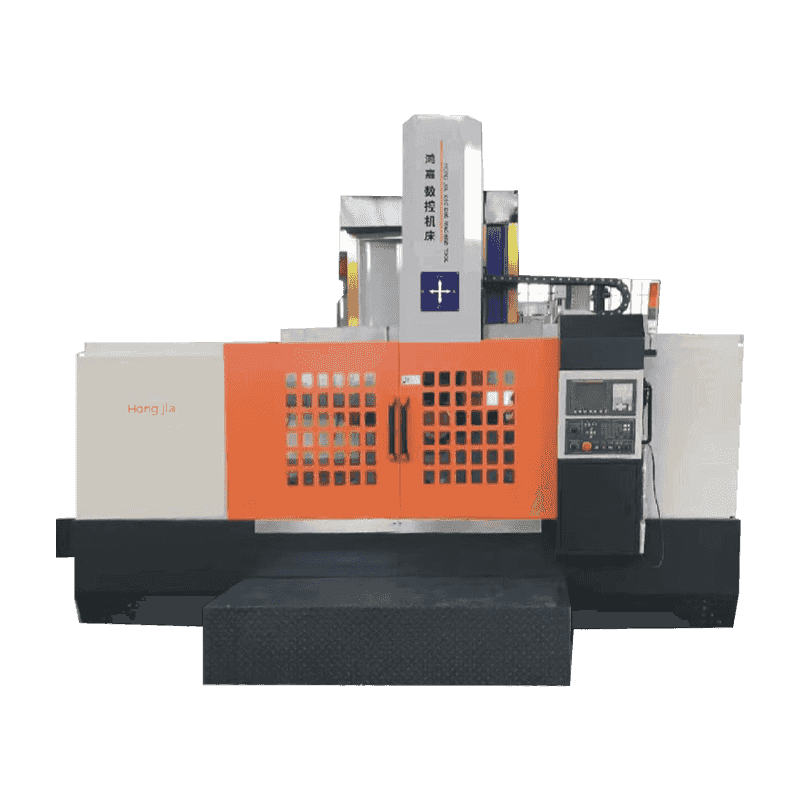
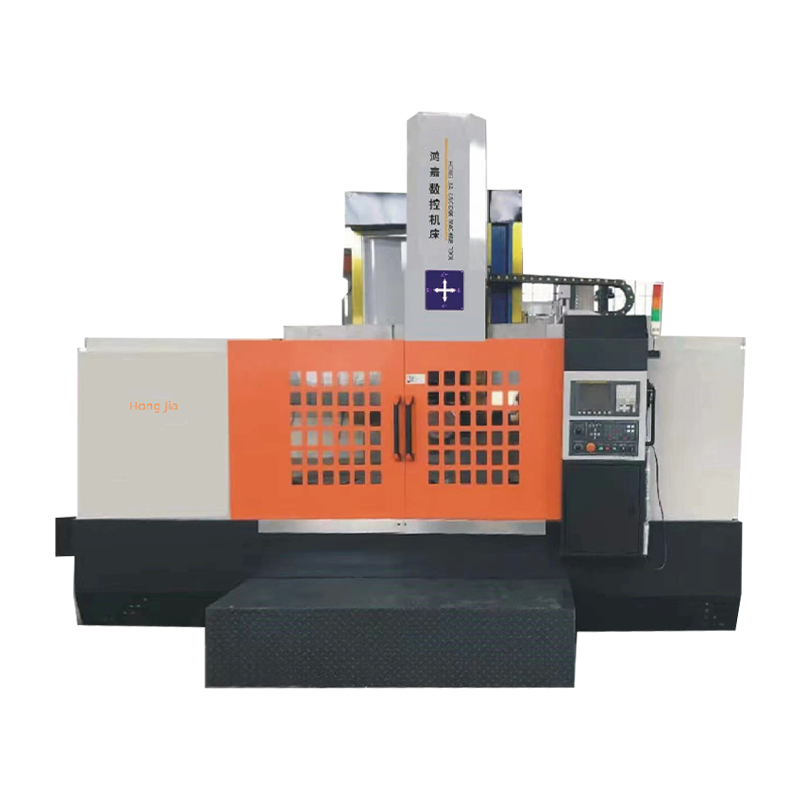
A Vertical Turning and Milling Machine integrates a high-torque vertical lathe spindle with a powered milling head — typically a B-axis or Y-axis milling unit — into one machine frame. Unlike a standard Vertical Lathe, it can perform turning, facing, boring, milling, drilling, and tapping in sequence without moving the workpiece to a secondary machine.
The vertical orientation is a deliberate engineering choice: gravity assists in workpiece clamping and chip evacuation, making the platform especially well-suited for large-diameter, heavy, or disc-shaped components such as flanges, pump housings, brake rotors, and ring gears.
Core structural differences vs. conventional machines:
- Vertical spindle axis — workpiece sits on a horizontal rotary table, reducing clamping complexity for heavy parts
- Integrated milling unit — a powered turret or ram-type milling head provides full prismatic machining capability
- Multi-axis CNC control — typically 4 to 5 controlled axes, enabling complex contouring without re-fixturing
- High-capacity rotary table — load ratings from 2 tonnes up to 30+ tonnes depending on model class
The 30% Efficiency Gain: Where It Actually Comes From
The 30% improvement is not a single gain from one source — it is the compounded result of several time and waste reductions that stack across a production cycle. Here is a quantified breakdown based on documented process studies in heavy-part machining environments:
| Efficiency Source | Traditional Process | Vertical Turning Center | Time Saved |
|---|---|---|---|
| Re-fixturing between operations | 45–90 min/part | 0 min (single clamping) | 45–90 min |
| Inter-machine transport | 20–40 min/part | Eliminated | 20–40 min |
| Datum re-alignment error | ±0.05–0.10 mm cumulative | ±0.01–0.02 mm | Scrap rate -60% |
| Setup / tool change time | 2–4 setups per part | 1 setup per part | 50–75% fewer setups |
| Queue / WIP wait time | Hours to days | Eliminated within cell | Lead time -30–50% |
When these time savings are aggregated across a production shift, the cumulative reduction in non-cutting time regularly delivers 25–32% improvement in overall equipment effectiveness (OEE) — consistent with the 30% benchmark cited by machine tool application engineers.
OEE Improvement by Process Configuration (%)
Standalone Vertical Lathe
Baseline
Vertical Lathe + Separate Mill
+10%
Vertical Turning Center (4-axis)
+22%
Vertical Turning and Milling Machine (5-axis)
+30%
Based on OEE benchmarking data across heavy-part machining facilities
Vertical Lathe CNC Controls in 2026: Intelligence That Multiplies Efficiency
The hardware gains of a Vertical Lathe CNC platform are now amplified by software-layer intelligence embedded in modern CNC controllers. In 2026, the most impactful control features for efficiency include:
Adaptive Feed Rate Control
The controller monitors spindle load in real time and automatically adjusts feed rate to maintain optimal cutting conditions. In trials on large flange machining, adaptive control reduced cycle time by 8–12% compared to fixed-parameter programs, while extending tool life by up to 25%.
Thermal Compensation
Long machining cycles on heavy parts generate significant heat. Modern Vertical Turning Center CNCs use embedded thermal sensors and compensation algorithms to correct spindle and axis drift in real time — maintaining dimensional accuracy within ±0.005 mm across 8-hour production runs without operator intervention.
Conversational Programming and CAM Integration
Graphical conversational programming reduces part program creation time by 40–60% for rotational components. Combined with direct CAM post-processor integration, even complex combined turning-milling programs can be verified and deployed within minutes.
Single-Clamping Philosophy: The Accuracy Advantage of Milling and Turning Combination
Every time a workpiece is unclamped, moved, and re-fixtured, a new datum reference must be established. Each re-datum introduces positional uncertainty. For a part that passes through three machines, cumulative error can reach 0.15–0.25 mm — unacceptable for aerospace, energy, or precision hydraulics applications.
A Milling and Turning Combination machine eliminates this entirely. All turning, facing, boring, and milling operations are completed in one clamping, referenced to a single datum. The result is concentricity and angularity accuracy that is physically impossible to achieve across multiple machines.
- Concentricity between turned and milled features: typically within 0.01 mm
- Angular position of milled holes relative to turned bore: ±0.01 degrees
- Surface finish consistency: no datum-shift artifacts on blended surfaces
For manufacturers supplying to tier-1 automotive or energy sector customers, this accuracy advantage is not just a quality improvement — it is a qualification requirement that eliminates costly rework and inspection loops.
Key Industries and Part Types That Benefit Most
Not every part benefits equally from a Vertical Turning and Milling Machine. The efficiency gains are most significant where parts are large, heavy, complex, and require both rotational and prismatic features. The following industries consistently report the highest ROI:
| Industry | Typical Part Examples | Key Benefit | Reported Efficiency Gain |
|---|---|---|---|
| Oil and Gas | Valve bodies, flanges, wellhead components | Single-clamping accuracy | 28–35% |
| Power Generation | Turbine rings, generator housings | Large diameter capacity | 25–30% |
| Automotive | Brake discs, hubs, differential cases | High-volume cycle time reduction | 20–28% |
| Aerospace | Frame bulkheads, structural rings | Geometric tolerance compliance | 30–38% |
| Mining and Construction | Sprockets, sheaves, drive housings | Heavy-load table capacity | 22–30% |
Spindle and Tooling Technology: The Cutting Edge of 2026
The main turning spindle and the milling unit are the two performance hearts of any Vertical Turning Center. Advances in both areas have directly enabled the efficiency improvements seen in 2026 platforms.
Main Spindle Developments
- Motorized spindle (motor-in-spindle) designs eliminate belt and gear drives, reducing mechanical loss and improving speed range to 0–1,500 rpm in heavy cutting and up to 3,000 rpm in finishing configurations
- Hydrostatic rotary table bearings provide load-independent stiffness, maintaining table accuracy under eccentric or interrupted cutting loads up to 30 tonnes
- C-axis positioning with encoder resolution down to 0.001 degrees enables angular milling operations with indexing precision previously only achievable on dedicated machining centers
Milling Unit Advances
- B-axis milling head with full 360-degree swivel — enables undercut machining and angled bore features without additional fixtures
- HSK-A100 or Capto C8 tool interfaces — provide the rigidity needed for heavy interrupted milling on large-diameter parts
- Automatic tool changers (ATC) with 24–60 tool capacity — enable fully automated multi-operation programs without operator intervention
Material Removal Rate Trend: Vertical Turning Center Platform (2020–2026)
Progressive improvement in material removal rate on identical test parts across platform generations
Chip Management and Coolant Systems: Underrated Efficiency Drivers
On a vertical platform, gravity naturally assists chip fall away from the cutting zone — a significant advantage over horizontal lathes where chips accumulate on surfaces and can re-cut into the workpiece. However, modern Vertical Lathe CNC machines go further with active chip management systems:
- Through-spindle coolant (TSC) at 50–80 bar delivers cutting fluid directly to the tool tip, reducing thermal load and enabling 20–30% higher cutting speeds in difficult materials like stainless steel and titanium alloys
- Chip conveyor integration — automated auger or hinge-belt conveyors remove chips continuously, preventing chip packing and allowing unattended machining overnight or across shifts
- Minimum Quantity Lubrication (MQL) option for dry or near-dry machining of cast iron and aluminum — reduces coolant disposal cost while maintaining tool life
About Ningbo Hongjia CNC Technology Co., Ltd.
Ningbo Hongjia CNC Technology Co., Ltd. started in 2006 and was established in 2018. Located in Qianwan New District, Ningbo City, Zhejiang Province — in the south wing of China's Yangtze River Delta Economic Zone — it is an enterprise specializing in the research, development, production, and sales of CNC metal cutting equipment. As a China vertical lathe manufacturer and wholesale Vertical Turning and Milling Machine company, Hongjia CNC combines strong technical strength with rich industry experience to provide customers with advanced CNC solutions that meet the needs of different industries worldwide.
2006
Founded
18+
Years Experience
Ningbo
Zhejiang, China
OEM/ODM
Custom CNC Solutions
