
 English
 中文简体
中文简体 русский
 Español
 عربى
عربى
Don't hesitate to contact when you need us!
Vertical Mill vs Horizontal Mill vs 5-Axis Mill: How to Choose
 2026.06.17
 Industry News
If you're deciding between a vertical mill, horizontal mill, or 5-axis mill, the core answer is this: your workpiece geometry, production volume, and tolerance requirements together determine the best platform. Vertical mills handle most standard 2.5D machining at the lowest entry cost; horizontal mills excel at high-volume, multi-face cutting with superior chip evacuation; and 5-axis mills are essential for complex contoured geometry that would otherwise require multiple repositioning steps. For facilities that also integrate turning operations, understanding how each milling platform pairs with a Horizontal CNC Turning and Milling Series or a Vertical Lathe Series machine is equally critical to achieving optimum throughput and part quality across the shop floor.
Content
- 1 Vertical Mills: The Entry Point and Everyday Workhorse
- 2 Horizontal Mills: Built for High-Volume, Multi-Face Production
- 3 5-Axis Mills: Maximum Geometric Freedom with Minimum Setups
- 4 Direct Comparison: Vertical vs. Horizontal vs. 5-Axis
- 5 Integrating Milling with CNC Turning: The Mill-Turn Advantage
- 6 Choosing the Right Platform: A Practical Decision Framework
- 7 Practical Workflow Example: Aerospace Titanium Bracket
- 8 Maintenance Considerations Differ by Platform
Vertical Mills: The Entry Point and Everyday Workhorse
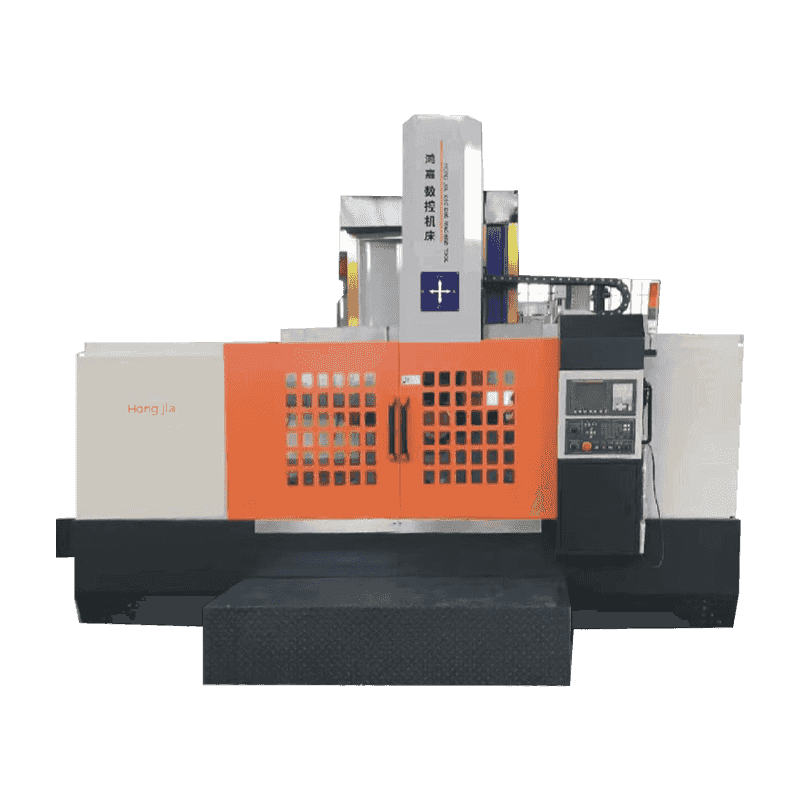
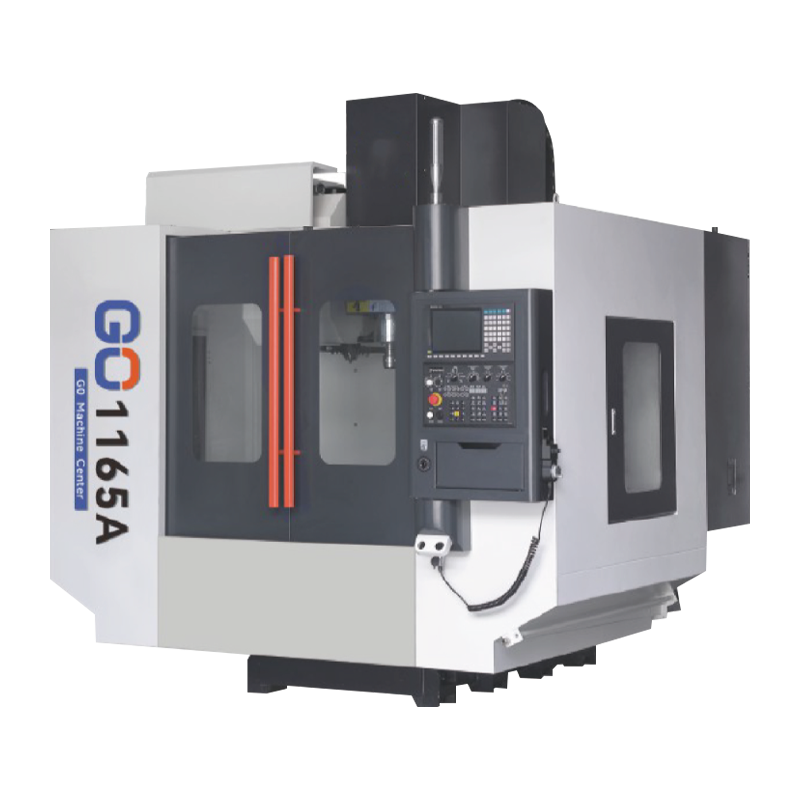
Vertical machining centers (VMCs) position the spindle perpendicular to the worktable — the cutting tool points straight down at the workpiece. This geometry is immediately intuitive for operators and programmers alike, and it maps cleanly onto the most common class of machined components: flat plates, housings, brackets, and cavity-based mold work accessed from a single face.
Key Strengths of Vertical Milling
- Lower initial capital investment compared to horizontal or 5-axis platforms, making them accessible to job shops and prototype departments
- Straightforward workholding for prismatic parts — vises, angle plates, and modular fixture systems all mount naturally on the horizontal table
- Direct operator line-of-sight to the cutting zone, simplifying setup verification and first-part inspection
- Broad compatibility with CAM post-processors, tooling catalogs, and operator training programs already established in most shops
- Compact footprint relative to machining envelope, making efficient use of floor space in smaller facilities
Where Vertical Mills Fall Short
The vertical orientation creates a fundamental chip evacuation challenge: gravity pulls chips back into the cutting zone rather than away from it. In deep-pocket aluminum or cast iron work, re-cutting chips accelerates tool wear, increases thermal load on the spindle, and degrades surface finish. High-pressure coolant systems mitigate this, but they add cost and complexity.
The deeper limitation is geometric coverage. A VMC in its standard configuration reaches only one face of a workpiece per setup. Any part requiring features on two or more faces must be re-fixtured, re-indicated, and re-probed between operations. Each repositioning introduces potential datum shift error — on tight-tolerance work, the cumulative effect of three or four setups can be the difference between a conforming part and a reject. Shops running mixed-complexity work often find a vertical mill most cost-effective for the 60–70% of parts that genuinely only need one face machined, while routing the remainder to horizontal or multi-axis platforms.
Horizontal Mills: Built for High-Volume, Multi-Face Production
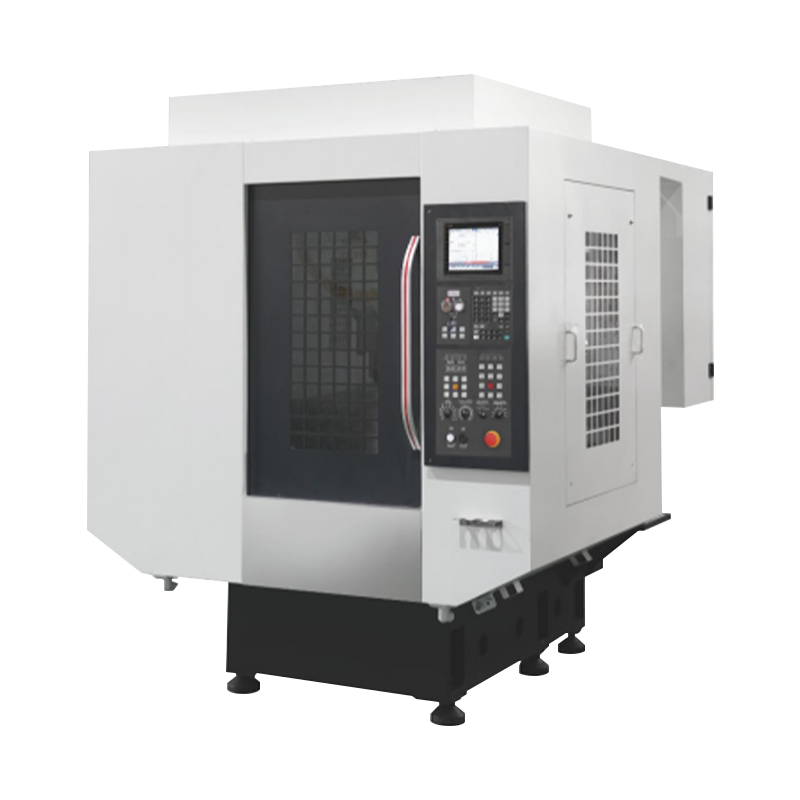
Horizontal machining centers (HMCs) orient the spindle parallel to the floor. The cutter approaches the workpiece from the side rather than from above, and this single structural difference unlocks two fundamental productivity advantages: natural chip evacuation and multi-face access through a rotary pallet or tombstone fixture system.
The Chip Evacuation Advantage
Because chips fall away from the spindle under gravity in horizontal machining, they drop clear of the cutting zone and collect in the machine base chip conveyor without re-engaging the tool. This is especially consequential in materials where chip management is difficult: cast iron, hardened steel, and titanium alloys all generate abrasive chips that cause accelerated flank wear when re-cut. Studies across production environments consistently show that chip re-cutting in deep-pocket operations can reduce tool life by 20–40%, a cost that compounds directly into tooling spend and unplanned downtime across high-volume runs.
Tombstone Fixturing and Pallet Changers
The horizontal spindle enables the use of tombstone fixtures — tall, multi-sided aluminum or steel pallets that hold multiple workpieces simultaneously on their faces. A single tombstone can present eight to sixteen parts to the spindle in one cycle, with the rotary B-axis indexing through each side without any operator intervention. Combined with an automatic pallet changer (APC), one pallet is being machined while an operator loads fresh blanks onto the second pallet — eliminating the non-cut time that represents a significant fraction of VMC cycle time in most production environments.
This workflow makes horizontal mills the standard equipment choice for automotive transmission components, hydraulic manifold bodies, aerospace structural frames, and any other prismatic part requiring machined features on three or four sides. Annual volumes of 5,000 to 500,000 parts — too many for job-shop VMC methods, not enough to justify dedicated transfer lines — are the horizontal mill's natural territory.
Trade-offs to Consider Before Specifying an HMC
- Larger machine footprint due to the pallet change envelope — floor space planning must account for operator access, chip conveyor routing, and coolant management
- Higher initial capital cost, typically 1.5–2.5× the price of an equivalent-travel VMC, which must be amortized across sufficient volume to justify the spend
- Tombstone fixture engineering adds pre-production lead time — custom fixturing for a new part family can take two to four weeks to design, fabricate, and qualify
- Spindle access for very tall or irregularly shaped workpieces can be more constrained than on a VMC, where the table drops to accommodate taller parts
5-Axis Mills: Maximum Geometric Freedom with Minimum Setups
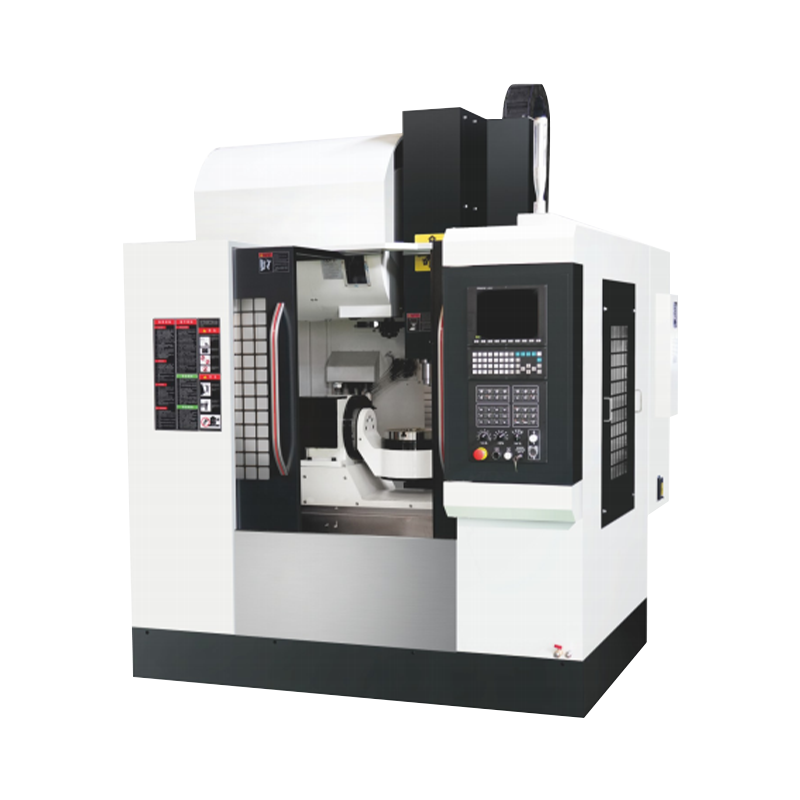
A 5-axis machining center adds two rotational axes — commonly A and B, or A and C — to the standard three linear axes. The result is a machine that can tilt and rotate the tool (or the workpiece) to approach any surface feature from virtually any angle within the machine's kinematic envelope. Parts that require four to six separate setups on a 3-axis VMC can be completed in a single clamping on a 5-axis center, eliminating datum re-registration error and compressing the total cycle time dramatically.
Applications Where 5-Axis Is Indispensable
- Impellers and turbine blades — twisted, multi-flute geometries with compound curvature that are physically inaccessible to a vertically positioned end mill
- Medical implants — bone plates, acetabular cups, and spinal fusion cages where complex curvature and tolerances tighter than ±0.02 mm are standard
- Aerospace structural parts — heavily pocketed aluminum frames with draft angles, compound flanges, and undercut relief features
- Injection mold cores and cavities — deep ribs, steep side walls, and undercut details that require tilted-tool positioning to reach without excessive tool length and associated deflection
- Marine and energy sector components — propeller blades, pump housings, and valve bodies with organic, non-prismatic geometry
Simultaneous 5-Axis vs. 3+2 Positional Machining
It's important to understand the distinction between two operating modes that both fall under the "5-axis" label. In 3+2 (positional) machining, the two rotational axes index the part or spindle to a fixed angle, then lock. The three linear axes perform the cutting cycle at that fixed orientation — no different from 3-axis cutting, just approached from a different angle. This mode is simpler to program, easier to verify with collision simulation, and sufficient for the majority of multi-face and undercut work.
In true simultaneous 5-axis machining, all five axes move in coordinated real time. This enables constant tool-normal surfacing on sculptured forms — the cutter always contacts the workpiece at the ideal angle for the tool geometry and the surface being cut. The practical benefits are shorter effective tool length (less deflection and vibration), better surface finish on curved features, and the ability to machine geometry that is simply impossible to approach in fixed-angle modes. Shops new to 5-axis typically begin with 3+2 capability and add full simultaneous machining as part complexity and operator skill develop.
Programming and Tooling Demands
5-axis work requires a capable CAM system with solid model-based toolpath generation, a carefully tuned post-processor matched to the specific machine kinematics, and collision-checking simulation that models the full machine envelope including fixtures and clamps. Tool selection also becomes more deliberate — shorter, stiffer tool assemblies in shrink-fit or hydraulic chuck holders are preferred over long-reach configurations in conventional collets, because runout and deflection become far more consequential when the spindle is operating at compound angles. Programming and setup time per part is substantially higher than for 3-axis work, so 5-axis delivers the best return on investment when part complexity genuinely demands it.
Direct Comparison: Vertical vs. Horizontal vs. 5-Axis
| Criterion | Vertical Mill | Horizontal Mill | 5-Axis Mill |
|---|---|---|---|
| Axes of motion | 3 (X, Y, Z) | 3 + rotary pallet (B) | 5 (X, Y, Z + 2 rotary) |
| Part complexity | Low to medium | Medium (prismatic) | High / sculptured |
| Setups per part (typical) | 1–4 | 1–2 (tombstone) | 1 |
| Chip evacuation | Poor in deep pockets | Excellent (gravity assist) | Variable by tilt angle |
| Relative capital cost | Low | Medium – High | High |
| Programming difficulty | Low | Medium | High |
| Optimal production volume | 1 – 500 pcs | 5,000 – 500,000 pcs | 1 – 5,000 pcs (complex) |
| Best production type | Job shop / low volume | High-volume batch | Complex / prototype |
Integrating Milling with CNC Turning: The Mill-Turn Advantage
No discussion of milling platform selection is complete without addressing how milling and turning capabilities intersect. The majority of machined components in automotive, energy, and general industrial production are rotationally symmetric — shafts, spindles, flanges, hubs — but also carry milled features such as keyways, cross-holes, flats, and bolt circles. Processing these parts on separate turning and milling machines means two setups, two fixtures, two opportunities for datum error, and double the queue and handling time.
Horizontal CNC Turning and Milling Series machines — commonly called mill-turn centers or turning centers with live tooling — combine a rotating spindle for turning operations with powered driven-tool stations in the turret for milling, drilling, and tapping. The workpiece rotates on the C-axis, and live tooling engages it radially or axially to cut milled features in the same setup. This single-setup capability has a direct impact on concentricity tolerances: features machined in the same clamping reference the same datum automatically, eliminating the re-chucking error that would otherwise accumulate between a turning operation and a subsequent milling operation.
When a Horizontal CNC Turning and Milling Series Machine Is the Right Choice
- Shaft-type parts carrying both turned diameters and milled features — a single setup eliminates re-chucking error and reduces cycle time by consolidating two operations
- Small-to-medium batch sizes where the overhead of operating separate turning and milling cells would consume more time in handling and setup than the machining itself
- Parts where concentricity between turned and milled features is tightly toleranced — achieving ±0.01 mm or better is far more reliable in a single setup than across two separate machines
- Components requiring sub-spindle operations, where the part is transferred from the main spindle to a second spindle to machine the opposite end without operator intervention
Vertical Lathe Series for Large-Diameter and Heavy Workpieces
For very large, heavy workpieces — large-diameter flanges, pressure vessel heads, ring gears, wind turbine hubs, and heavy bearing housings — the Vertical Lathe Series (vertical turning lathe, VTL) provides capabilities that neither a horizontal turning center nor a gantry mill can match efficiently. In a VTL, the workpiece rests on a large horizontal rotary table with the axis of rotation pointing upward. Gravity acts to seat the workpiece firmly against the table face, eliminating the deflection and jaw distortion that a horizontal chuck generates when gripping large, heavy blanks.
For workpieces exceeding 800 mm in diameter or 1,500 kg in mass, VTL-based machining is often the only practical option. Modern Vertical Lathe Series machines equipped with live milling heads extend their capability further still: radial milling of bolt holes, axial milling of keyways, and interpolated milling of curved pockets can all be performed without removing the workpiece from the table. Parts that would previously travel through three separate machines — a horizontal lathe, a radial drill, and a VMC — can now be completed in one clamping, compressing total lead time from days to hours.
Choosing the Right Platform: A Practical Decision Framework
Before specifying a machine type, systematically work through these five criteria. In most cases, two or three of them will clearly point toward one platform, while the others confirm or refine the choice.
- Part geometry and feature access: Count the number of faces requiring machined features, and note whether any features are undercut, blended, or otherwise inaccessible to a fixed-angle cutter. One accessible face → vertical mill. Two to four faces, all flat → horizontal mill or mill-turn. Sculptured, undercut, or blended surfaces → 5-axis mill.
- Annual production volume: Low-volume prototype or job shop work rarely justifies an HMC's pallet-change infrastructure or the programming overhead of a 5-axis center. High-volume production of prismatic parts almost always justifies the horizontal mill's capital cost within one to two years of operation. For complex low-volume parts, a 5-axis VMC delivers the best ROI.
- Workpiece size and mass: Parts exceeding 1,000 mm in diameter or 2,000 kg in mass are natural candidates for a Vertical Lathe Series rather than any horizontal platform. Attempting to machine very large, heavy workpieces on conventional horizontal equipment creates clamping distortion that cannot be corrected in post-machining inspection.
- Tolerance and surface finish requirements: When tight concentricity, runout, and multi-feature positional relationships are required — for example, a shaft bore concentric to an outer diameter within 0.005 mm — single-setup platforms (mill-turn or 5-axis) eliminate the inter-setup datum drift that accumulates on multi-machine workflows. The tighter the tolerance, the stronger the case for single-clamping solutions.
- Operator skill and programming resource: 5-axis and mill-turn platforms demand significantly higher CAM proficiency, post-processor expertise, and setup skill than a standard VMC. Before committing to a more complex platform, honestly assess training needs and lead time. A well-utilized VMC operated by an expert programmer consistently outperforms a poorly utilized 5-axis center operated by an undertrained team.
Practical Workflow Example: Aerospace Titanium Bracket
A concrete example makes the platform selection logic tangible. Consider a titanium aerospace bracket with six machined faces, three cross-bored holes, four blended fillet radii on the outer contour, and a positional tolerance of ±0.015 mm between the main bore and four mounting hole patterns.
Machined on a vertical mill alone, this part requires six separate setups. Each re-fixturing cycle takes 20–40 minutes of setup and indicate-in time, and each introduces potential datum shift. Over six setups, cumulative positional error can easily exceed the ±0.015 mm tolerance, requiring part scrapping or rework. Total elapsed time from blank to finished part: 12–18 hours including queue, setup, and machining.
On a horizontal mill with a tombstone fixture, the same part completes in two setups — one for the primary face cluster, one re-mount for the remaining two faces. Setup time drops to under one hour total, and positional accuracy improves significantly because fewer datum transfers occur. Total elapsed time: 6–8 hours.
On a full 5-axis machining center, the bracket completes in a single clamping — eliminating five re-fixturing cycles entirely. All feature-to-feature positional relationships are machined from one datum, and the blended fillets are produced by simultaneous 5-axis toolpaths that a 3-axis machine cannot replicate without expensive form tools. Total elapsed time: 3–5 hours. For shops producing this bracket in quantities above 500 per month, the horizontal mill's pallet automation offers superior throughput and lower per-part cost. For quantities below 50 — prototype and qualification builds — the 5-axis center's setup economy and single-datum accuracy make it the clear choice.
Maintenance Considerations Differ by Platform
Machine selection is not only a productivity decision — it is also a maintenance commitment. Understanding the distinct maintenance demands of each platform is essential for realistic total cost of ownership planning.
Vertical Mill Maintenance Priorities
- Spindle bearing condition monitoring: check for thermal rise, vibration signature changes, and runout at scheduled intervals; a degraded spindle bearing shows in surface finish before it fails catastrophically
- Way lubrication systems: linear guideways and ballscrews require consistent lubrication delivery; blocked lube lines are a leading cause of premature ballscrew wear on VMCs
- Coolant management: chip accumulation in the sump and coolant tank degrades pH balance and promotes bacterial growth, which accelerates rust on the machine interior and causes odor problems
Horizontal Mill and Mill-Turn Maintenance Priorities
- Pallet changer mechanisms require periodic inspection of clamping actuators, locating pins, and drive components; wear in these elements causes pallet positioning repeatability to degrade gradually
- Chip conveyor systems on horizontal mills carry significantly higher chip volume than VMCs and require daily inspection and cleaning to prevent blockages that can contaminate the coolant circuit
- On Horizontal CNC Turning and Milling Series machines, live tooling turret stations require periodic inspection of the driven coupling interfaces and bearing condition within each powered station
5-Axis and Vertical Lathe Series Maintenance Priorities
- Rotary axis drives — worm gears, direct-drive torque motors, or roller cam mechanisms — require backlash and pre-load verification at scheduled intervals to maintain the angular accuracy on which 5-axis precision depends
- On Vertical Lathe Series machines, the large rotary table bearing and clamping system are the highest-consequence components: table runout should be checked with a precision indicator as part of every scheduled maintenance cycle
- Thermal compensation systems on precision 5-axis and VTL platforms rely on sensor networks that must be verified calibrated; a drifted temperature sensor will produce incorrect compensation offsets that degrade part accuracy without triggering an obvious alarm
Across all platform types, the most cost-effective maintenance strategy is condition-based monitoring combined with a fixed-interval lubrication and inspection schedule. Deferring maintenance to reduce downtime in the short term consistently produces larger, more disruptive unplanned stoppages. For high-utilization machines in production environments, tracking spindle hours, axis travel distance, and thermal cycle count provides a data foundation for predicting component service intervals rather than reacting to failures.
