
 English
 中文简体
中文简体 русский
 Español
 عربى
عربى
Don't hesitate to contact when you need us!
Does a high speed drilling center need cleaning?
 2025.11.05
 Industry News
Content
1. Why must a high speed drilling center be cleaned?
(1) To ensure machining accuracy
Chips and Dust: During machining, metal chips (iron chips, aluminum chips, etc.) and dust generated by a high-speed drilling center can seep into precision components such as guideways, lead screws, and bearings. These hard particles act like abrasives, accelerating component wear and leading to decreased positioning accuracy and machining errors.
Spindle coolant: If shavings accumulate at the spindle nose or around the tool holder, it will affect the tool holder's clamping accuracy and repeatability, and in severe cases, may cause tool wobbling, damaging the spindle and workpiece.
(2) To protect core components
Guide rails and lead screws: These are the "skeleton" and "nerves" of the equipment. Accumulated shavings and dirt can scratch the guide rail surface, clog the lead screw nut, causing unstable movement, abnormal noise, or even jamming.
Spindle: The high-speed spindle is the most expensive heart of the equipment. Metal filings and oil can clog the cooling air or oil passages around the spindle, causing it to overheat, lose accuracy, or even burn out.
Sensors and components: Components such as grating rulers, limit switches, and tool detection probes on the equipment are highly sensitive to contamination. Covering them with metal filings or oil can cause signal malfunctions, leading to false alarms or shutdowns.
(3) Maintaining Cooling System Efficiency
Coolant (cutting fluid) mixes with metal filings and oil to form a viscous sludge. This sludge can clog the coolant filtration system and delivery pipes, resulting in poor cooling, increased workpiece and tool temperatures, and impacting machining quality and tool life. Deteriorated coolant can also easily breed bacteria and produce an unpleasant odor.
(4) Ensuring Production Safety
Accumulated oil and chips on the ground pose a significant safety hazard, easily causing personnel to slip and fall.
Long chips wrapped around the spindle or leadscrew can be flung out during high-speed rotation, which is extremely dangerous.
Excessive dust inside the electrical control cabinet can cause short circuits or even fires.
(5) Improve Equipment Stability and Service Life
A clean piece of equipment, with its mechanical and electrical components operating at their optimal condition, will significantly reduce the failure rate, thereby minimizing downtime, increasing production efficiency, and maximizing the equipment's service life.
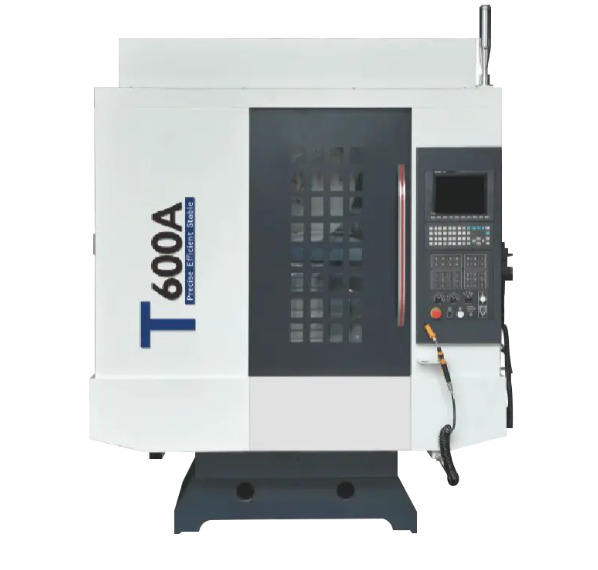
2. How to Properly Clean a High-Speed Drilling Center?
Principles: Regular, Timely, and Standardized.
(1) Daily Cleaning (After Each Shift)
Clean the worktable and fixtures: Use a brush and air gun to remove major chips from the worktable, fixtures, and workpieces.
Clean the tool magazine and tool changer: Inspect and remove chips from the tool magazine and spindle taper hole.
Clean the exterior of the equipment: Wipe the doors, windows, and control panel, and remove chips and oil stains from the exterior of the machine.
Check the coolant: Check the coolant level and concentration, and add or adjust as necessary.
Empty the chip conveyor: If the equipment is equipped with an automatic chip conveyor, ensure it is working properly and empty the chip collection cart.
(2) Weekly/Regular Cleaning
Comprehensive Internal Cleaning: Turn off the main power supply to the equipment. Use a vacuum cleaner, scraper, whetstone, etc., to carefully clean the bottom of the workbench, guide rail guards, lead screws, linear guides, and other hard-to-reach areas of chips and sludge.
Clean the Coolant Tank: Regularly clean the floating oil and settled metal sludge from the coolant tank. Replace all coolant if necessary.
Clean the Filter System: Clean or replace the filter elements of the coolant filter and the air source treatment unit (filter, pressure reducing valve, oil mist lubricator).
Inspect and Clean the Electrical Cabinet: Ensure the power is completely off and that this is done by a qualified professional. Open the electrical cabinet and gently blow away dust with a low-pressure dry air gun. Do not wipe with a damp cloth.
(3) Precautions During Cleaning
Safety First: Always turn off the main power supply to the equipment before cleaning to prevent accidental triggering that could cause personal injury or equipment damage.
Proper Use of the Air Gun: The air pressure should not be too high to avoid blowing chips and dust into more delicate sealed structures. Do not blow directly onto guide rails, lead screws, linear encoders, bearing seals, or other components at close range, as this may damage the seals or allow contaminants to enter.
Use appropriate tools: Use professional scrapers, copper brushes, non-woven fabrics, etc., and avoid using sharp or hard tools to scratch the equipment surface.
Avoid liquid splashes: Do not splash coolant or cleaning agents onto electrical components, motors, switches, and sensors during cleaning.
