
 English
 中文简体
中文简体 русский
 Español
 عربى
عربى
Don't hesitate to contact when you need us!
Horizontal CNC Machine Guide: How It Works, Benefits & Uses
 2026.08.19
 Industry News
Content
- 1 What Is a Horizontal CNC Machine and Why It Matters
- 2 How a Horizontal CNC Machine Works
- 3 Horizontal vs. Vertical CNC Machines: Where Horizontal Wins
- 4 Horizontal CNC Turning and Milling in One Setup
- 5 Industries and Parts Best Suited to Horizontal CNC Machining
- 6 What to Check When Comparing Horizontal CNC Machine Specifications
- 7 Practical Considerations Before Investing
- 8 Horizontal CNC Turning and Milling Series From Hongjia CNC
- 9 Frequently Asked Questions About Horizontal CNC Machines
What Is a Horizontal CNC Machine and Why It Matters
A horizontal CNC machine is a machining center whose spindle runs parallel to the ground, cutting into the workpiece from the side rather than from above. This single design choice changes almost everything about how a shop runs: chips fall away by gravity instead of piling on the table, tool changes and pallet swaps happen without stopping production, and complex parts can often be finished in one setup instead of several.
For manufacturers producing medium to high volumes of complex metal components, a horizontal CNC machine is generally the more productive choice over a vertical machining center, particularly when a part needs multiple faces machined or when turning and milling operations must be combined on the same workpiece.
How a Horizontal CNC Machine Works
Unlike a vertical machining center, where the tool moves down into the workpiece, a horizontal CNC machine positions the spindle so that the cutting tool approaches the part from the side. The workpiece is typically clamped to a rotary table or tombstone fixture, which allows several sides of the part to be machined without unclamping and repositioning it by hand.
The Rotary B-Axis Advantage
Most horizontal CNC machines include a fourth controlled axis, the B-axis, which rotates the workpiece around a vertical centerline. Combined with the standard X, Y, and Z axes, this lets the machine reach multiple faces of a part in a single program, cutting down the number of manual setups a part needs to reach final dimensions.
Gravity-Assisted Chip Evacuation
Because the spindle sits horizontally, chips generated during heavy cutting simply drop away from the tool and part instead of collecting on top of the workpiece. This keeps the cutting zone clear during long unattended runs and reduces the risk of chip re-cutting, which can damage surface finish and shorten tool life.
Horizontal vs. Vertical CNC Machines: Where Horizontal Wins
Industry sources consistently point to speed and multi-face access as the clearest advantages of horizontal machining. Horizontal CNC mills can run up to three to four times faster than comparable vertical machines on certain operations, largely because of better chip clearance and more efficient tool paths, while also delivering longer tool life and improved surface finish on demanding cuts.
| Characteristic | Horizontal CNC Machine | Vertical CNC Machine |
|---|---|---|
| Chip removal | Falls away by gravity | Requires airflow or clearing |
| Setups per part | Often one, using B-axis rotation | Multiple, for each face |
| Best suited for | High-volume, complex parts | Low to medium volume, simple parts |
| Operator visibility | Limited during cutting | Direct line of sight |
Horizontal CNC Turning and Milling in One Setup
One of the strongest arguments for a modern horizontal CNC machine is the ability to combine turning and milling on the same platform. Instead of moving a part between a lathe and a machining center, a horizontal turning and milling machine holds the workpiece in a single fixture while a live spindle performs rotational turning passes and a separate milling head handles flats, slots, holes, and contours.
This matters most for shafts, flanges, and other rotationally symmetric parts that also need off-axis features like keyways, cross-holes, or mounting faces. Cutting turning and milling operations into one program removes the repositioning error that comes from moving a part between separate machines, and it shortens overall cycle time since there is no wait for a second setup, fixture change, or re-zeroing of the part.
- The raw stock is loaded and clamped once in the horizontal turning and milling machine's chuck or fixture.
- Turning operations shape the outer diameter, tapers, and grooves using the rotating spindle.
- The milling head engages to cut flats, slots, drilled holes, or threaded features without unclamping the part.
- The B-axis or rotary table indexes the part as needed to reach additional faces in the same cycle.
- The finished part is unloaded with all critical dimensions already verified relative to a single reference.
Industries and Parts Best Suited to Horizontal CNC Machining
Horizontal machining centers have long been standard equipment in industries that demand both high output and tight tolerances on complex geometry.
- Automotive components such as engine blocks, cylinder heads, transmission housings, and crankshafts.
- Aerospace structural parts and fittings that require multi-face accuracy with minimal setup variation.
- Hydraulic and pneumatic components, including valve bodies and manifolds with intersecting bores.
- Heavy machinery shafts, flanges, and gear blanks that combine rotational turning with off-axis milling features.
- Medical and precision instrument components where repeatable multi-face tolerances are critical.
What to Check When Comparing Horizontal CNC Machine Specifications
Not every horizontal CNC machine is built for the same job. Matching machine specifications to the actual parts being produced avoids paying for capacity that will sit unused, or worse, buying a machine that cannot hold tolerance on the heaviest parts in the mix.
Spindle Power and Torque
Heavier roughing cuts on cast iron or steel components demand higher spindle torque. A machine sized for light aluminum parts will struggle, and often overheat, if pushed into deep steel cuts on a regular production schedule.
Automatic Tool Changer Capacity
Complex parts with many operations benefit from a larger automatic tool changer, since it reduces manual tool swaps and keeps the machine cutting rather than waiting on an operator.
Pallet or Tombstone Automation
Pallet changers and tombstone fixtures let one part be machined while the next is being loaded, which is a major reason horizontal CNC machines are favored for continuous, high-volume production runs.
Practical Considerations Before Investing
A horizontal CNC machine typically costs more upfront than a comparable vertical machine and requires a larger floor footprint to accommodate the tombstone or pallet system. It also demands more programming expertise to fully exploit multi-axis, multi-face cycles, since a poorly written program can leave the added capability unused.
These trade-offs are usually justified once production volume rises past the point where repeated manual setups on a vertical machine start eating into throughput. For shops running batch sizes in the hundreds or thousands of complex parts, the reduced cycle time and fewer setups typically offset the higher initial investment within a reasonable payback period.
Horizontal CNC Turning and Milling Series From Hongjia CNC
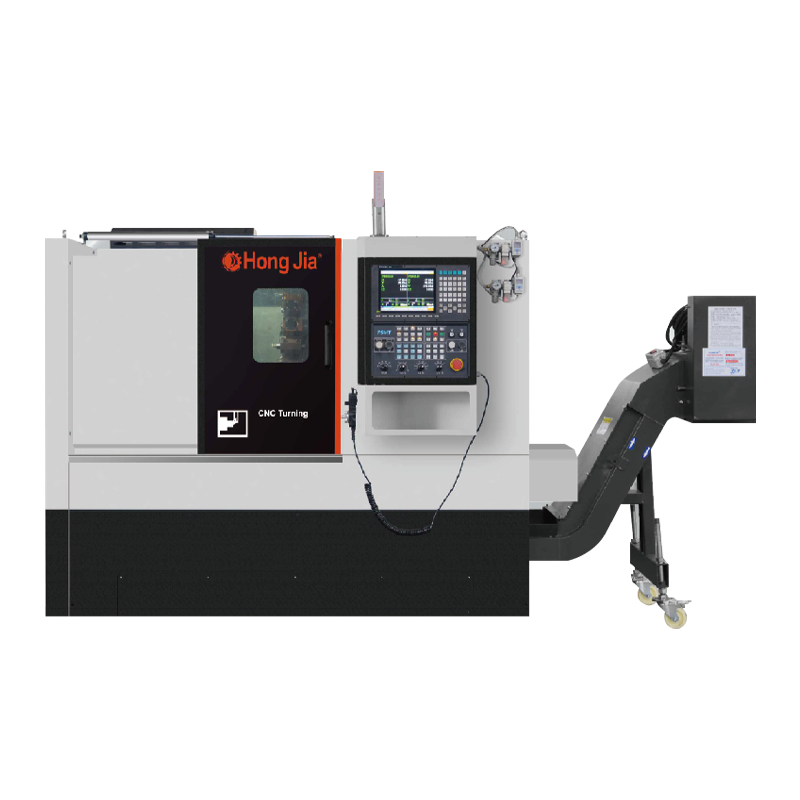
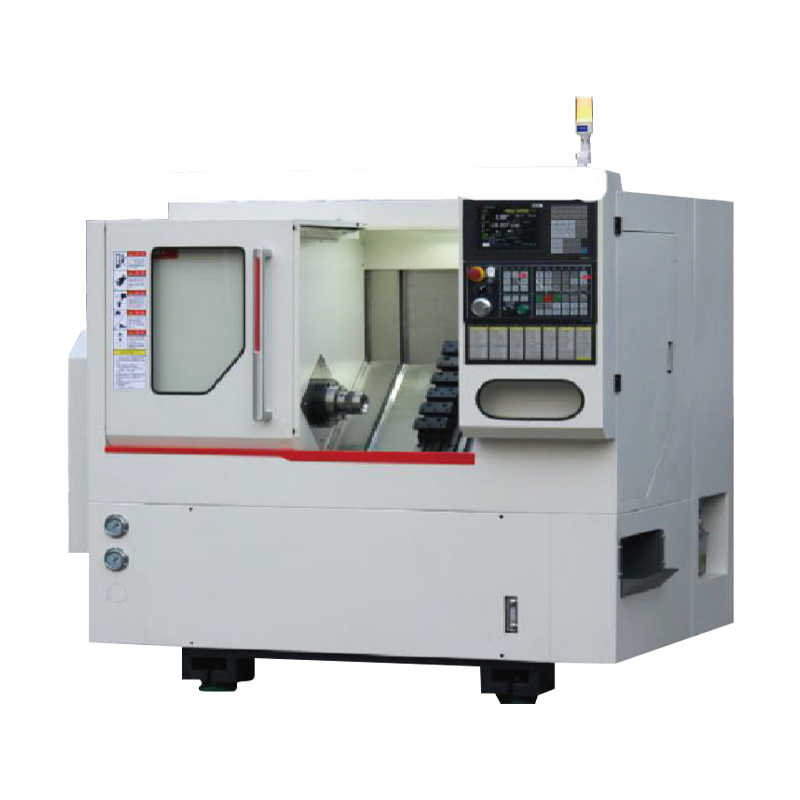
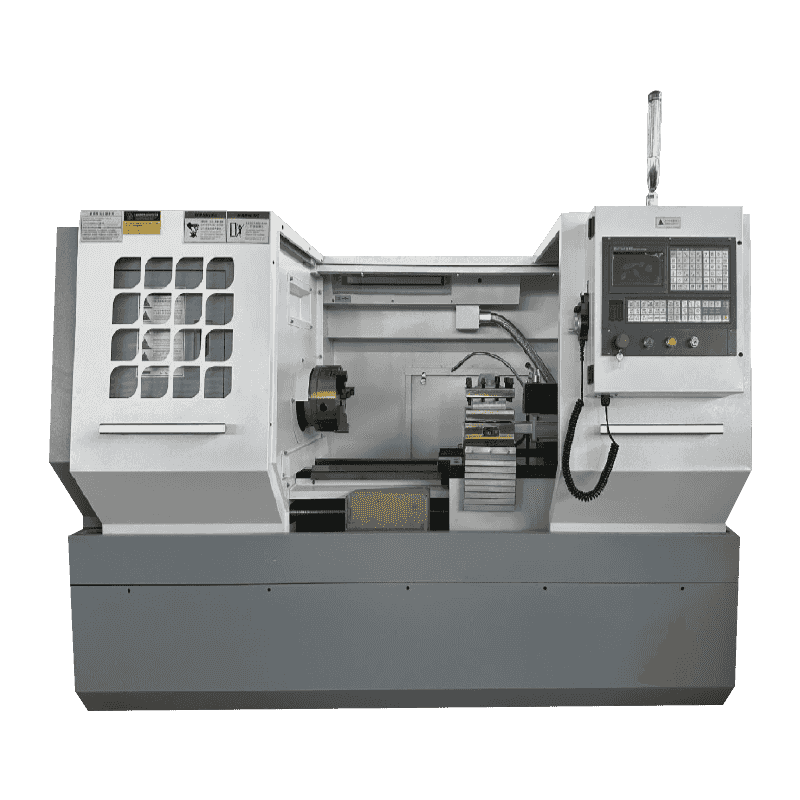
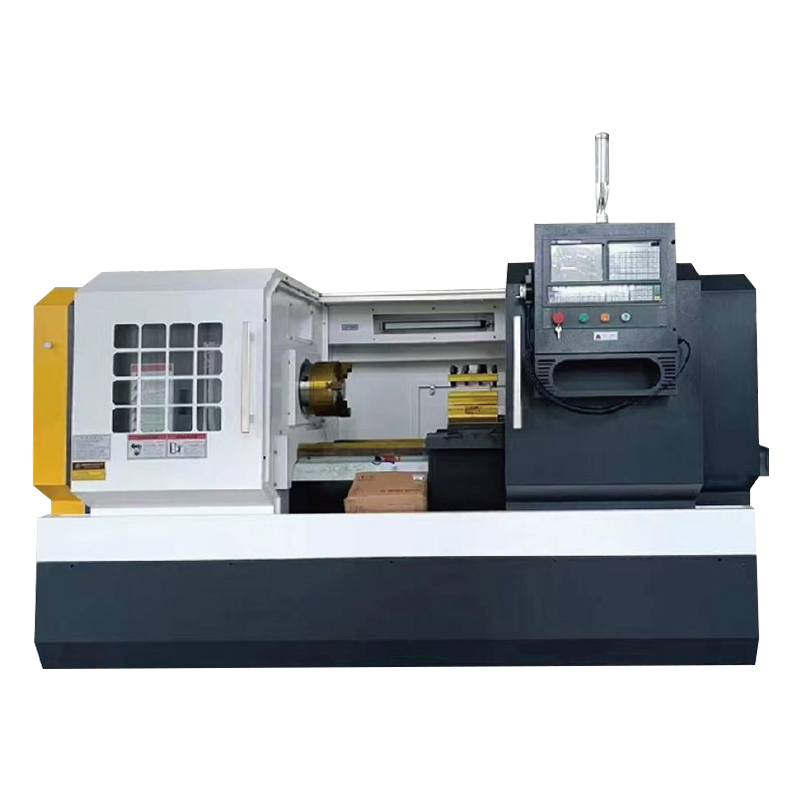
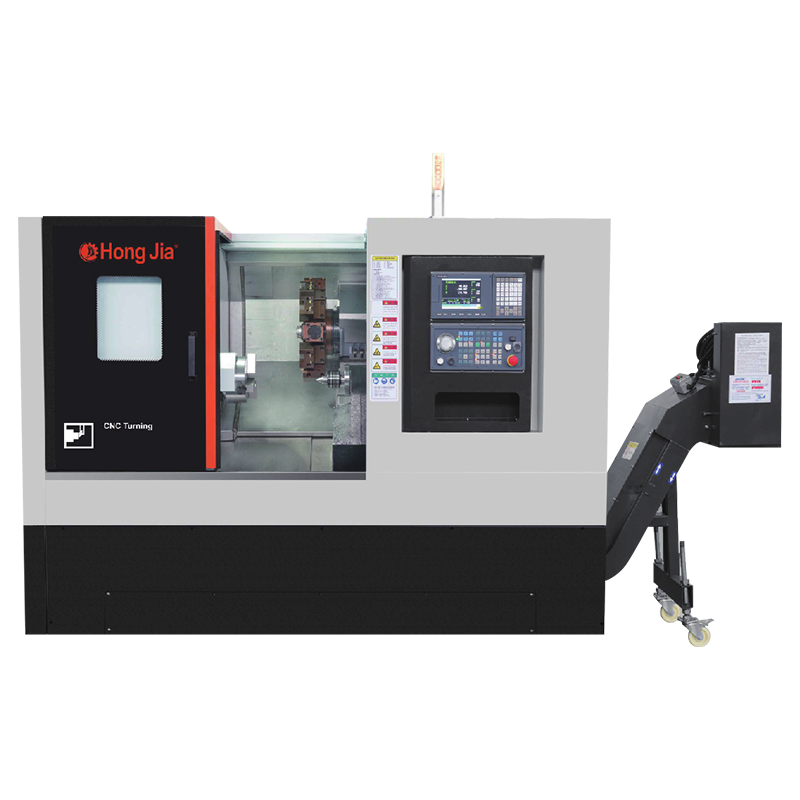
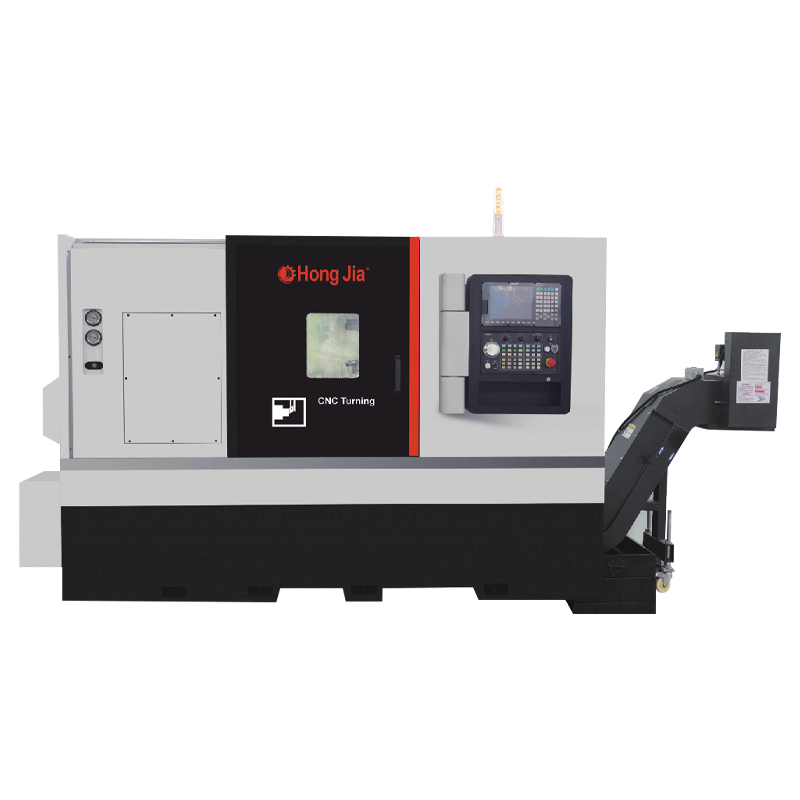
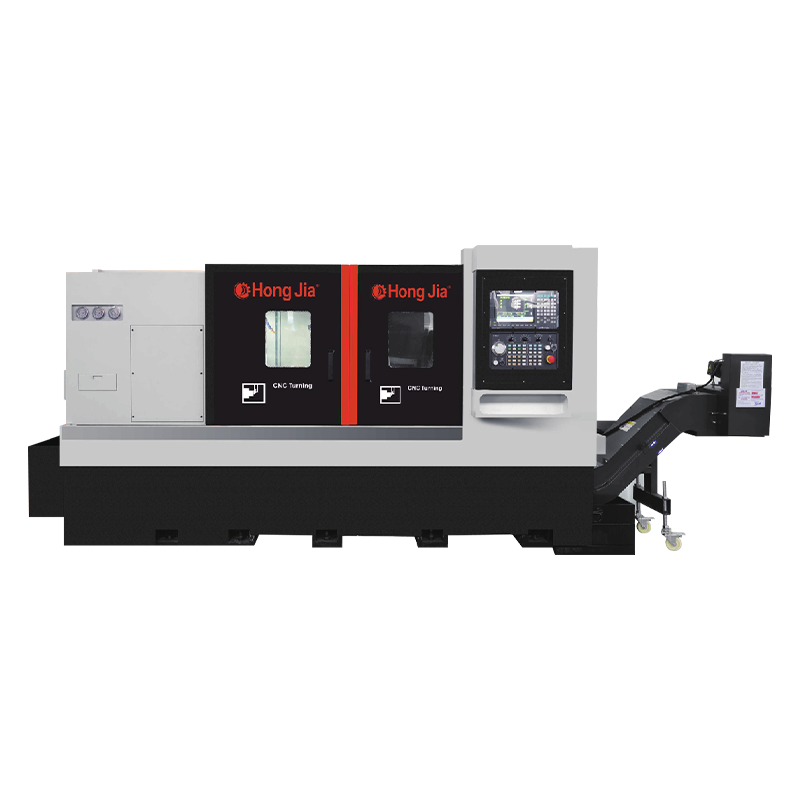
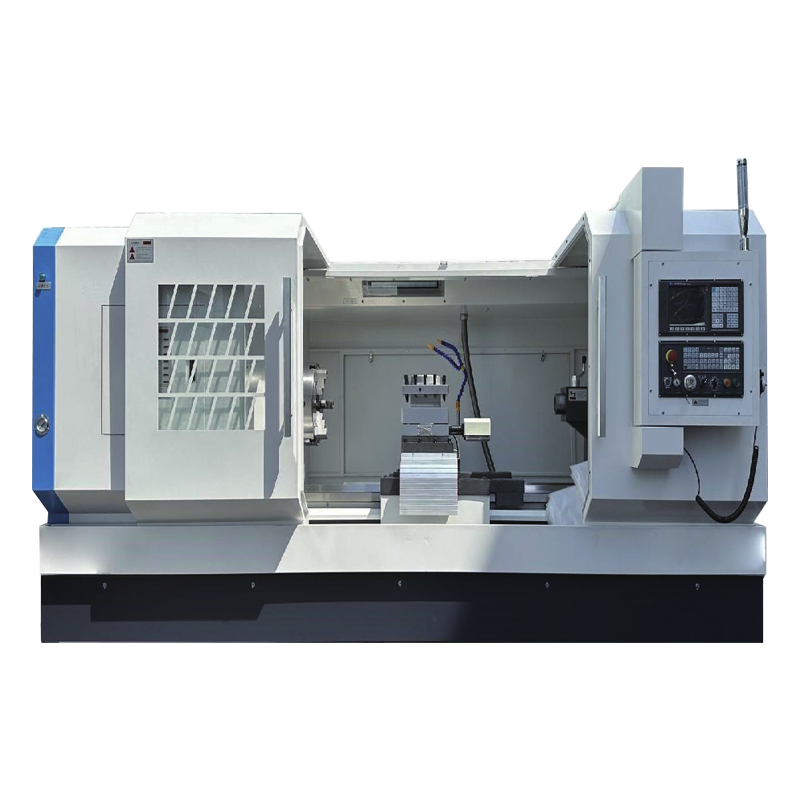
Hongjia CNC produces a horizontal CNC turning and milling series designed to combine rotational turning and multi-face milling within a single fixture, targeting shops that machine shafts, flanges, and other complex rotationally symmetric parts in volume. The series is built around a rigid horizontal spindle layout intended to support consistent chip evacuation and stable cutting during extended production runs, along with tooling and automation options that support high-mix, high-volume manufacturing environments.
For shops evaluating whether to consolidate turning and milling operations onto one platform, reviewing the working envelope, spindle torque, and automation options of a horizontal CNC turning and milling machine against the specific parts in production is the most reliable way to confirm fit before committing to a purchase.
Frequently Asked Questions About Horizontal CNC Machines
Is a horizontal CNC machine better than a vertical one?
Neither type is universally better; a horizontal CNC machine tends to outperform a vertical machine on high-volume, multi-face parts, while a vertical machine is often more economical and simpler to operate for lower-volume, single-face work.
Can a horizontal CNC machine handle both turning and milling?
Yes, dedicated horizontal turning and milling machines are built specifically to combine both operations in one fixture, which is especially useful for shaft-type and flange-type components.
What industries rely most on horizontal CNC machining?
Automotive, aerospace, heavy machinery, and hydraulic component manufacturers are among the most frequent users, largely because their parts require multi-face accuracy and high production volumes.
