
 English
 中文简体
中文简体 русский
 Español
 عربى
عربى
Don't hesitate to contact when you need us!
 Home / News / Industry News / 5-Axis CNC Machine: The Complete Buyer's Guide for Complex Part Machining
 5-Axis CNC Machine: The Complete Buyer's Guide for Complex Part Machining
 2026.09.30
 Industry News
A mold shop in Ningbo recently took on an aerospace bracket with contoured pockets on five faces. Their three-axis vertical machining center needed 38 hours of machining, five separate setups, and two manual re-fixtures. The same batch came off a five-axis vertical machining center in 19 hours and two setups, holding a 0.8 µm surface finish without interruption. That gap is exactly why 5-axis machines dominate serious metalwork conversations.
The practical answer, however, is not simply "buy a 5-axis machine" and stop. It is choosing the right configuration — positional 3+2, full simultaneous five-axis, or a turning-milling center — for the parts you actually cut. This guide explains what each option does, what it really costs, and where the payback appears.
Content
- 1 What Is a 5-Axis CNC Machine?
- 2 3+2 vs Full Simultaneous: The Fork in the Road
- 3 Five Benefits You Can Measure Before You Buy
- 4 What a 5-Axis Machine Does Not Solve on Its Own
- 5 Key Parameters to Check When You Compare Machines
- 6 When Does a Five-Axis Machine Pay for Itself?
- 7 What to Ask the Manufacturer Before You Sign
- 8 A Practical Decision Roadmap
What Is a 5-Axis CNC Machine?
A 5-axis CNC machine is a computer-controlled machining system that moves a cutting tool or a workpiece along five independently interpolated axes: the three linear axes X, Y, and Z, plus two rotational axes — typically A (rotation about X), B (rotation about Y), and C (rotation about Z). The rotational axes let the tool approach nearly any face of the workpiece, so multiple fixture setups collapse into one program.
The three body styles below change the part sizes you can hold, the rigidity you can expect, and the price you will pay:
- Trunnion-table machines tilt and rotate the workpiece on a built-in rotary table. Compact footprint, excellent stiffness, and the dominant choice for parts up to roughly 800 mm.
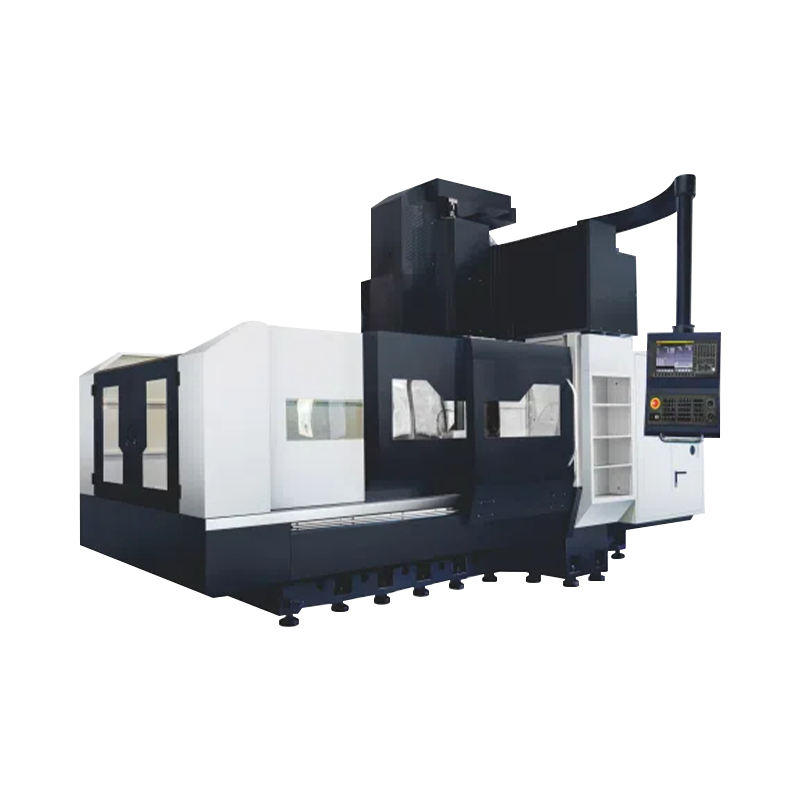
- Swivel-head and gantry machines keep the workpiece stationary on the floor and tilt the spindle head instead. Best for long, heavy, or large-format parts that would be unsafe to rotate.
- Turning-milling centers combine lathe turning with live-tool milling, driven drilling, and a Y or B axis. They offer the fastest route to multi-axis capability for shafts, flanges, and other rotational parts.
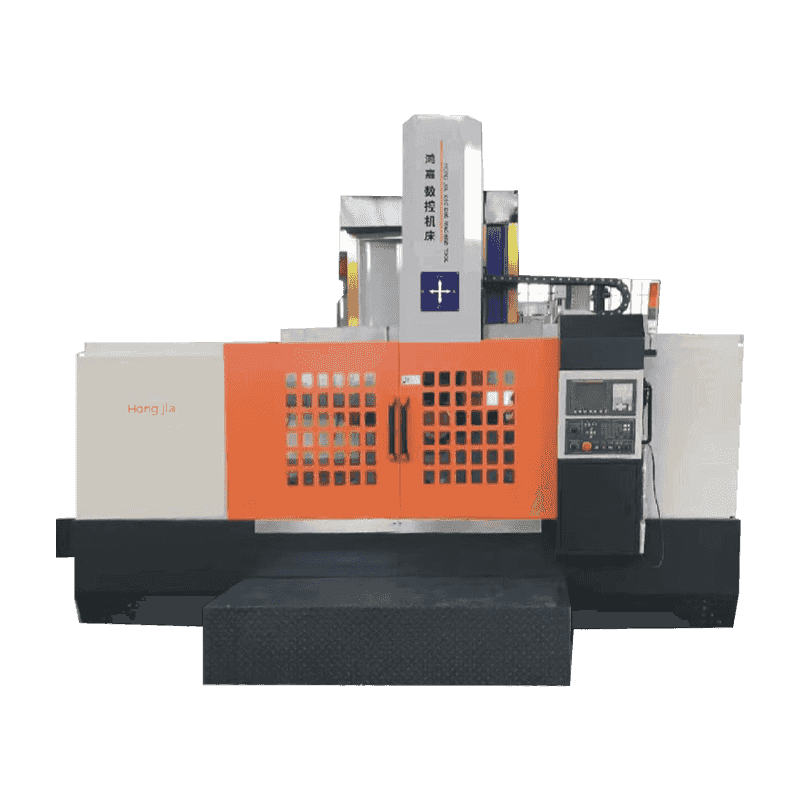
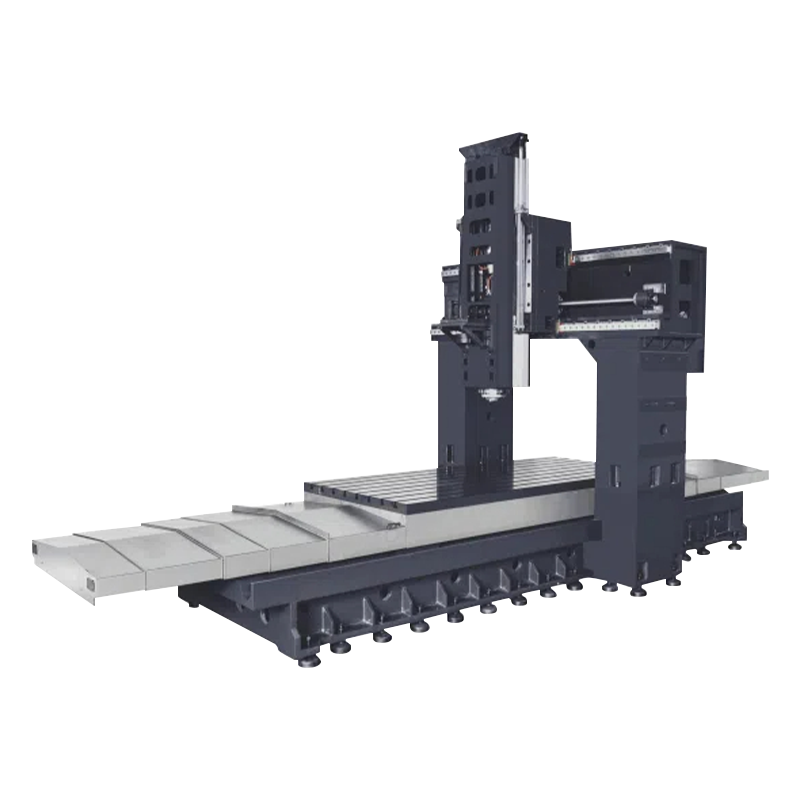 Double Column Machining Centre for Stable PrecisionThis center combines a rigid double-column structure with high-grade ball screws and spindles, ideal for drilling and tapping tasks demanding repeatable accuracy.View Product →
| Body style | Best-suited parts | Typical size range | Principal limitation |
|---|---|---|---|
| Trunnion-table | Molds, aerospace brackets, medical components | Up to 800 mm cube | Rotary table limits maximum workpiece weight |
| Swivel-head / gantry | Large dies, structural frames, long profiles | 1 m to several metres | Higher cost; more floor space required |
| Turning-milling center | Shafts, flanges, valve bodies | Up to 600 mm turned diameter | Milling capacity is secondary to turning performance |
3+2 vs Full Simultaneous: The Fork in the Road
Before comparing machines, compare the two operating modes. They look similar on a brochure and behave very differently on the shop floor.
Positional 3+2 (five-axis positioning)
The machine rotates the part or the head to a fixed angular position, locks the rotary axes, then machines with a standard three-axis move. This is how most "5-axis" jobs are actually run. It removes complex angled fixtures, improves tool reach, and keeps programming close to normal three-axis CAM work. For most shops it is the fastest and safest first step into five-axis capability.
Full simultaneous five-axis
All five axes interpolate continuously at the same time, so the tool maintains a constant relationship with a sculpted surface. This is essential for turbine blades, impellers, and complex mold cores. It demands a proper 5-axis CAM module, a matched post-processor, and reliable simulation — otherwise the risk of a collision climbs quickly.
| Criterion | 3+2 positional | Full simultaneous |
|---|---|---|
| Machining motion | Rotary axes locked during cutting | All five axes move during cutting |
| Typical parts | Multi-face prismatic parts, steep walls, deep pockets | Sculpted surfaces, blades, electrodes |
| CAM complexity | Standard 3-axis CAM plus rotation | Dedicated 5-axis toolpath module required |
| Collision risk | Moderate, easier to control | Higher; simulation strongly recommended |
| Main investment | Machine rigidity first | CAM, post-processor, and training first |
Five Benefits You Can Measure Before You Buy
The marketing story about 5-axis is always about smooth curves. The measurable story is about setups, deflection, and cost per part. These five benefits survive contact with a real production schedule:
- Fewer setups — one clamping replaces four or five. Every clamping cycle removed also removes a tolerance stack and a manual-error risk.
- Shorter, stiffer tools — the tool stays perpendicular to the cut, so long extended holders become unnecessary. Deflection drops and tool breakage falls.
- Better surface finish — a constant cutting angle produces consistent chip load. Mold and medical parts leave the machine with far less hand polishing.
- Longer tool life — favorable engagement along the full flute spreads heat and wear; shops typically report 20–40% longer tool life on multi-face parts.
- New geometry becomes possible — undercuts, angled holes, and deep cavities that no straight tool path can reach are machined in one program.
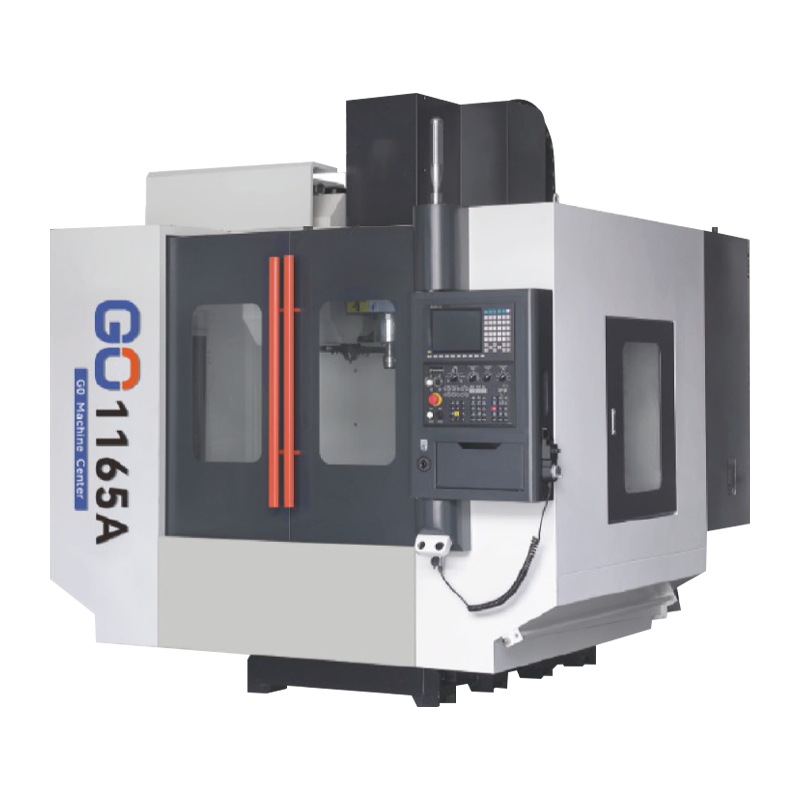 1165A High Speed High Precision Heavy Duty Machining CenterWith wide-span linear guides and pre-tensioned ball screws, this model reduces deflection and setup time, directly impacting cost per part in production.View Product →
What a 5-Axis Machine Does Not Solve on Its Own
The fastest way to lose money on a 5-axis purchase is to treat the machine as the entire project. Four costs sit outside the machine price, and each deserves its own budget line:
- CAM software and post-processor. A capable 5-axis CAM seat runs from about $8,000 to $40,000, and a poorly matched post-processor quietly produces unusable programs.
- Programming and operator skill. A 5-axis programmer typically earns 30–50% more than a 3-axis counterpart. Budget for hiring or training before the machine arrives.
- Simulation and verification. Collision checking is not optional once the table rotates. The software cost is small; the crash cost of a $3,000 spindle head is not.
- Calibration and maintenance. Rotary axes drift with thermal growth and impacts. A calibration schedule and test-cut routine should be a line item, not an afterthought.
Key Parameters to Check When You Compare Machines
A specification sheet decides the outcome once the decision is made. These five parameters cause the most purchasing mistakes because they interact with one another:
| Parameter | Why it matters | Typical values to look for |
|---|---|---|
| Rotary axis range | A ±120° tilt covers most shapes; 360° rotation is needed for full wrap-around work | Tilt ±120°, rotation 360° |
| Work envelope vs part family | Usable envelope shrinks as the part grows; check the real space at full tilt | Table diameter 400–630 mm for medium parts |
| Spindle power and speed | Aluminum wants high speed; steel and titanium want torque | 12,000–18,000 rpm, 15–30 kW for general work |
| Accuracy and repeatability | Rotary axes usually dominate final tolerance; verify bidirectional repeatability | ±0.005 mm linear, ±5 arcsec rotary |
| Control and probing | In-process probing matters more on 5-axis because you cannot check manually mid-cycle | Probe-ready control with tool measurement |
Benchmark these figures against a real machine in our machining center catalog, where every model lists its tested specification.
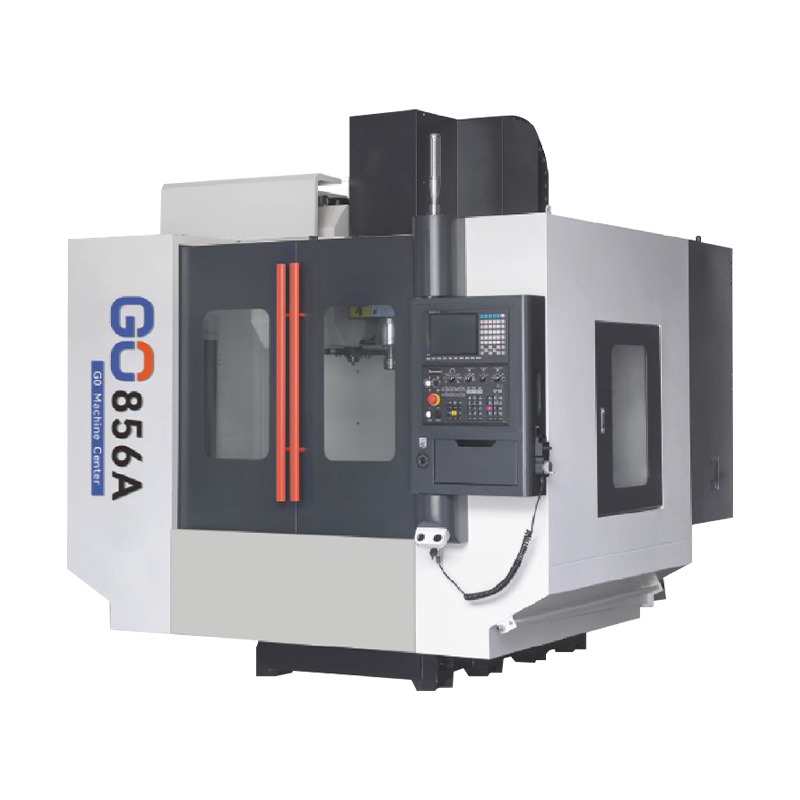
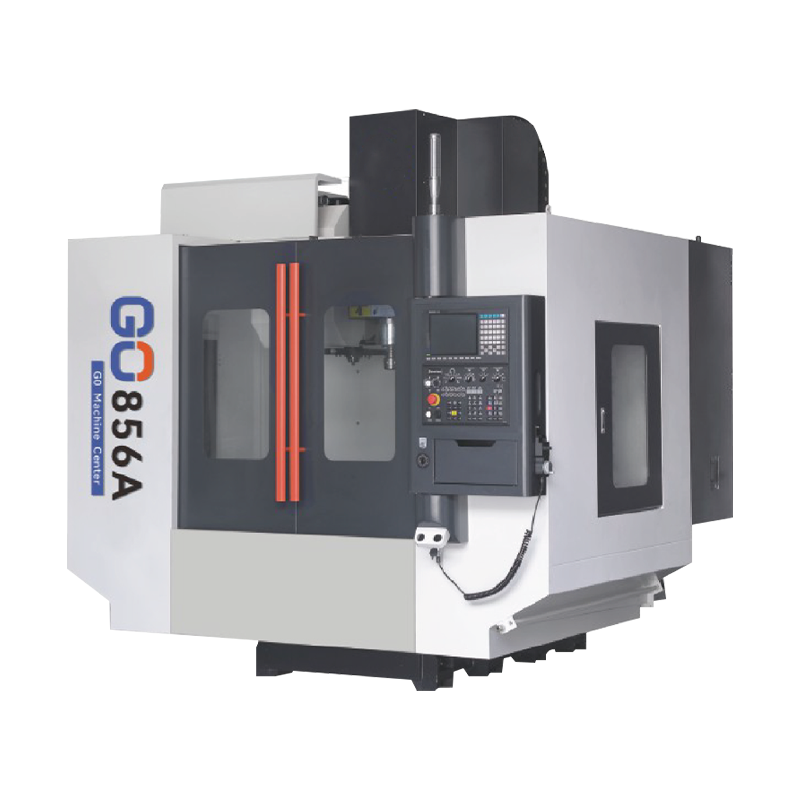 856A Heavy Duty Machining CenterBox-type column and full-load support resist vibration during heavy cuts, while pre-stretched lead screws maintain rigidity—worth benchmarking against your part mix.View Product →
When Does a Five-Axis Machine Pay for Itself?
Set aside the marketing and check the economics of your own part mix. Two situations dominate real purchasing decisions:
The investment usually pays off when
- Parts need four to six faces machined, and setup time exceeds 30% of cycle time.
- Batch sizes are small to medium, so setup reduction matters more than raw spindle speed.
- Workpiece material is expensive enough that one scrapped part represents serious money.
- A CAM system is already in place, so a 5-axis module can be added without switching suppliers.
The investment usually does not pay off when
- Most parts are simple 2.5D prismatic shapes produced in high volume on a 3-axis line.
- Parts exceed the rotary table capacity and would need a different machine class entirely.
- The shop has no CAM or post-processor capability and no plan to hire programmers.
- A turning-milling center would achieve the same result for less money.
What to Ask the Manufacturer Before You Sign
The nameplate is only one component of a working cell. The supplier must answer three questions convincingly: how the machine is tested before shipment, how fast spare parts are shipped, and what training is provided after installation. Ningbo Hongjia CNC Technology Co., Ltd. has produced CNC metal-cutting equipment since 2006 and organizes every order around the customer's part requirements and acceptance tests — which is exactly the conversation a serious 5-axis buyer should have before issuing a purchase order.
Review the engineering background and factory capability on our company profile, then compare our machining center and turning-milling center lineups against the part families you machine.
A Practical Decision Roadmap
If you are evaluating a 5-axis machine for the first time, use this sequence instead of trusting a brochure:
- Map your part family: number of faces, tolerances, materials, and current setup times.
- Decide between 3+2 and full simultaneous on the basis of surface geometry, not marketing.
- Budget the complete system: machine, CAM, post-processor, probing, training, and calibration.
- Arrange a test cut and confirm exactly which axes will move during the real program.
- Verify lead time, spare parts availability, and on-site support before signing.
A five-axis machine is not a single tool; it is a system of programming, simulation, workholding, and service. The configuration that fits your parts — and a manufacturer who stays accountable after delivery — is what turns capital cost into a measurable competitive edge.
