
 English
 中文简体
中文简体 русский
 Español
 عربى
عربى
Don't hesitate to contact when you need us!
 Home / News / Industry News / Milling M/C Buying Guide: Machine Types, Key Specs, and Selection Tips for Shops
 Milling M/C Buying Guide: Machine Types, Key Specs, and Selection Tips for Shops
 2026.10.07
 Industry News
Content
- 1 What a Milling M/C Actually Does
- 2 Four Structural Types and What Each One Handles
- 3 Specifications That Actually Move the Price
- 4 Milling or Turning: Match the Machine to the Part
- 5 Components That Decide Long-Term Accuracy
- 6 Four Mistakes Buyers Keep Repeating
- 7 Where a Conventional Milling M/C Still Makes Sense
- 8 Acceptance Testing and Daily Care
- 9 Bringing It Back to the Machine on Your Floor
What a Milling M/C Actually Does
A milling m/c removes material with a multi-tooth rotating cutter while the workpiece stays clamped to a table. That single sentence separates milling from turning: on a lathe the part spins and the tool stands still; on a milling machine the tool spins and the part is fed past it.
That difference decides what each machine does well. Because milling is an interrupted cut, with each insert edge engaged for only part of a revolution, it handles flats, slots, pockets, shoulders, keyways and contoured surfaces. Round, axially symmetric parts still belong on a lathe.
Most modern machines are controlled by CNC across three to five axes. Three-axis models move in X, Y and Z only. Four- and five-axis models add one or two rotary axes, which lets several faces be machined in a single setup and removes re-clamping error from the process.
Four Structural Types and What Each One Handles
Before comparing strokes and axis counts, settle the spindle direction. It determines chip evacuation, how the cutter reaches the part, and how much of the cut the operator can actually see.
| Type | Spindle | Typical work | Main limitation |
|---|---|---|---|
| Vertical | Vertical, Z axis downward | Faces, pockets, mould surfaces, drilling and tapping | Chip evacuation from deep cavities |
| Horizontal | Horizontal | Slotting, box-type side faces, heavy stock removal | Workholding and viewing are less convenient |
| Universal | Adjustable or swivelling head | Angle features, several faces in one setup | Slightly lower rigidity than a dedicated design |
| Double column | Vertical, carried on a bridge | Large parts, long travel distances | Floor space and purchase cost |
Vertical is the default for general job work. The operator looks straight into the cutting zone, workholding is straightforward, and a fourth-axis rotary table can be added later without rebuilding the machine. That combination is why a vertical machining centre carries most of the everyday milling load in a general workshop.
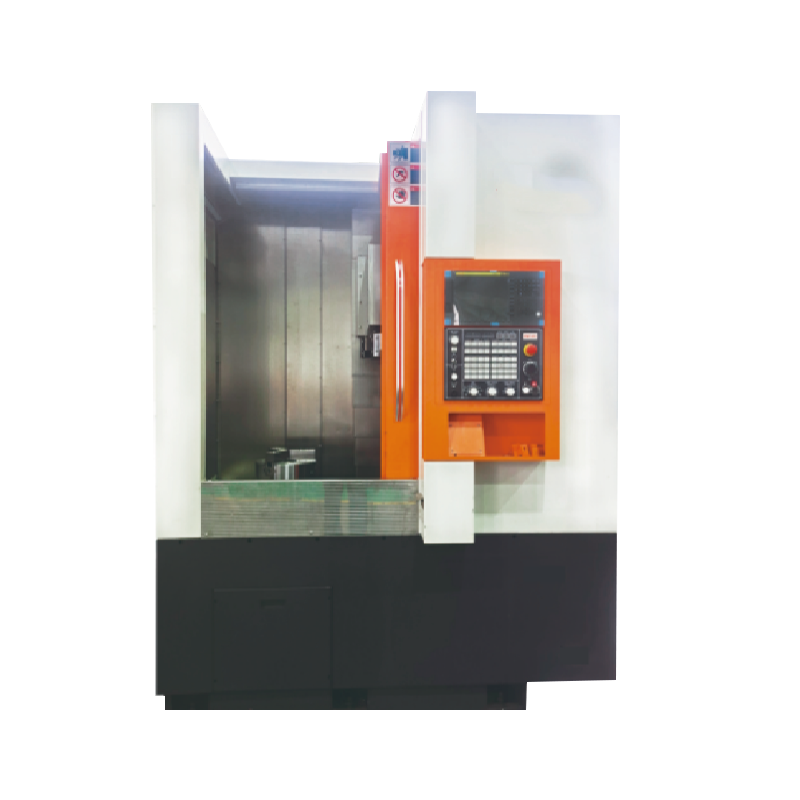
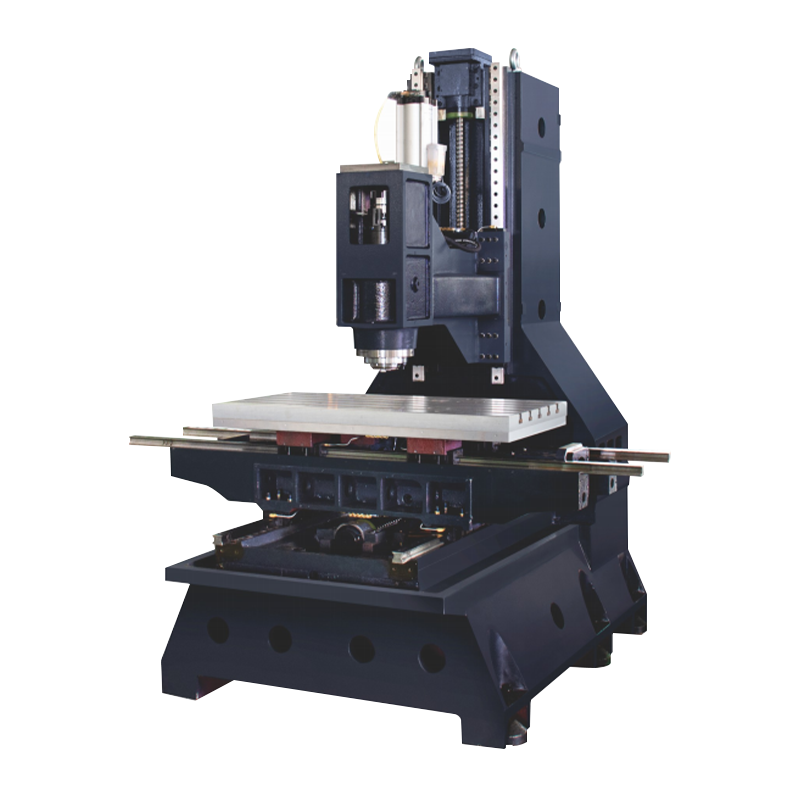 Vertical Machining CentreThe vertical machining center is a high-performance CNC machining equipment suitable for precision machining of complex parts. It adopts a high-precision C3-level ball...View Product →
Specifications That Actually Move the Price
Two machines can quote the same X-axis travel and still differ by a factor of two in price. The gap sits below the headline travel figure. Check these points one by one:
- Table size and usable travel. Subtract the space taken by the vice, fixtures and any rotary table. An 800 mm X stroke with a 150 mm fixture leaves roughly 650 mm for the part.
- Spindle taper and power. BT40 covers most medium-duty work. BT50 and higher torque ratings suit heavy stock removal in steel.
- Spindle speed range. A high top speed helps small-diameter tools and aluminium, but roughing performance is decided by torque at the lower end of the range.
- Rapid traverse and cutting feed rates. Rapid rates reduce air-cutting time; cutting feed rates should be quoted at a stated depth of cut, not in isolation.
- Positioning and repeat positioning accuracy. These are two separate numbers. Repeat accuracy governs batch consistency; positioning accuracy governs how closely the tool reaches the programmed point.
- Tool magazine capacity and change time. A small magazine means frequent stops, and chip-to-chip time accumulates across a shift.
- CNC system and controlled axes. Confirm at acceptance which functions are enabled, rather than accepting a promise that they can be added later.
- Chip removal and coolant handling. In deep pockets and reaming work, chip build-up causes defects earlier than tool wear does.
Milling or Turning: Match the Machine to the Part
Buyers often select equipment based on what is already on the floor rather than on the geometry in front of them. A safer order of thinking starts with the part:
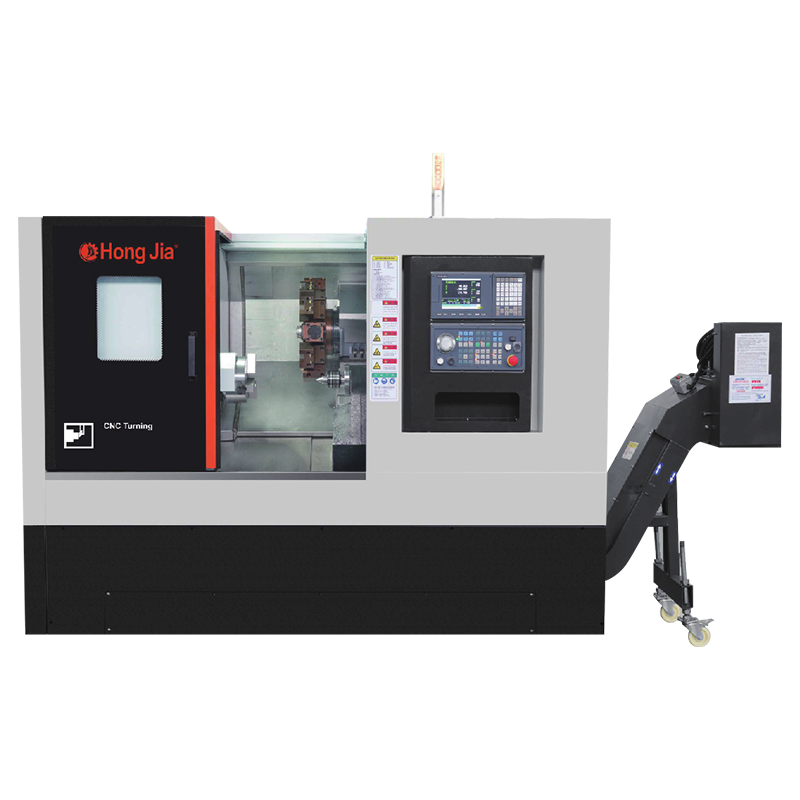
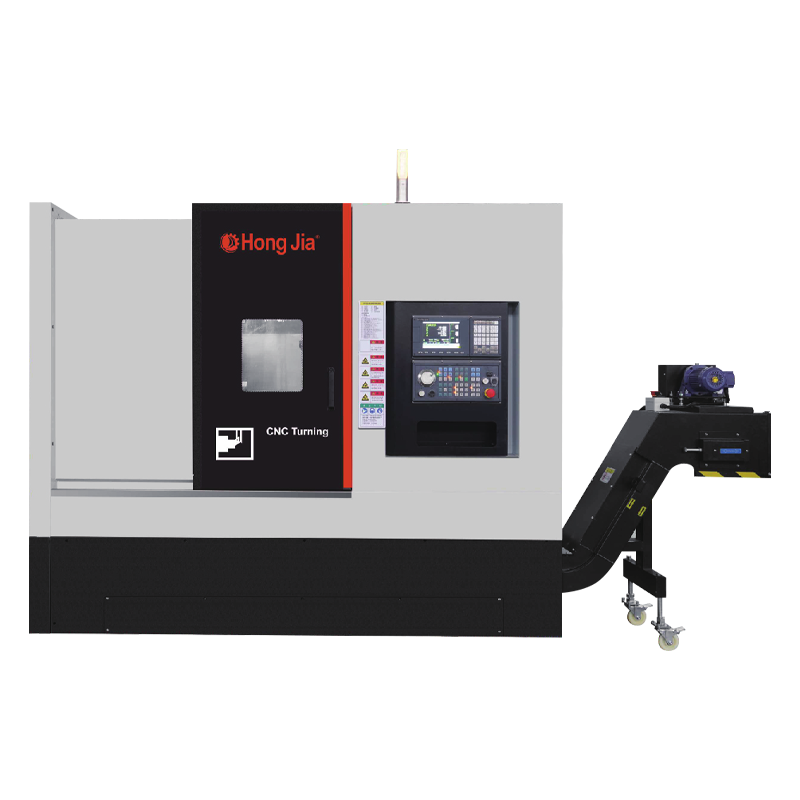
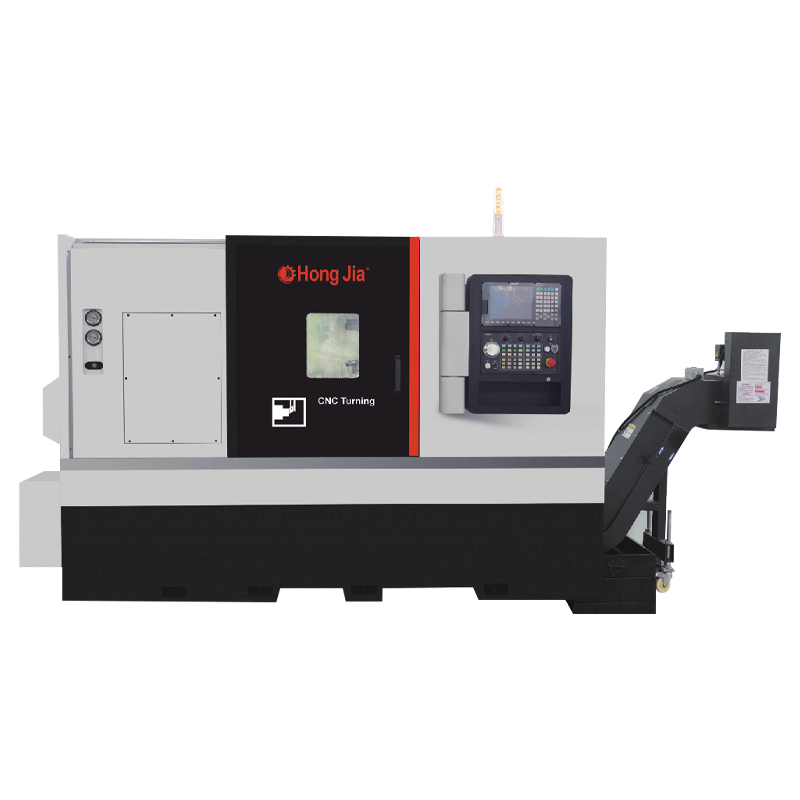
- Rotational parts such as shafts, sleeves, flanges and fittings run fastest on a lathe or a horizontal turning centre.
- Prismatic parts such as plates, housings, brackets and mould inserts belong on a milling m/c.
- Parts that combine both features, such as a valve body with milled pads, either need two operations or one pass on a turn-mill platform.
If the same machine must cover both families, a three-axis vertical mill is the more practical starting point. If the workload is largely shaft-type production, buying a mill first is simply the wrong order of purchase.
Components That Decide Long-Term Accuracy
Initial accuracy comes from assembly. Accuracy after five years comes from the parts themselves. Ranked by effect on the finished surface, these are the items worth questioning a supplier about:
- Spindle assembly. Bearing arrangement, preload and thermal behaviour decide whether surface quality holds at the top of the speed range.
- Guideways. Box ways resist heavy cutting loads; linear rails allow faster rapids and hold accuracy longer. The choice should follow the cutting type, not a general preference.
- Ball screws. Preload class and lead affect backlash and how repeatably the axis returns to position.
- Castings. Resin-sand iron, properly aged and generously proportioned, damps vibration. A light bed transmits it, and the result appears as chatter marks on the workpiece.
- CNC system. The control decides which cycles are available and how the machine can be extended later.
For large, heavy workpieces, the structure moves up to a bridge-type design in which the spindle is carried on a cross beam and the table stays fixed, so the machine does not have to move the mass of the part.
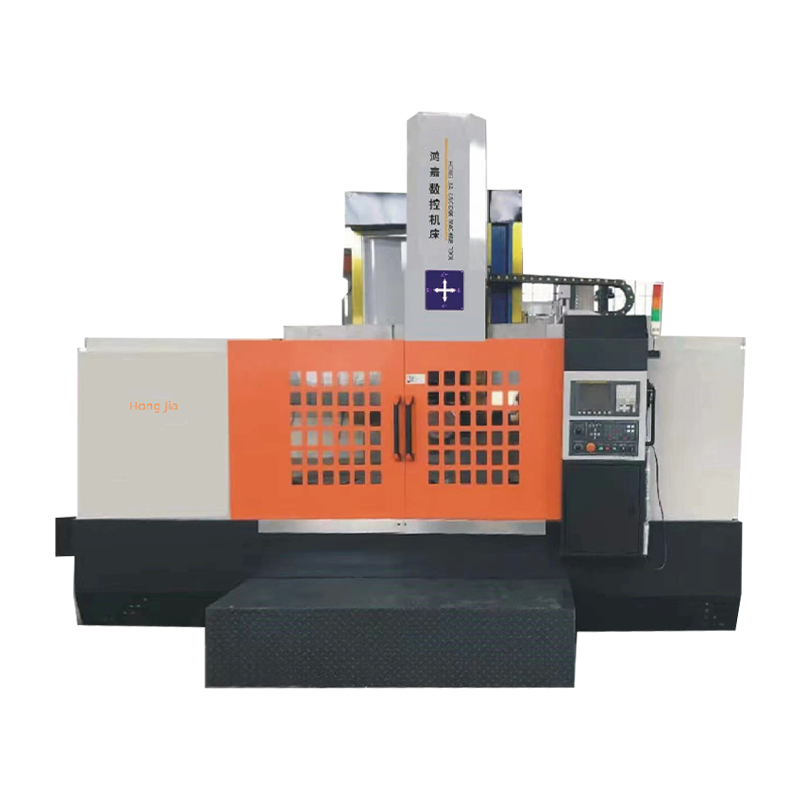
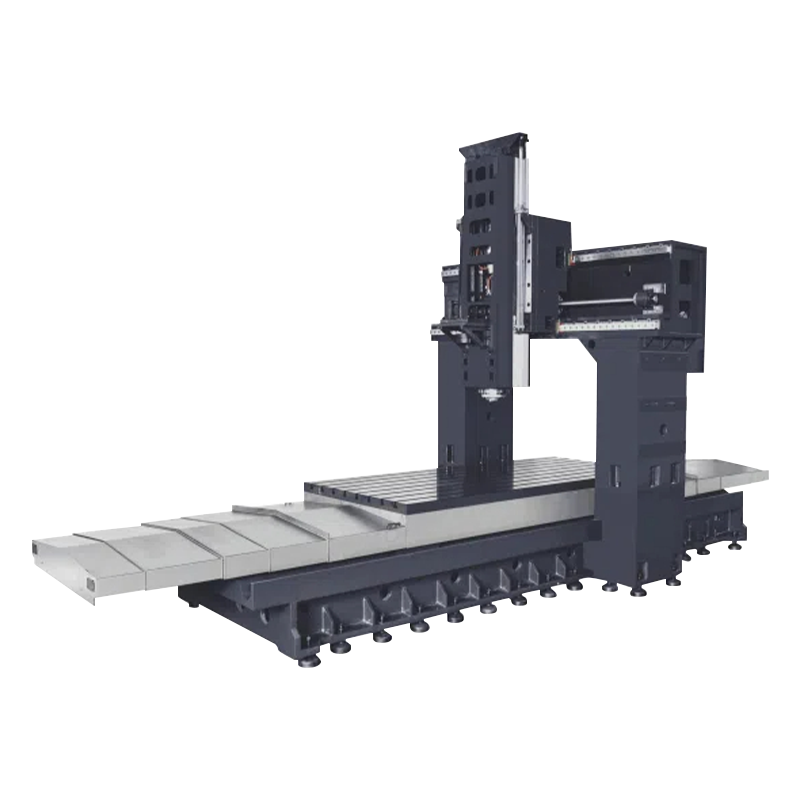 Double Column Machining CentreDrilling and tapping machines use high-quality configurations, such as ‘Gintech PMI’, ‘Shangyin HIWIN’ or ‘THK’ C3-grade ball screws, P4-grade bearings, ‘Speedcn’ dire...View Product →
Four Mistakes Buyers Keep Repeating
- Buying on travel alone. A machine that fits the part on paper may not fit the fixture, the rotary table and the coolant guards as well.
- Choosing a spindle by top speed. A 12,000 rpm spindle with low torque stalls in a heavy steel cut, while a slower, torquier spindle finishes the same job without complaint.
- Underestimating chip and coolant management. Trapped chips recut on the next pass, which shows up as poor finish and accelerated insert wear rather than as an obvious fault.
- Accepting static geometry results without a test cut. Geometry checks confirm alignment, but only a test cut on your own material at your own parameters confirms that the machine will hold tolerance in production.
Where a Conventional Milling M/C Still Makes Sense
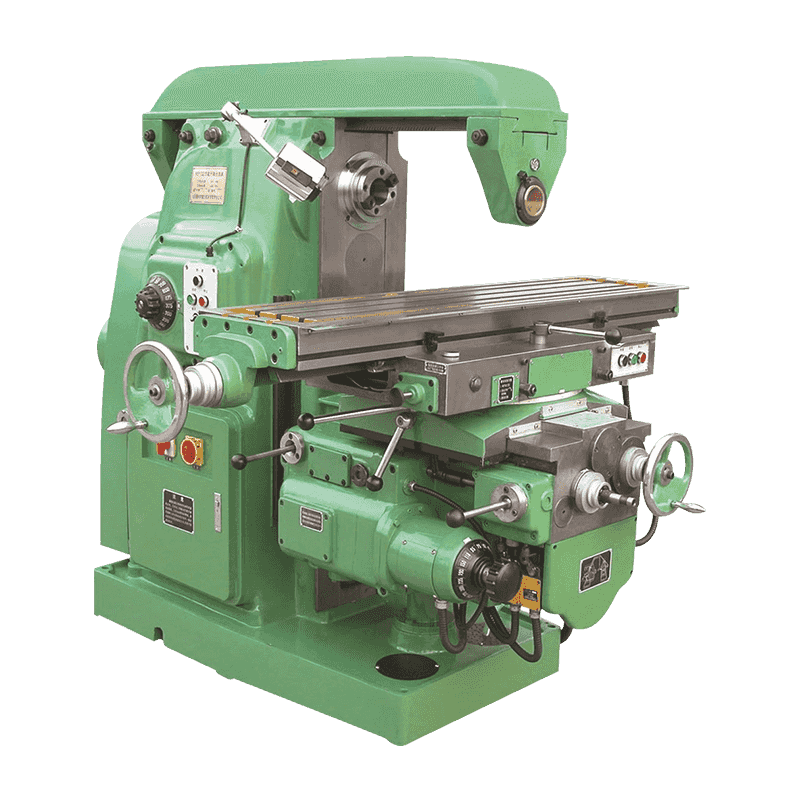
Not every job needs a CNC control. In maintenance shops, single-piece tooling work and training environments, a manual knee-type mill with a swivelling head and hand feeds costs less, sets up faster and is easier for a new operator to approach.
A universal lifting-table machine of this class handles flat faces, angular surfaces, slots and keyways. It cannot match the repeatability of a servo-driven axis, but where the demand never required that repeatability in the first place, the gap does not matter.
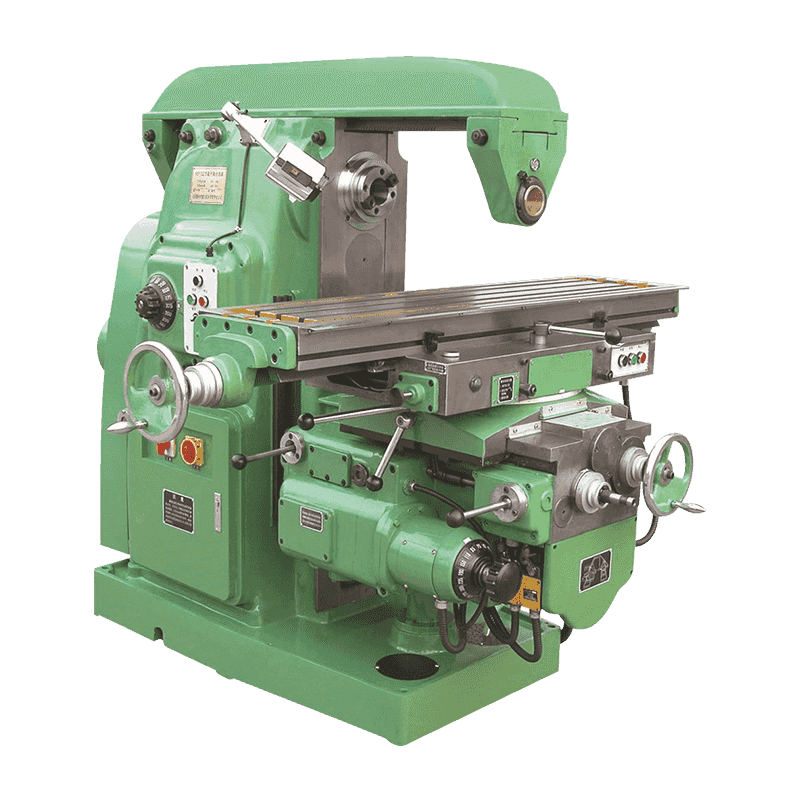 X6132 Universal Lifting Table Milling MachineProduct introduction and use This machine tool is a kind of strong metal cutting machine tool, the machine tool has strong rigidity, a wide feed speed range, and can b...View Product →
Acceptance Testing and Daily Care
Run acceptance on your own parts. Supplier-supplied test pieces are useful for comparison, but they rarely reproduce the material, fixturing or tolerances of real production.
- Geometry check. Verify straightness, squareness and spindle radial run-out against the published figures before signing off.
- Test cut. Machine your material at your normal parameters and measure the finished surface against the drawing tolerance.
- Continuous run. Run a four to eight hour cycle and watch spindle temperature, axis drift and repeat accuracy across the shift.
- Daily routine. Clear chips, check way lubrication and confirm coolant concentration before the first cut of the day.
- Quarterly inspection. Check ball screw backlash and guideway condition, and re-level the machine if the foundation has moved.
Bringing It Back to the Machine on Your Floor
A milling m/c is selected on three things: the geometry of the parts, the real size range you will run, and the tool-to-tool productivity each shift requires. Settle those first and the specification list largely writes itself.
Ningbo Hongjia CNC has built metal-cutting equipment since 2006, with a catalogue covering horizontal turning and milling centres, vertical lathes, milling centres and conventional machines. A vertical machining centre covers the bulk of general milling work, a double-column structure covers large parts, and a universal lifting-table mill fills the gap where a CNC control is not required at all.
If you would like the selection checked against specific drawings and tolerances, send the part details rather than browsing the catalogue alone. The background of the manufacturing operation is set out on the about Ningbo Hongjia CNC page.
