
 English
 中文简体
 русский
 Español
 عربى
Don't hesitate to contact when you need us!
 Home / News / Industry News / CNC Mill vs CNC Lathe: How to Choose the Right CNC Machine for Your Shop
CNC Mill vs CNC Lathe: How to Choose the Right CNC Machine for Your Shop
 2026.10.21
 Industry News
At 8 a.m., a shop quotes a 45 mm 4140 shaft with a keyway and a 6061 aluminum bracket with six tapped holes. By 9 a.m., the question is familiar: buy a CNC lathe, a CNC mill, or both? The short answer is that the lathe spins the workpiece, while the mill spins the tool. That single difference decides which features are profitable, which tolerances are repeatable, and which machine pays back first.
Content
- 1 The Short Answer: Rotation Decides the Machine
- 2 How Each Machine Removes Metal
- 3 Part Geometry and Tolerance Stack-Up: Where Projects Go Wrong
- 4 Axis Count, Live Tooling, and the Mill-Turn Middle Ground
- 5 Cycle Time, Cost, and Throughput: The Practical Math
- 6 Programming, Operators, and Shop Workflow
- 7 Buying Checklist for CNC Mill vs CNC Lathe
- 8 Where Hongjia CNC Fits in a Turning or Milling Plan
The Short Answer: Rotation Decides the Machine
If most of the value is in outside diameter, inside diameter, faces, grooves, threads, and concentricity around a centerline, a CNC lathe is usually the lower-risk choice. If the value is in pockets, slots, bolt patterns, flat faces, angles, and holes that do not share a single centerline, a CNC mill is the natural fit. The table below shows the core mechanical differences that drive that decision.
| Decision factor | CNC lathe | CNC mill |
|---|---|---|
| Primary motion | Workpiece rotates | Cutting tool rotates |
| Workholding | Chuck, collet, faceplate, bar feeder | Vise, fixture, clamps, tombstone |
| Typical tooling | Turning inserts, boring bars, drills, taps | End mills, face mills, drills, taps, reamers |
| Best part features | OD, ID, faces, grooves, threads, tapers | Pockets, slots, flats, angles, hole patterns |
| Common limit | Off-center and prismatic features need live tooling | Round parts can be slow without a rotary axis |
How Each Machine Removes Metal
CNC lathe: the part rotates
On a 2-axis lathe, X and Z axes move the turret while the spindle holds and rotates the workpiece. Bar stock, chuck jaws, collets, and tailstocks hold the part. The machine turns outside diameters, bores inside diameters, faces ends, cuts grooves, threads, and drills on the centerline. A turning center adds C-axis motion, live tooling, Y-axis travel, or a sub-spindle. That lets it mill flats, drill off-center holes, and tap without moving the part to a second machine.
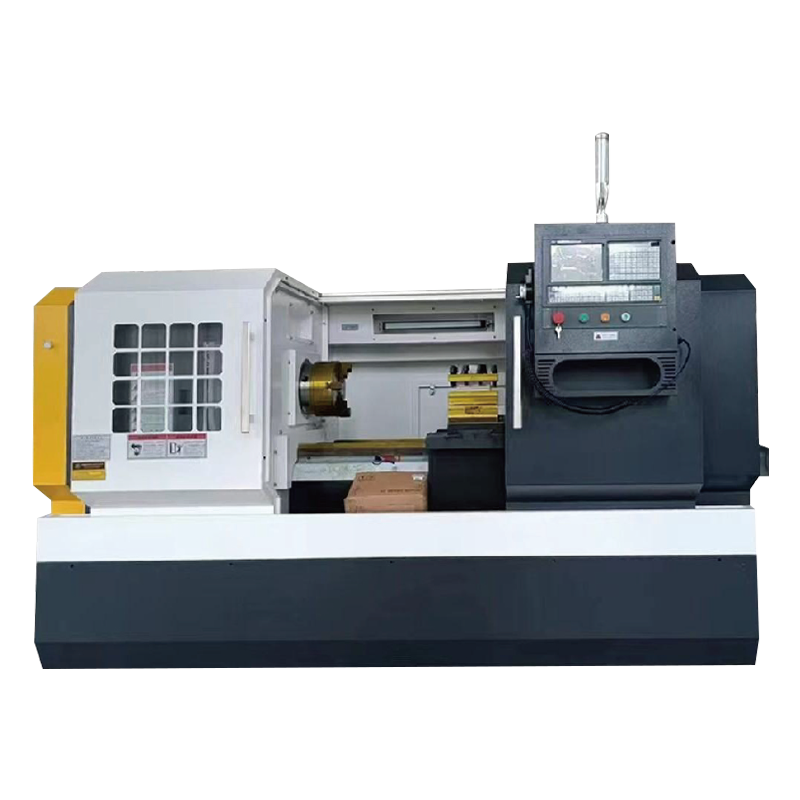
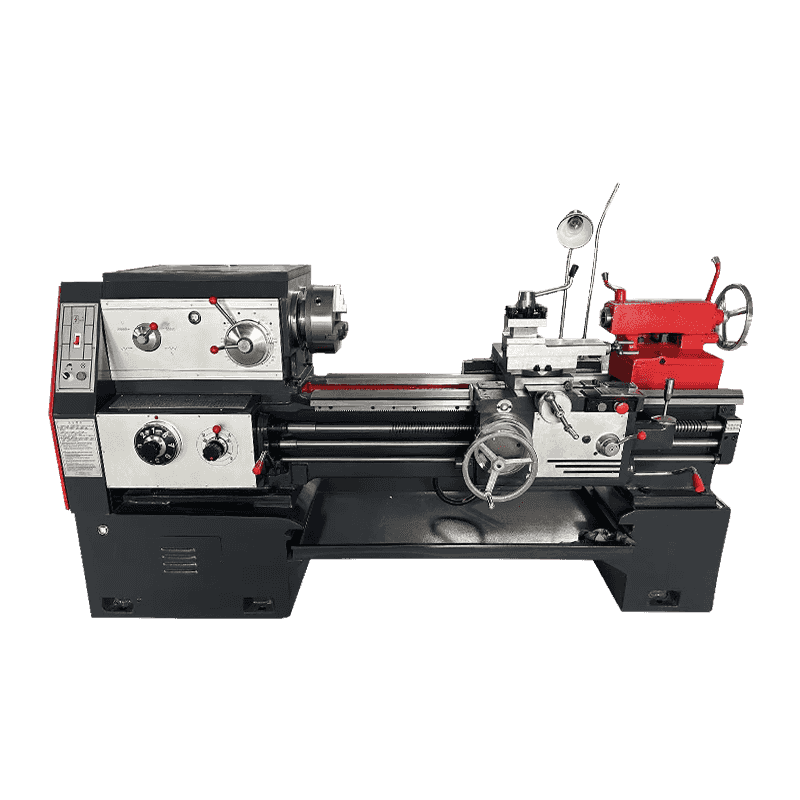
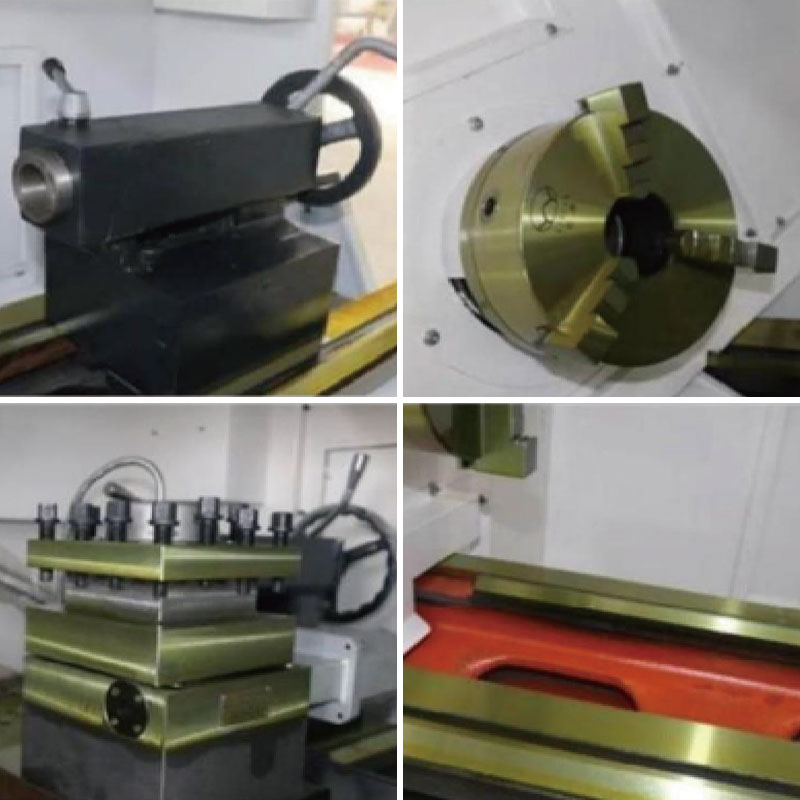 CK6150 High-Power CNC Horizontal Lathe for Shaft and Disc MachiningA CNC horizontal lathe with X/Z semi-closed-loop control, C3 ball screws and a four-station tool holder, suited to shafts, discs, bushings and screw-type workpieces.View Product →
CNC mill: the tool rotates
A 3-axis vertical mill moves the table in X and Y while the spindle moves in Z. The workpiece stays clamped to a vise, fixture, or tombstone. End mills, face mills, drills, and taps remove material from flat surfaces, pockets, slots, contours, and hole patterns. A 4th axis adds rotation around X, and a 5th axis adds tilt for complex angles and undercuts. For high-speed drilling and tapping, a dedicated drill-tap machine can outperform a general vertical machining centre because it changes tools faster and travels shorter distances.
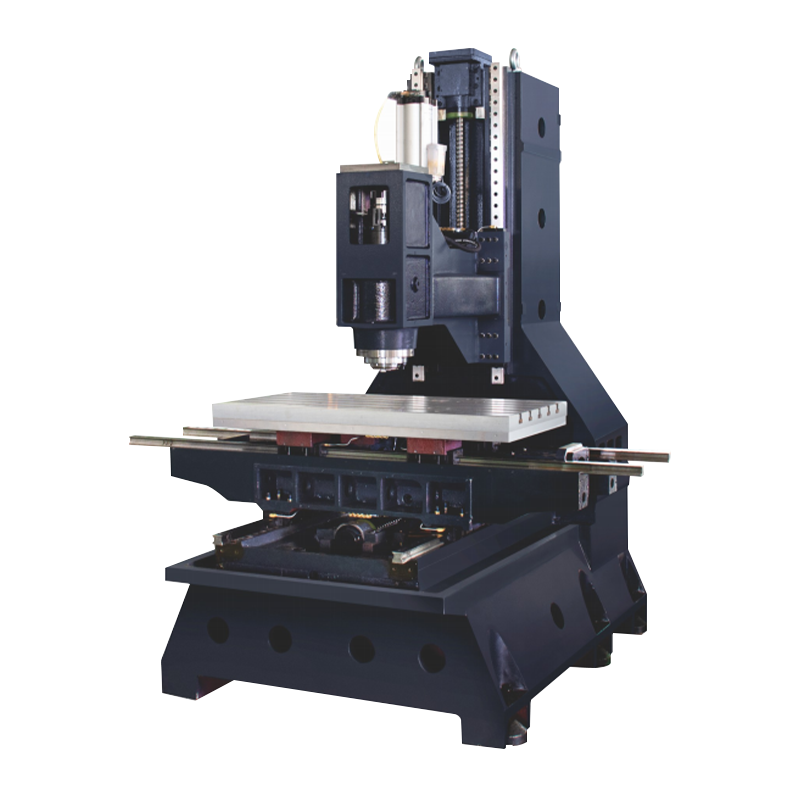 Vertical Machining Centre for Precision Complex Part MillingA CNC vertical machining centre with C3 ball screws, roller guideways, P4 bearings and automatic tool changing, with optional high-speed spindle or nitrogen balancing for precision complex parts.View Product →
Part Geometry and Tolerance Stack-Up: Where Projects Go Wrong
Buyers often compare spindle speed and axis count, but geometry and tolerance stack-up decide the process. A round part with a 0.02 mm concentricity callout is not just “round”; it may need one setup on a lathe. Move it to a mill, and you may need a rotary table, a custom fixture, and more setup time. Conversely, a housing with a flat mounting face, dowel holes, and a pocket may look simple on a lathe with live tooling, but Y-axis travel and rigidity can limit accuracy.
- Shafts, pins, bushings, and fittings: lathe first.
- Flanges and discs: lathe for OD, ID, and bolt circle if live tooling is available; mill if milling features dominate.
- Housings, plates, and brackets: mill first.
- Mold inserts, pockets, and ribs: mill first; 3-axis may be enough, while 5-axis helps with undercuts.
- Mixed parts: consider mill-turn or two machines instead of forcing one platform.
A practical tolerance check: if the drawing has a single centerline and most dimensions are diametral, choose a lathe. If dimensions come from a flat datum and include true position, squareness, and flatness across faces, choose a mill. If both are present, the process plan matters more than the machine label. For a plain-language overview of turning and milling basics, Hongjia CNC's beginner's guide to CNC turning and milling technology is useful.
Axis Count, Live Tooling, and the Mill-Turn Middle Ground
A 2-axis lathe is not a weak machine; it is a focused machine. It can turn, face, drill on center, tap on center, and thread. A 3-axis mill is also focused: X, Y, and Z with a fixed workpiece. Confusion starts when live tooling, C-axis, Y-axis, sub-spindles, and rotary tables enter the quote.
Live tooling on a lathe lets you mill flats, drill off-center holes, and tap without moving the part. That saves a second setup and protects concentricity. But live tooling is not a full VMC. If the part needs deep pockets, long end mills, or heavy face milling, a mill usually wins.
Dual-spindle automatic docking and three-axis synchronous machining are examples of lathe configurations that reduce handling for complex shaft parts. The trade-off is programming complexity, tooling cost, and operator skill.
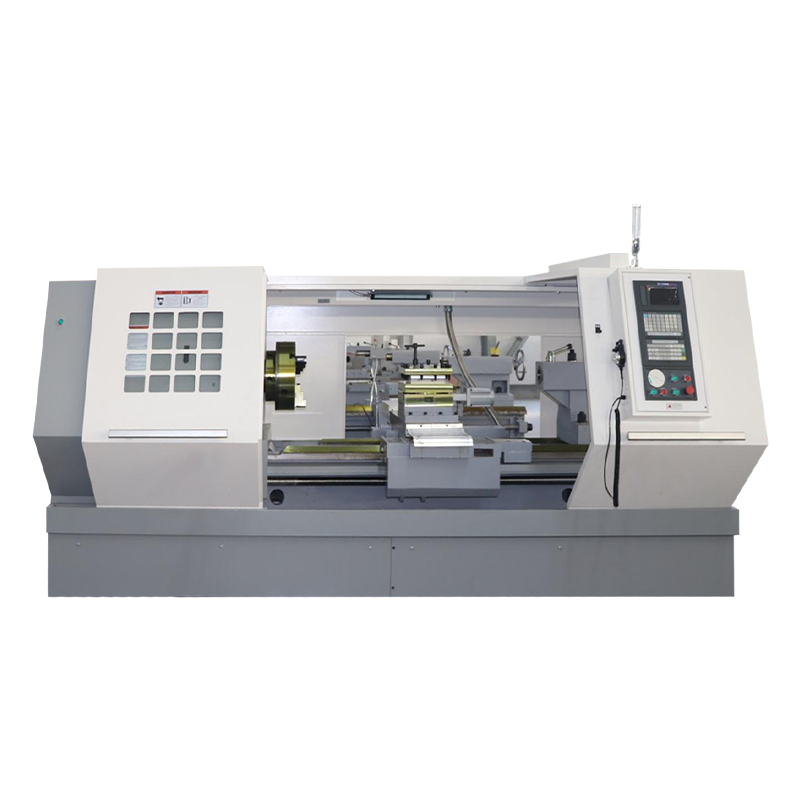
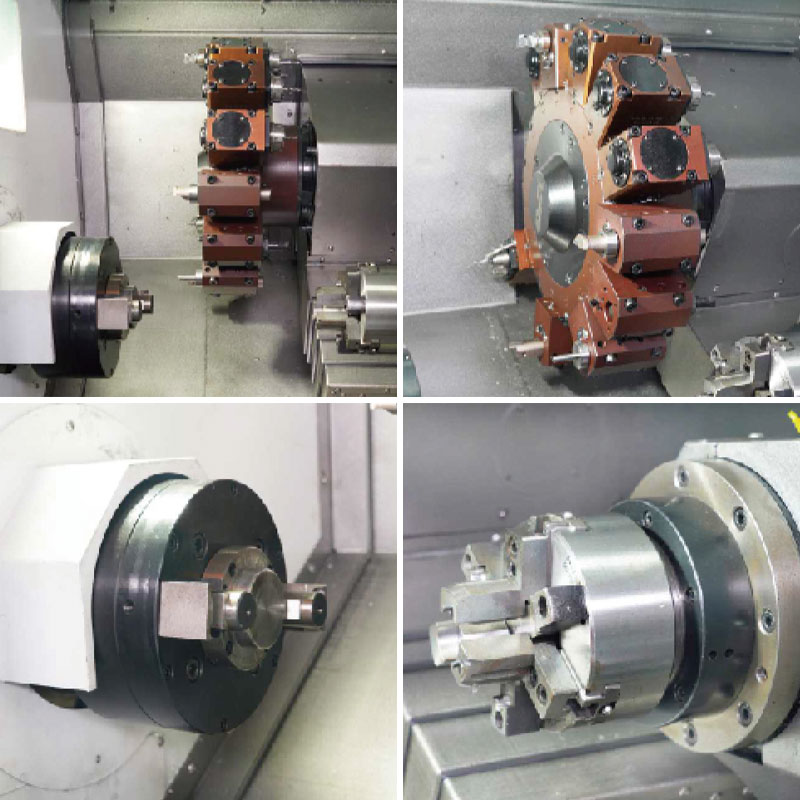 NC-106DS Dual-Spindle Automatic Docking Horizontal Turning CenterA dual-spindle turning center that combines turning, drilling, boring, milling and tapping, with automatic workpiece docking to reduce clamping and support complex parts in one setup.View Product →
Cycle Time, Cost, and Throughput: The Practical Math
Machine price is only one line in the calculation. The real comparison includes setup time, tooling, fixture cost, scrap rate, labor, floor space, and power. A CNC lathe with a bar feeder can run unattended for hours on a family of round parts. A CNC mill with a tombstone fixture can run several parts per cycle, but the fixture and CAM programming may take longer to prove out.
- Estimate cycle time per part, not per feature.
- Add setup and fixture amortization over the order quantity.
- Check bar stock or blank cost; lathes often start from bar, mills from plate or casting.
- Count how many setups the part needs. Each extra setup adds error and labor.
- Test the bottleneck: chip evacuation, tool change, spindle acceleration, or operator load.
For low-volume, high-mix work, a 3-axis mill and a 2-axis lathe can be more flexible than one mill-turn machine, because each machine is simpler to program and maintain. For high-volume round parts, a lathe with live tooling and a sub-spindle often wins on cost per part. For high-volume prismatic parts, a VMC with pallets or a drill-tap machine wins.
Programming, Operators, and Shop Workflow
Lathe programming centers on a rotating part and a turret or gang tool plate. You think in diameters, faces, and centerlines. Mill programming centers on a coordinate system fixed to the workpiece. You think in work offsets, tool length offsets, and cutter compensation. Both use G-code, but the setup sheets, tool libraries, and probing routines differ.
Operator skill is a hidden cost. A lathe operator may be comfortable with chuck jaws, bar feeders, and tool wear on inserts. A mill operator may be comfortable with vises, fixtures, edge finding, and CAM simulations. If your team is strong in one area, the first machine should match that strength. A new machine that nobody can set up quickly becomes a bottleneck.
Buying Checklist for CNC Mill vs CNC Lathe
- Part envelope and weight: check swing, chuck size, bar capacity, table size, and load limits.
- Axis travel: lathe X and Z plus tailstock; mill X, Y, and Z plus spindle nose to table.
- Spindle: speed, power, torque, taper, and through-spindle coolant.
- Tooling: turret stations, live tooling, ATC capacity, and tool taper.
- Accuracy: positioning, repeatability, thermal growth, and backlash.
- Automation: bar feeder, gantry loader, pallet changer, or robot cell.
- Service: installation, training, spare parts, and local support.
A good rule is to buy for 80 percent of your current work and outsource the remaining 20 percent until the order pattern is clear. That reduces the risk of buying a mill for one pocket feature or a lathe for one threaded bore.
Where Hongjia CNC Fits in a Turning or Milling Plan
Hongjia CNC builds metal-cutting equipment from its base in Ningbo, China, with horizontal CNC turning and milling series, vertical lathes, milling centres, and ordinary turning, milling, and drilling machines. The horizontal series includes CK6140, CK6150, CK6163, and CK6180 lathes, plus NC106, NC108, NC110, and NC112 turning centres with D, DY, and DS variants. The milling centre series covers vertical machining centres, double-column machining centres, high-speed drilling centres, and drilling and tapping machines. The company states more than 20 years of industry experience, annual output of 1,000 units, and more than 500 customers.
That range matters when you compare a CNC mill vs a CNC lathe. A supplier that offers both turning and milling platforms can help you match the machine to the part instead of forcing the part onto one technology. If your work is mostly round, start with a horizontal lathe or turning center. If your work is mostly prismatic, start with a vertical machining centre. If you have both, plan the process around the feature that controls the tolerance.
You can see Hongjia CNC's manufacturing background and factory details for more on its production and customization approach.
CNC mill vs CNC lathe is not a contest. It is a process decision. Count the diametral features, count the flat features, check the tolerance stack-up, and calculate the cost per good part. The machine that removes the most setups and holds the tightest datum is usually the one that pays back first.
