
 English
 中文简体
中文简体 русский
 Español
 عربى
عربى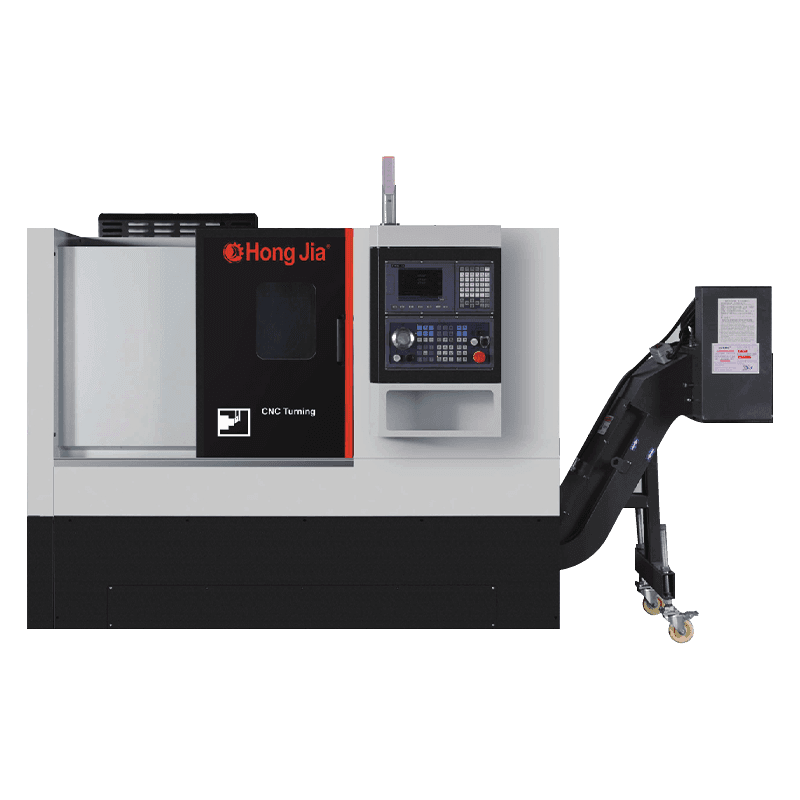
Don't hesitate to contact when you need us!
 Home / News / Industry News / CNC Turning and Milling Machine: How It Works, Benefits, and Selection Guide
 CNC Turning and Milling Machine: How It Works, Benefits, and Selection Guide
 2026.09.09
 Industry News
A job shop gets a quote request for 500 stainless-steel shafts. Each shaft needs the outside diameter turned, a thread at one end, and a cross-drilled hole near the shoulder. On a separate lathe and machining center, each part is loaded twice and re-referenced twice. On a CNC turning and milling machine, the shaft is clamped once; the turret changes from the turning tool to a driven drill, the spindle locks at the correct angle, and the hole is cut before the part ever leaves the chuck. That single clamping is the entire business case.
Turning-milling machines exist to close the old gap between process flexibility and setup accuracy. This guide explains how the machine class works, which specifications actually decide whether a model fits your parts, and what to verify before you place the order.
Content
What a CNC turning and milling machine actually does
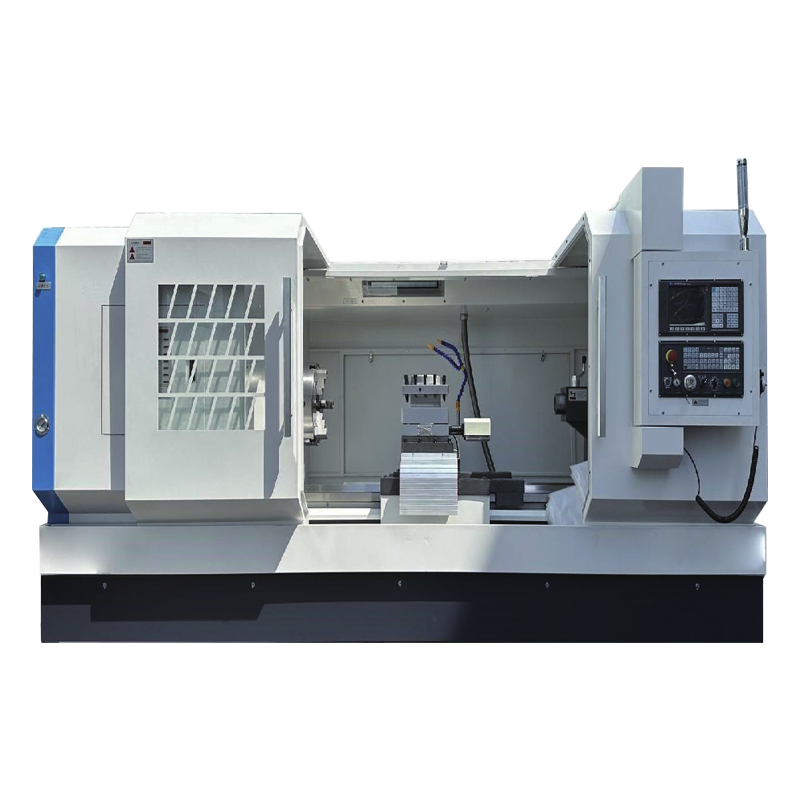
Stated directly: it is a CNC horizontal lathe platform with live tooling added. The workpiece still rotates for turning operations, but when the C-axis locks the spindle at a precise angular position, driven tools in the turret spin independently and can mill, drill, tap, or bore features on the same clamping. Because the part is never re-chucked, every machined feature shares the same clamping datum.
The turning foundation
The bed, headstock, chuck, and turret work like a conventional CNC lathe: turning tools handle outer diameters, faces, grooves, threads, and internal bores at high metal-removal rates. An inclined bed lets chips fall clear of the cutting zone and adds structural rigidity, which shows up directly in surface finish on heavy passes.
The milling capability
Driven tools give the turret its own rotating cutting speed. Combined with C-axis spindle positioning, the machine can machine flats, cross holes, keyways, slots, and off-center bores that once required a separate machining center. This addition is what converts a single-process lathe into a complete processing station.
One setup, one reference
The operational effect matters more than the technical detail: you remove the error that appears every time a part is unclamped and re-referenced. Concentricity between turned and milled features is then controlled by machine geometry rather than by operator judgment, and the first part of a batch is already correct instead of waiting for trial cuts.
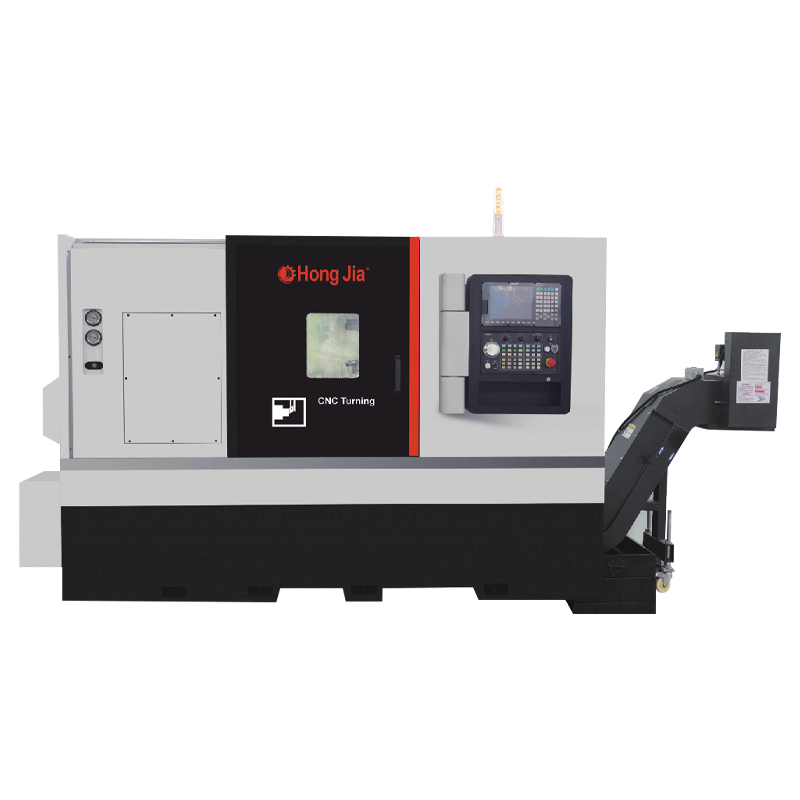
Hongjia CNC's T36P horizontal turning center is a direct example of the category: its planned tooling sequence covers turning, drilling, and boring in one program cycle without the part moving between machines.
The six specifications that decide whether it fits
A sales sheet can list twenty parameters. In practice, six of them determine whether the machine can hold your parts, cut your material, and meet your tolerances. Compare these numbers first, before looking at optional features.
| Parameter | What it means | Typical mid-size value | Why it matters |
|---|---|---|---|
| Max turning diameter | Largest workpiece swing that clears the bed, tooling, and chip flow | 350–500 mm | Flanged parts and custom jaws need headroom |
| Turning length | Longest part the machine can support between centers | 500–1,500 mm | Longer shafts require a longer bed or a different model |
| Spindle speed | Maximum rotational speed of the main spindle | 4,500–6,000 rpm | Small-diameter finishing can only reach good surface speeds at high rpm |
| Driven tool stations | Number of turret positions capable of running live rotating tools | 8–14 stations | More live stations let one program complete more operations |
| C-axis resolution | Smallest angular positioning step of the spindle | 0.001° | Fine resolution keeps cross holes and flats at the right angle |
| Positioning accuracy | Repeatable linear accuracy of the sliding axes | ±0.005–0.01 mm | Directly limits which drawing tolerances you can hold |
For most job shops, a mid-size horizontal turning center with roughly 400–500 mm maximum turning diameter and about one meter of turning length is the practical starting point. If your parts sit clearly inside those dimensions, choose the lighter frame and invest the saved budget in tooling or automation.
Choose the configuration from the part, not the brochure
For nearly every buyer, the practical rule is: buy the smallest machine that can hold the parts you run today plus most of the parts you are quoting, with all operations completed in one clamping. A larger frame than necessary costs money, floor space, and even cutting performance on small workpieces.
1
Measure the real envelope
Maximum turning diameter and center distance must cover your largest part plus jaw height and tool approach. A flanged shaft changes the requirement more than its nominal diameter suggests, so measure the finished blank, not the drawing's basic dimension.
2
Match power to material
Stainless, heat-treated, and high-hardness alloys need spindle torque and structural rigidity more than top speed. Check the rated torque at operating speed rather than peak horsepower, because that is the number that governs real roughing performance.
3
Count the features that need driven tools
Cross holes, flats, keyways, slots, and eccentric bores each need a live station and a C-axis function. Leave spare live stations in the turret for future jobs; the difference between being able to quote a new part or refusing it is often one driven position.
4
Plan the automation level
High-volume batches justify dual spindles or automatic workpiece transfer. Mixed short-run production is better served by a standard turret with driven tools and quick changeover. The full decision order — envelope, material, features, batch size — is covered in our separate guide on how to choose a horizontal CNC turning and milling machine.
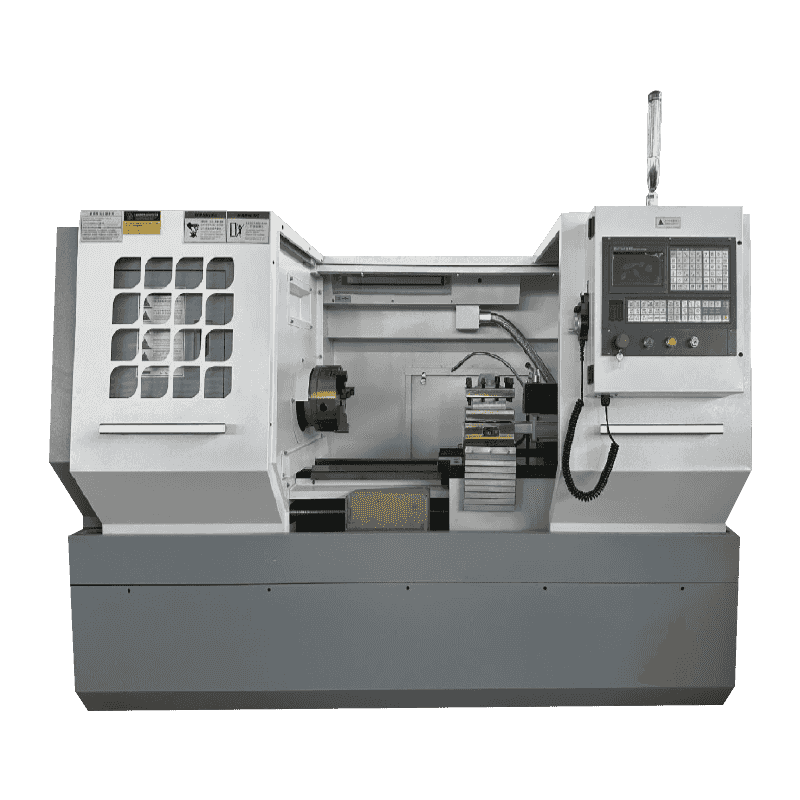
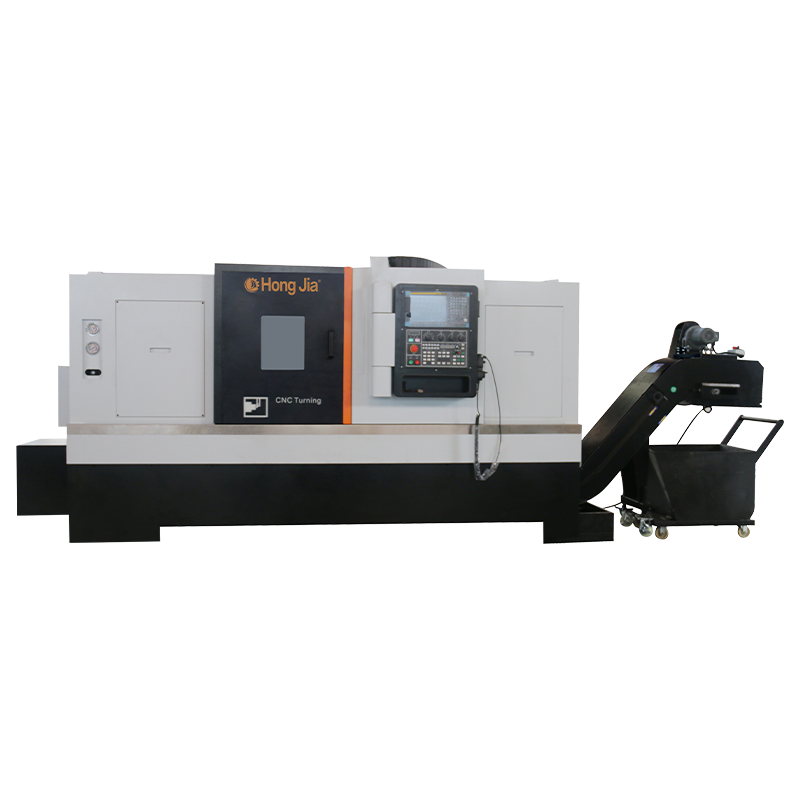
For complex shafts that need machining at both ends, a dual-spindle automatic docking configuration can cut total cycle time dramatically because the workpiece transfers directly from one spindle to the other without added setup. Hongjia's NC106DS is built around this principle.
Realistic accuracy expectations
Accuracy is a relationship between machined features, not a number on a test report. The strongest reason to choose a combined turning-milling machine is the consistency created by a single clamping.
0.01–0.02 mm Typical runout between turned and milled features on a rigidly held part
H7 Bore tolerance routinely achieved with fine boring on the same setup
Ra 0.8–1.6 µm Surface finish from standard turning; a finishing pass can lower it further
These values assume a rigid workpiece, appropriate insert geometry, and a machine in reasonable condition. They will not hold on thin-walled parts or with long, deflecting tools: the machine provides the potential, but the part design and the process decide the final result.
Combined machine or the two-machine route?
The decision is simple to state: choose the combined machine when your parts are rotational but include features that require milling or drilling. Dedicated pure high-volume turning and large prismatic milling work remain better on separate machines. The choice comes down to what the majority of your batches actually look like.
Choose turning-milling when
- Parts have cross holes, flats, keyways, or off-center bores
- Concentricity between turned and milled features is on the drawing
- Batch sizes vary and setup time is the real bottleneck
- Floor space is tight and one machine can replace two
Choose separate machines when
- Long production runs are almost pure turning
- You need a very large milling envelope for big prismatic parts
- You already have idle capacity on both sides
- Heavy milling stock removal would strain a combined machine's turret
A useful mental model: every change of machine loading is a source of error. A turn-mill center removes three or four loadings per part, and for mixed short-run work, each removed loading is direct profit.
What to verify before you order
The specification list only matters if the manufacturer can deliver the configuration and stand behind it. Ask these questions and write down the answers.
- Custom configuration: can spindle speed range, turret layout, coolant system, and chip handling be adapted to your parts?
- Acceptance standard: how is the machine tested against your own workpiece before delivery?
- Experience and output: has the factory delivered comparable machines? The company's own figures describe more than 20 years of industry experience, an annual output of about 1,000 machines, and over 500 customer installations.
20+Years of industry experience
1,000Machines produced per year
500+Customer installations
A manufacturer profile such as Hongjia CNC's company introduction is a reasonable starting point, but your own trial part is the real reference. Ask for a cutting test with a representative workpiece; the result tells you more than any brochure.
For shaft and bushing production in high volumes, Hongjia's NC110DY uses its high-production configuration to shorten cycle times, which is exactly the kind of option to explore when batch counts climb into the thousands.
Buy the machine that fits the parts you have today and leaves margin for the parts you will quote tomorrow. The right CNC turning and milling center does the work of two machines without ever asking the operator to re-clamp a good part.
