
 English
 中文简体
中文简体 русский
 Español
 عربى
عربى
Don't hesitate to contact when you need us!
What Are the Applications of Horizontal Milling Machine?
 2026.08.05
 Industry News
Content
- 1 What Are the Applications of Horizontal Milling Machine? The Direct Answer
- 2 How a Horizontal Milling Machine Actually Works
- 3 Core Applications of Horizontal Milling Machines
- 4 Industries That Rely on Horizontal CNC Turning and Milling Machines
- 5 Horizontal vs Vertical Machining: When Horizontal Wins
- 6 Typical Parts Produced on a Horizontal CNC Turning and Milling Machine
- 7 Key Factors to Evaluate Before Choosing a Horizontal Machine
- 8 Sourcing a Horizontal CNC Turning and Milling Machine
- 9 Frequently Overlooked Benefits of Horizontal Machining
What Are the Applications of Horizontal Milling Machine? The Direct Answer
A horizontal milling machine is used to cut slots, gears, keyways, splines, and flat or contoured surfaces on metal workpieces where a horizontally mounted cutter provides better chip evacuation and higher material removal rates than a vertical spindle. Today, most of that traditional cutting capability has been merged into a single platform known as a Horizontal CNC Turning And Milling Machine, which combines turning, drilling, tapping, and multi-axis milling in one horizontal bed so a workpiece is fully machined in a single clamping.
This shift matters because manufacturers no longer choose between a mill and a lathe. A Horizontal CNC Turning And Milling Machine covers slotting, gear cutting, gang milling, drilling, tapping, boring, and turning operations on one machine, which reduces setup time and improves the positional accuracy between turned and milled features. The rest of this guide breaks down exactly where these machines are used, what industries rely on them, and how to decide whether horizontal machining is the right fit for a given part.
How a Horizontal Milling Machine Actually Works
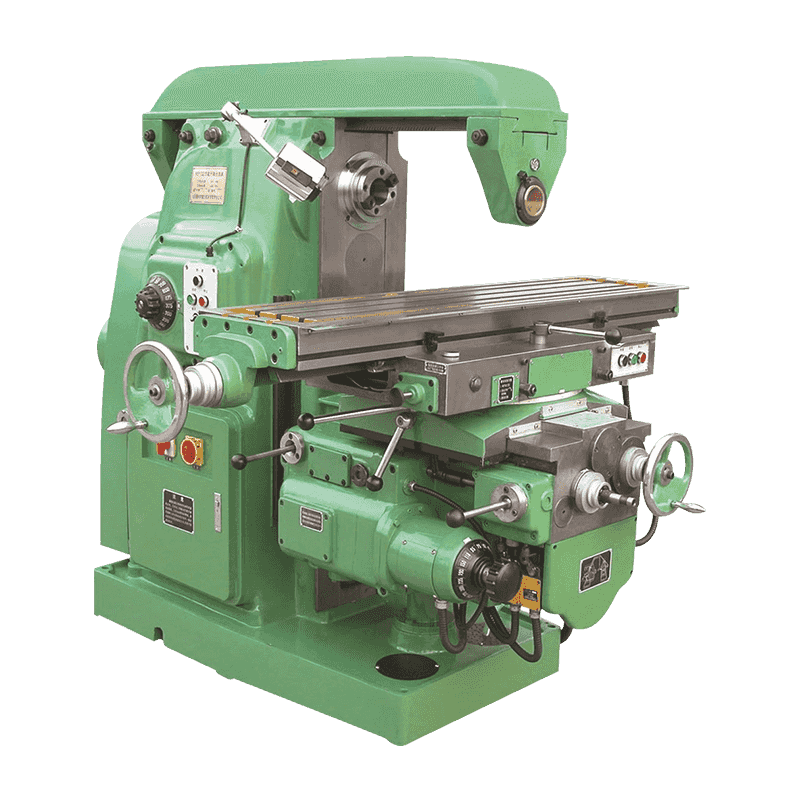
A conventional horizontal milling machine mounts its cutting arbor parallel to the worktable, allowing the cutter to engage the workpiece from the side rather than from above. This orientation lets gravity assist chip removal, which is why horizontal milling has traditionally been favored for heavy stock removal and long production runs.
From Manual Horizontal Mills to CNC Turning and Milling Centers
Modern machine builders have carried this horizontal layout forward into CNC platforms. A Horizontal CNC Turning And Milling Machine typically pairs a horizontal spindle with a turret for turning operations and a driven tool holder for milling, drilling, and tapping. Higher-end models add a Y-axis, which allows off-center milling and drilling features to be produced without repositioning the part, a capability that is essential for complex shafts, flanges, and housings.
Core Applications of Horizontal Milling Machines
The applications of horizontal milling machine technology span both traditional standalone milling operations and the integrated turning and milling processes performed on a modern horizontal center. The table below summarizes the most common uses.
| Application | Typical Operation |
|---|---|
| Slot and keyway cutting | Side and slab milling cutters produce precise slots on shafts and housings |
| Gear and spline manufacturing | Form cutters and indexing heads generate gear teeth and spline profiles |
| Gang milling | Multiple cutters mounted on one arbor machine several surfaces in a single pass |
| Turning and milling in one setup | A Horizontal CNC Turning And Milling Machine turns diameters, then drills, taps, and mills features without re-fixturing |
| Flange and housing machining | Y-axis milling produces off-center holes and pockets on turned parts |
| Threading and tapping | Driven tools cut internal and external threads directly on the horizontal spindle |
Industries That Rely on Horizontal CNC Turning and Milling Machines
Because a Horizontal CNC Turning And Milling Machine can complete both rotational and prismatic features in one clamping, it has become the standard choice across several manufacturing sectors that produce complex round parts with off-axis features.
- Automotive component manufacturing, including shafts, gear blanks, valve bodies, and transmission parts
- Hydraulic and pneumatic fittings that require turned diameters combined with cross-drilled ports
- Pump and valve manufacturing, where flanges need both turned faces and drilled bolt patterns
- Aerospace and defense components that demand tight concentricity between turned and milled features
- General mechanical parts manufacturing for gearboxes, couplings, and bearing housings
In each of these sectors, the appeal is the same. Combining turning and milling on one horizontal platform removes the accuracy loss that comes from transferring a part between separate lathe and mill operations, while also cutting overall cycle time since the part does not need to be unclamped and re-referenced.
Horizontal vs Vertical Machining: When Horizontal Wins
Choosing between a horizontal and vertical configuration depends heavily on part geometry, batch size, and how much stock needs to be removed. The comparison below highlights where a horizontal layout has a clear advantage.
| Factor | Horizontal Configuration | Vertical Configuration |
|---|---|---|
| Chip evacuation | Chips fall away from the cutting zone by gravity | Chips can accumulate on the workpiece surface |
| Best suited part shape | Round, shaft-like, or box-shaped parts with side features | Flat plates and prismatic parts machined from the top |
| Combined turning and milling | Available on a Horizontal CNC Turning And Milling Machine in one setup | Typically requires a separate lathe operation |
| Multi-side access | Fourth-axis rotary tables reach multiple faces without repositioning | Usually limited to top-down access without add-on units |
Typical Parts Produced on a Horizontal CNC Turning and Milling Machine
Understanding the applications of horizontal milling machine platforms is easier when looking at actual part families. The most common examples include:
- Stepped shafts with cross holes, keyways, and threaded ends produced in a single cycle
- Flanged housings that need a turned bore plus a bolt circle of drilled and tapped holes
- Valve bodies requiring turned ports combined with milled mounting faces
- Couplings and gear blanks that need both concentric turning and keyway or spline milling
- Pump shafts and rotors that combine turned diameters with off-center milled flats
For parts with these characteristics, a Horizontal CNC Turning And Milling Machine generally delivers better dimensional consistency between the turned and milled features than a two-machine process, since the part never loses its original datum reference during machining.
Key Factors to Evaluate Before Choosing a Horizontal Machine
Before investing in a horizontal milling machine or a combined turning and milling platform, manufacturers should weigh the following factors against their part mix and production volume.
Part Complexity and Batch Size
Parts that combine rotational and off-axis features benefit most from a Horizontal CNC Turning And Milling Machine, since a single setup eliminates the fixture and alignment steps required when a part is moved between separate machines. For simple flat plates without turned features, a dedicated vertical mill is often more cost effective.
Spindle Power and Tooling Capacity
Heavier stock removal applications, such as gear blank roughing, require higher spindle torque and rigid tool holders. Buyers should confirm the number of driven tool stations, the maximum turning diameter, and whether a Y-axis is available, since these specifications directly determine what part geometries the machine can produce.
Control System and Automation Readiness
A modern control system with reliable programming support reduces changeover time between part families, which matters most for manufacturers running mixed small to medium batch production rather than a single dedicated part number.
Sourcing a Horizontal CNC Turning and Milling Machine
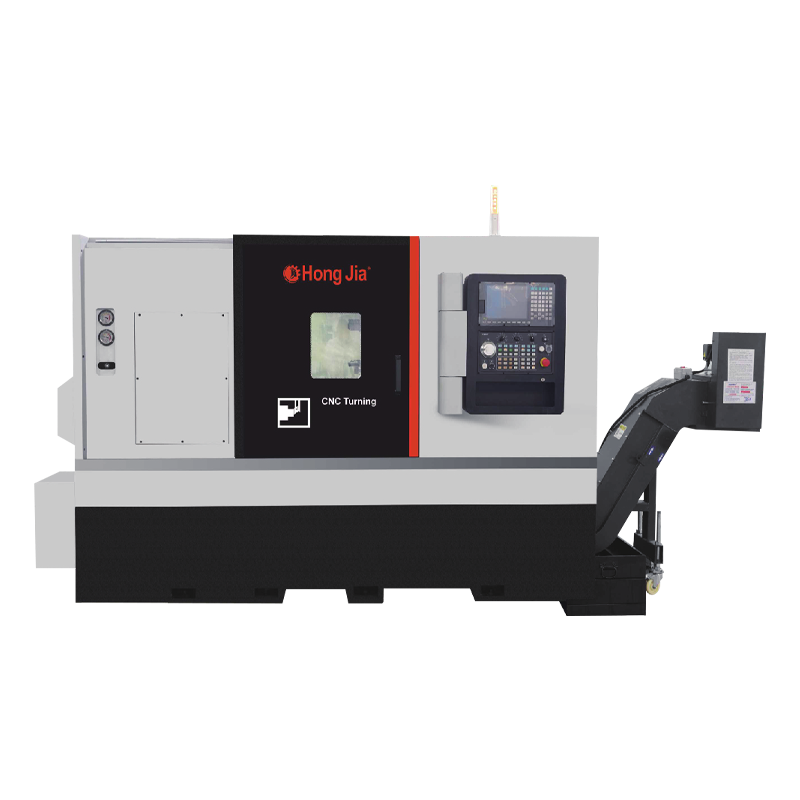
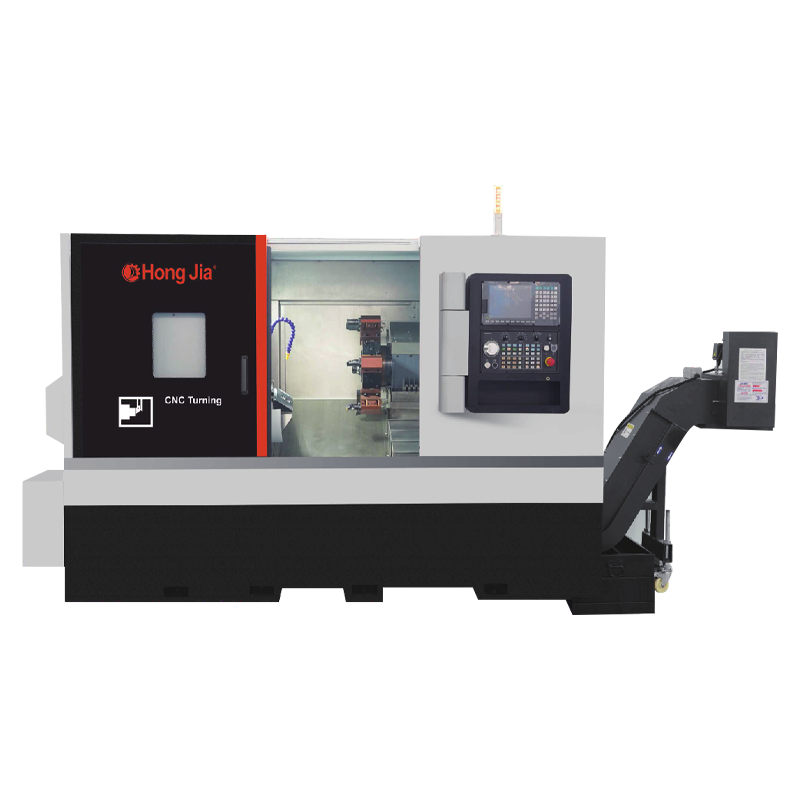
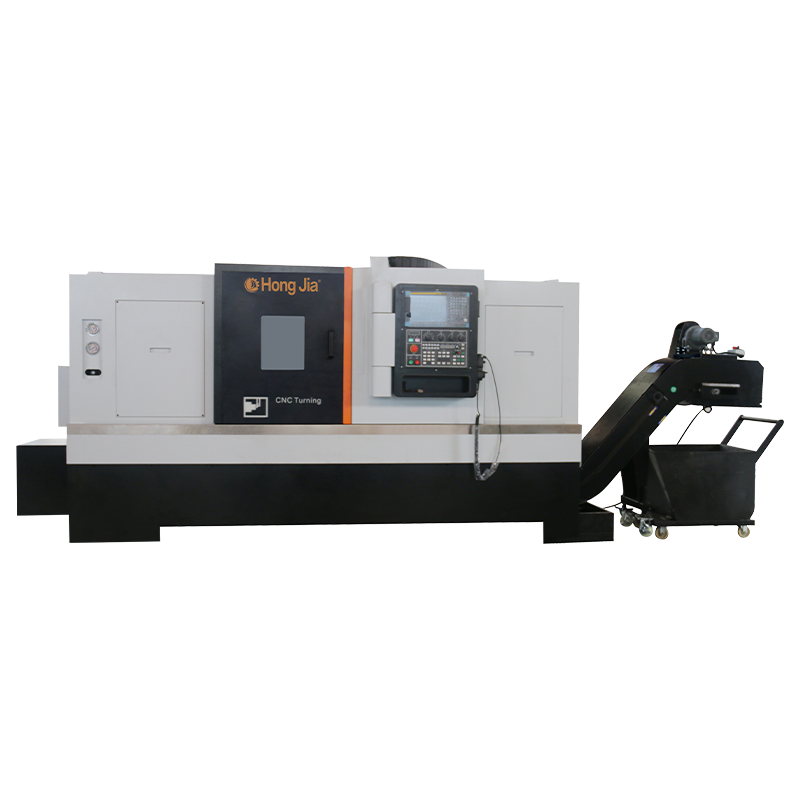
Hongjia CNC, based in the Qianwan New District of Ningbo, Zhejiang Province, integrates research, manufacturing, sales, and service within one operation, producing a Horizontal CNC Turning And Milling Machine lineup built for combined turning, drilling, tapping, and multi-axis milling on a single horizontal bed. The company's turning and milling series is designed for manufacturers that need to machine complex shafts, flanges, and housings in one clamping rather than transferring parts between separate lathes and mills.
Buyers evaluating a supplier for this category of equipment should confirm the spindle configuration, the number of driven tooling stations, whether a Y-axis is included, and the level of after-sales technical support available, since these factors determine how well the machine adapts to a manufacturer's specific part mix over time.
Frequently Overlooked Benefits of Horizontal Machining
Beyond the headline applications, horizontal milling and turning platforms offer several operational advantages that are easy to overlook during initial machine selection.
- Reduced tool wear from improved chip clearance, which extends cutter life during heavy roughing passes
- Lower scrap rates from eliminating repositioning errors between turning and milling stages
- Shorter overall cycle times since setup changes between operations are removed
- Better suitability for lights-out or unattended production runs due to fewer manual handling steps
Taken together, these advantages explain why the applications of horizontal milling machine technology have expanded well beyond traditional slot and gear cutting into full turning and milling integration for complex round parts across multiple industries.
